Feb 5, 2024: Albert Town (near Wānaka) -> Papamoa Beach (near Tauranga)
Today was a sunrise to sunset day.
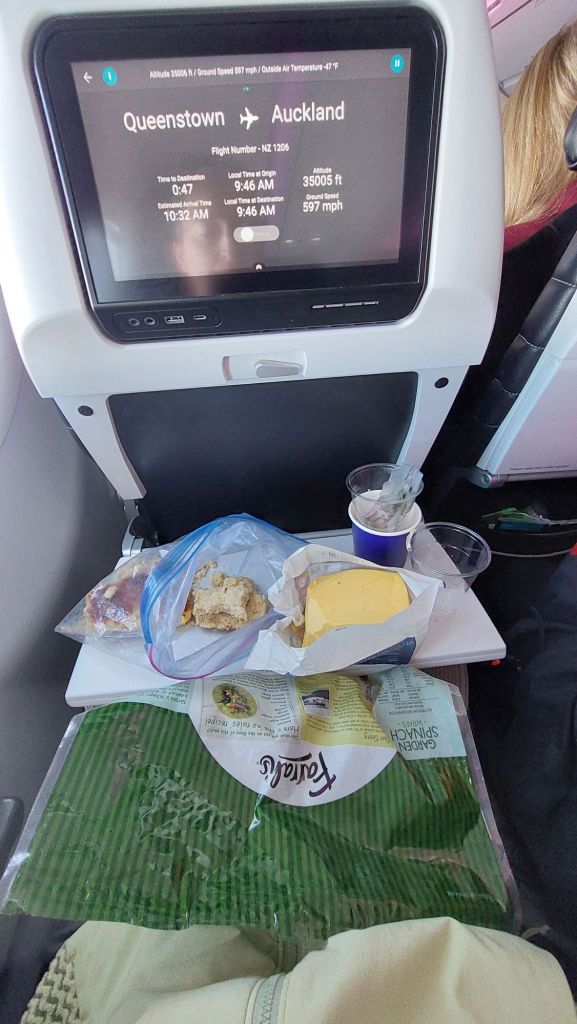
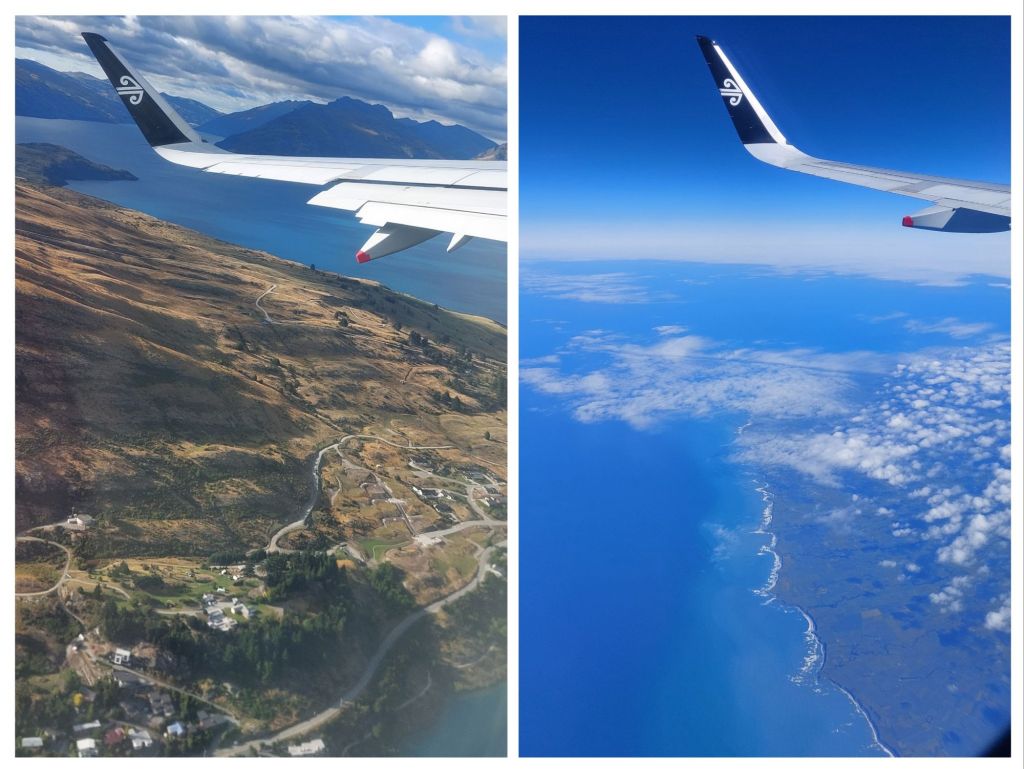
We were up at 5am to drive to Queenstown in time for our flight to Auckland. When travelling domestically, I found they did not check my passport at all, and did not protest about byo supplementary in-flight snacks… (Yes, that is a pound of butter!)Goodbye glaciated south island (left); hello volcanic north island (right)
Clare, Jessi, John and Sachi were arriving from Canada today, and we planned on meeting at our AirBnB in Papamoa – about 3h from Auckland on the east coast. Flis and mum and I stopped at Mercer Cheese to taste cheese and then popped around the corner to get a snack. Who should we see crossing the parking lot, but Clare!
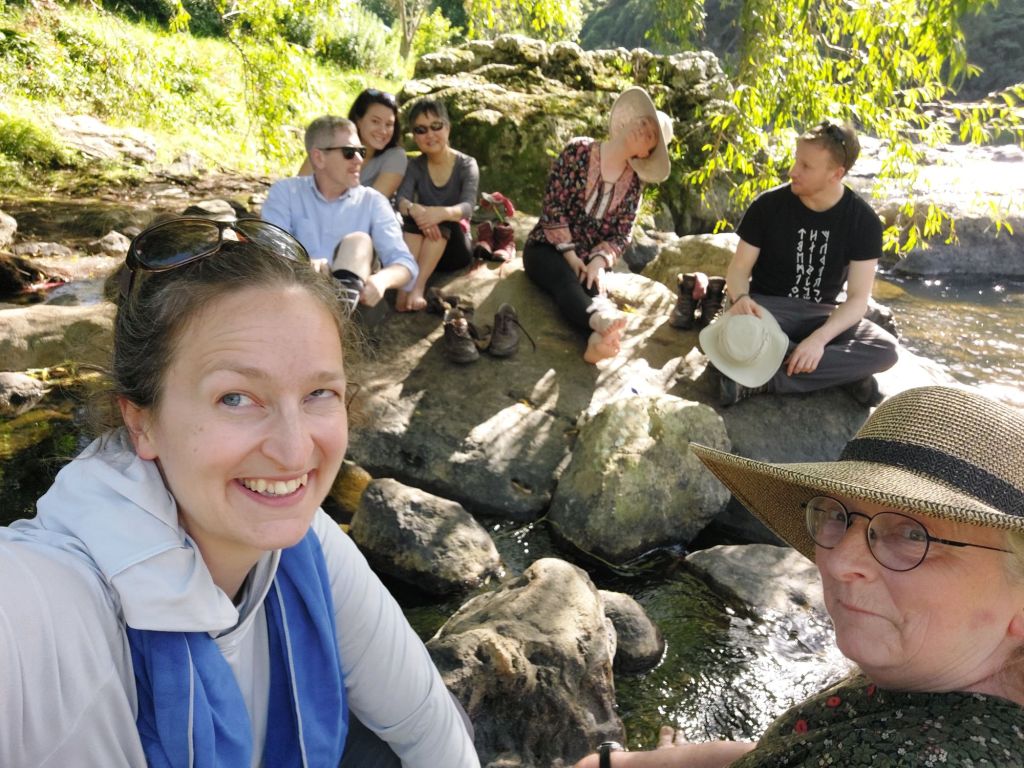
We later stopped at Karangahake gorge and were sitting in the shade with our feet in the water when a text from Sachi came in – a photo of Jessi swimming at … Karangahake gorge!
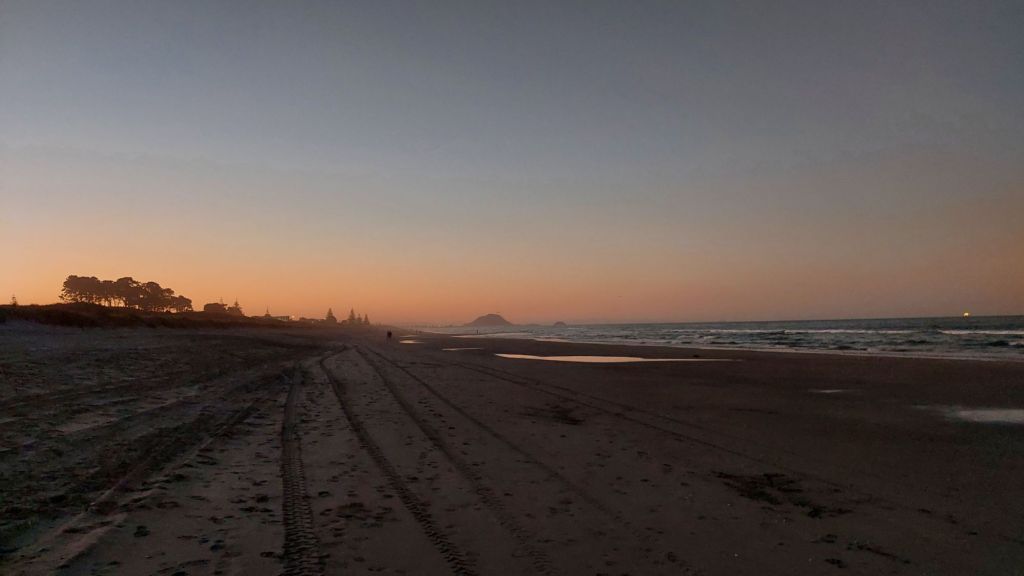
It is much warmer on the north island, and the swim was very refreshing. After finding the rest of the family, we had Indian takeout dinner, and then some enjoyed a short walk to the beach at sunset.
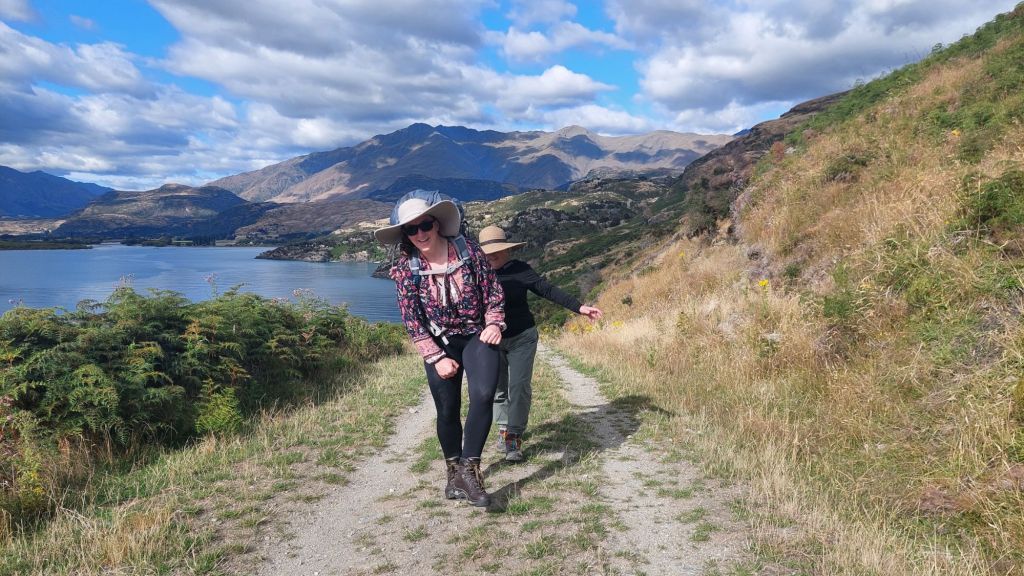
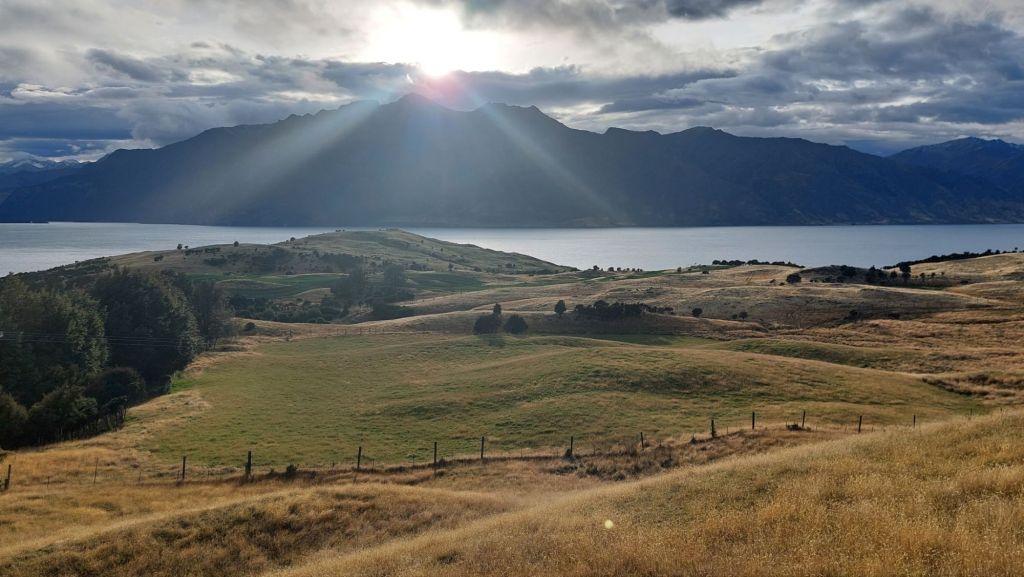
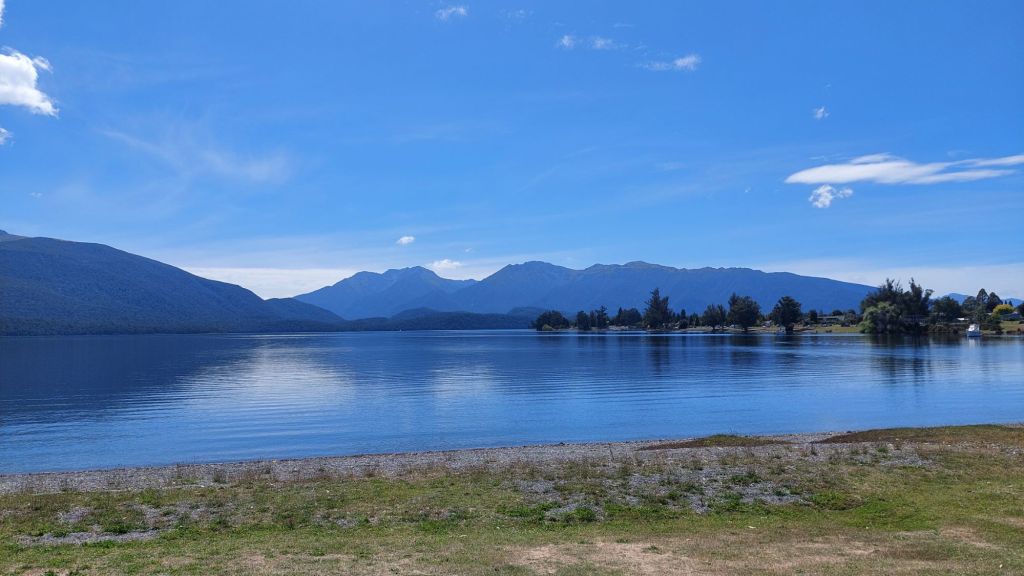
We lured mum out for a hike on the west side of Lake Wānaka.
It would be easy, we said. It would be short, we said. We’d go for a swim in the lake, we said. It turned into a hot, 20km-long trek with a strong headwind and no swimming. Oops!
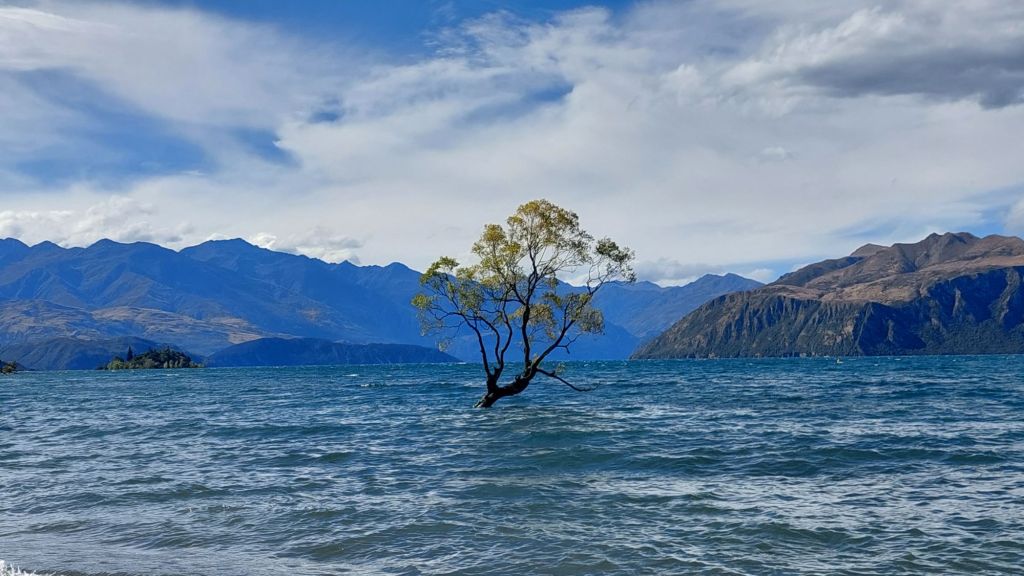
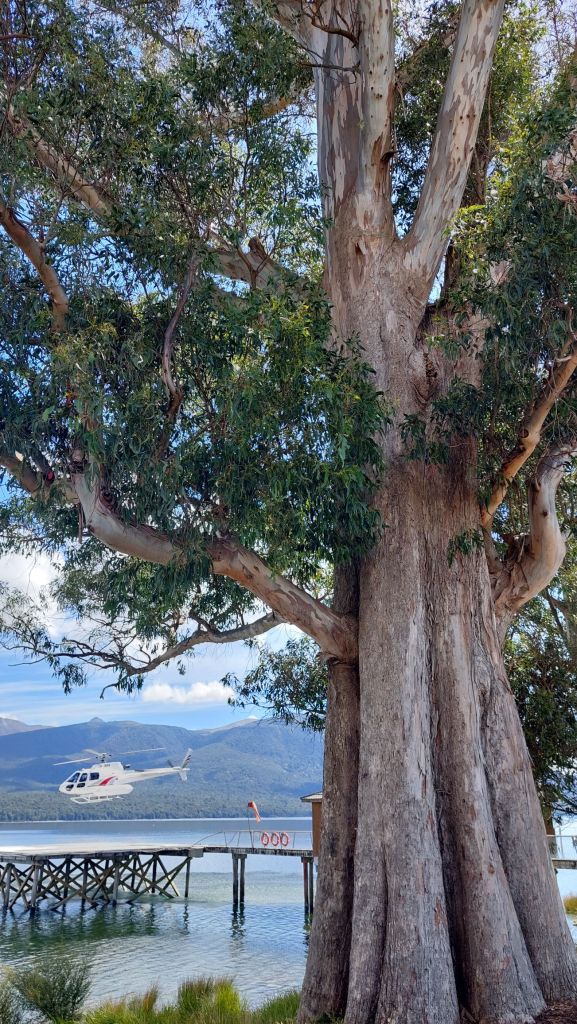
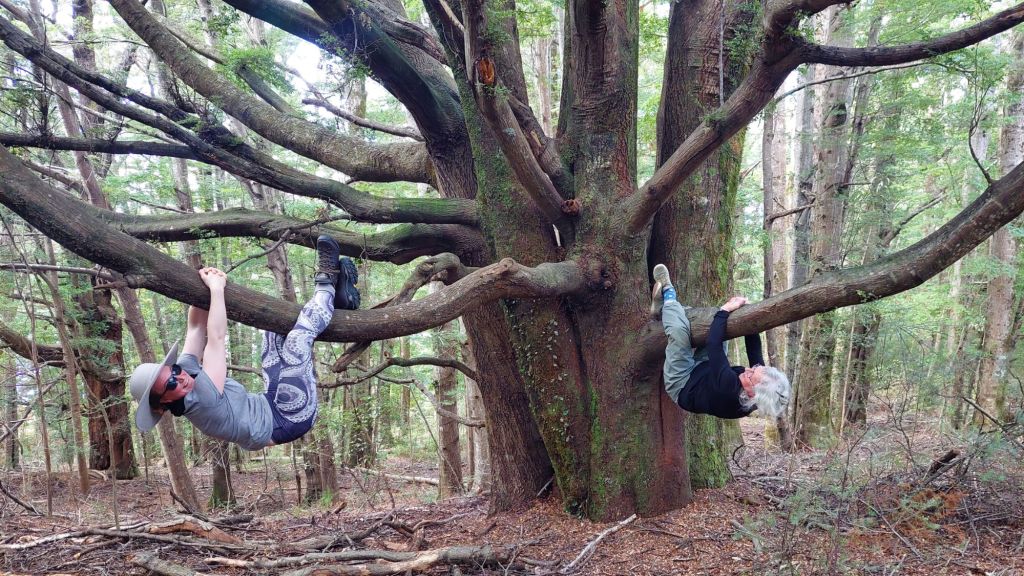
First thing, it was very calmA wanaka wannabe tree
Driving out to the trailhead, we saw a lot of roadkill as well as many live rabbits.
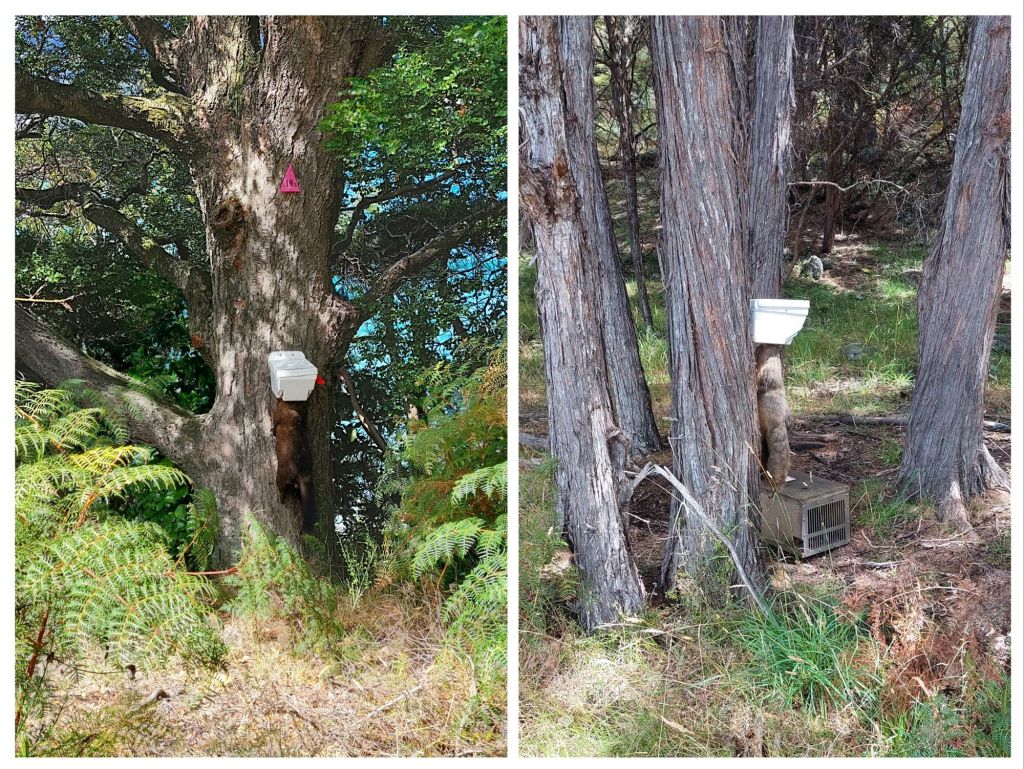
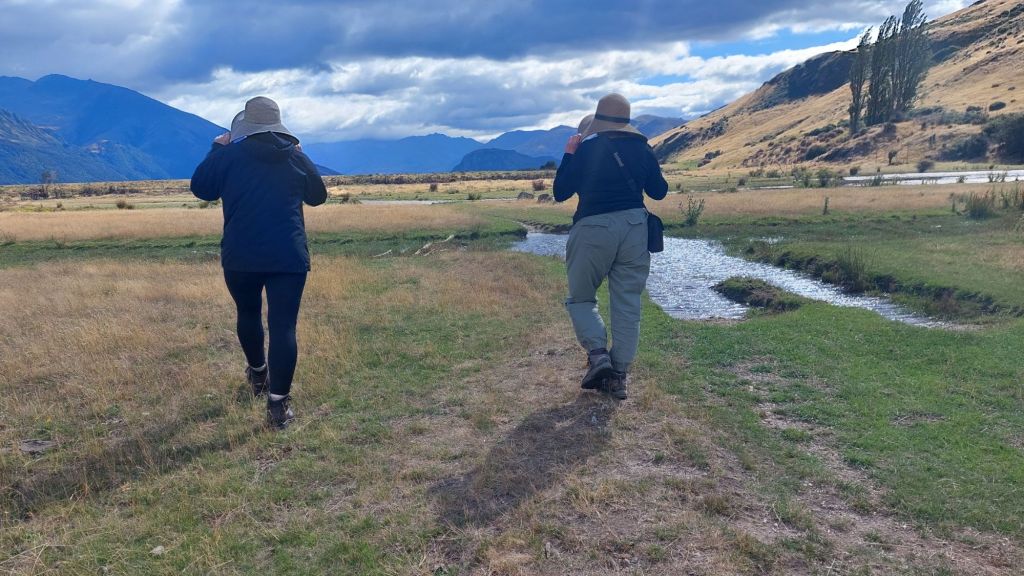
The track, like many others we’ve been on, had traps for mammalian predators, but this time, we found some full ones.The wind started early and persisted all day, making today the only day we had no wish for our bicycles.It is hard to show wind in photos, but it was a hold-onto-anything-you-don’t-want-to-lose kind of day.
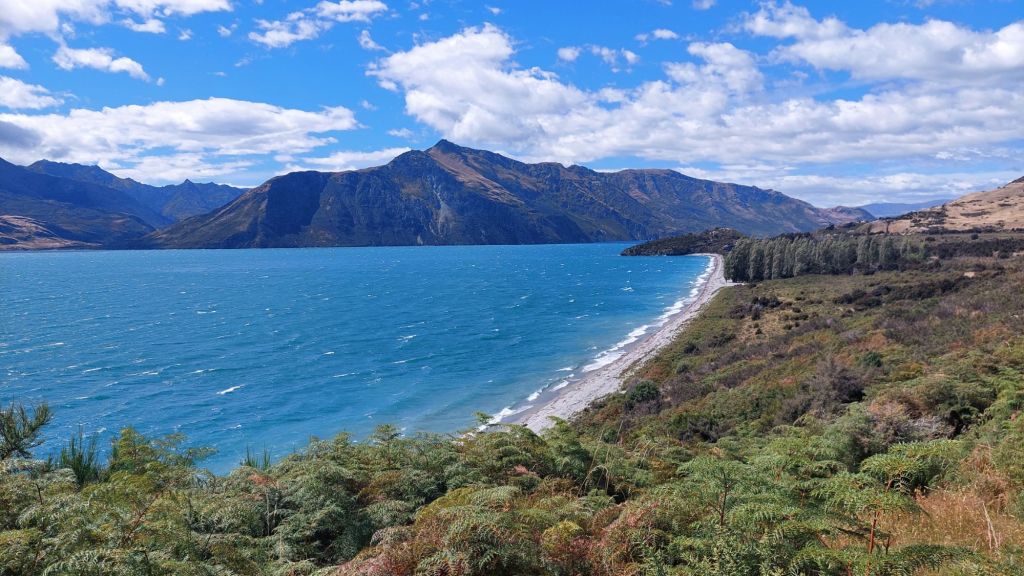
We watched clouds zoom by (in a different direction than the wind and waves). White caps foamed and cloud shadows slid by on the surface of the brilliantly coloured lake.
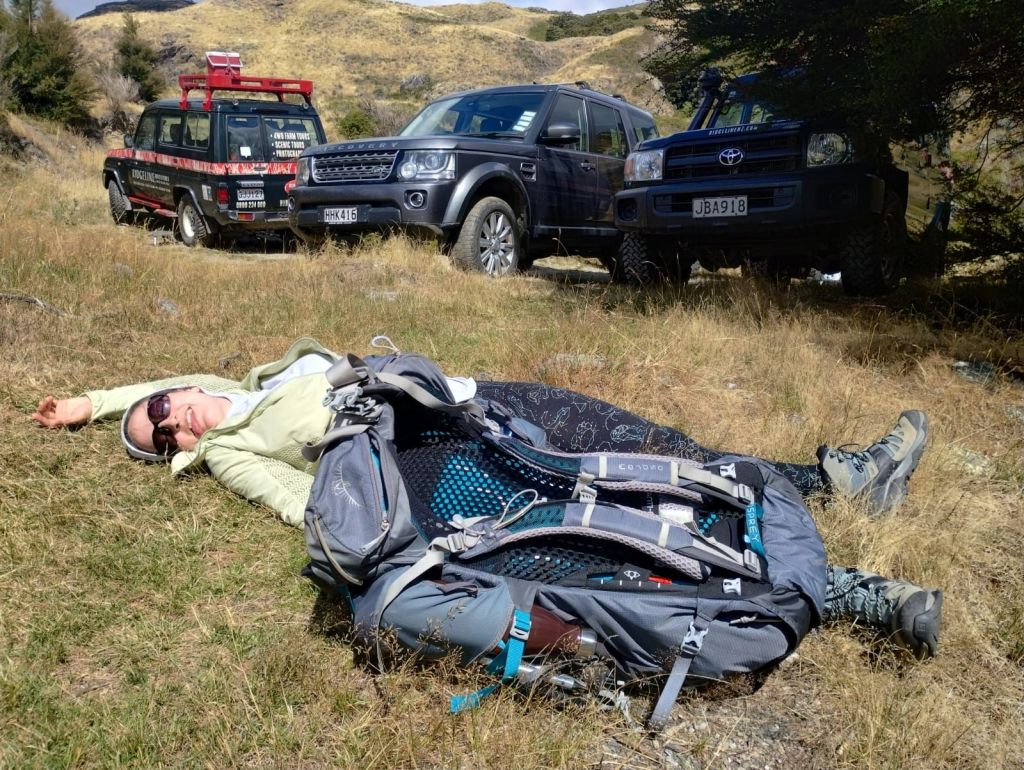
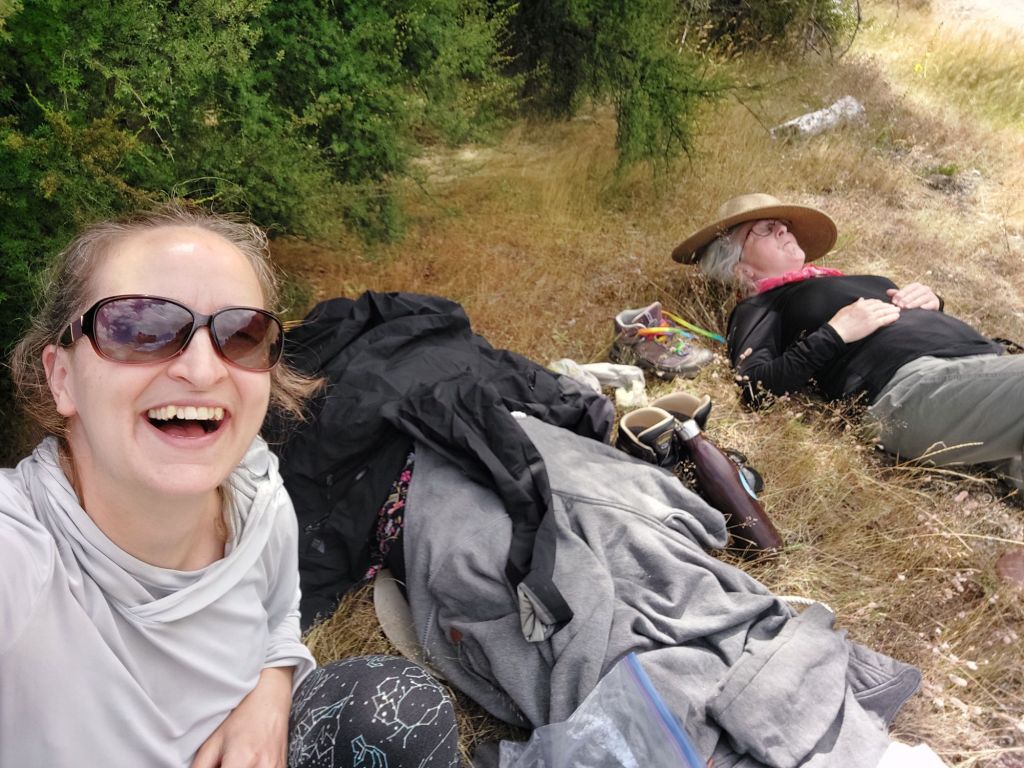
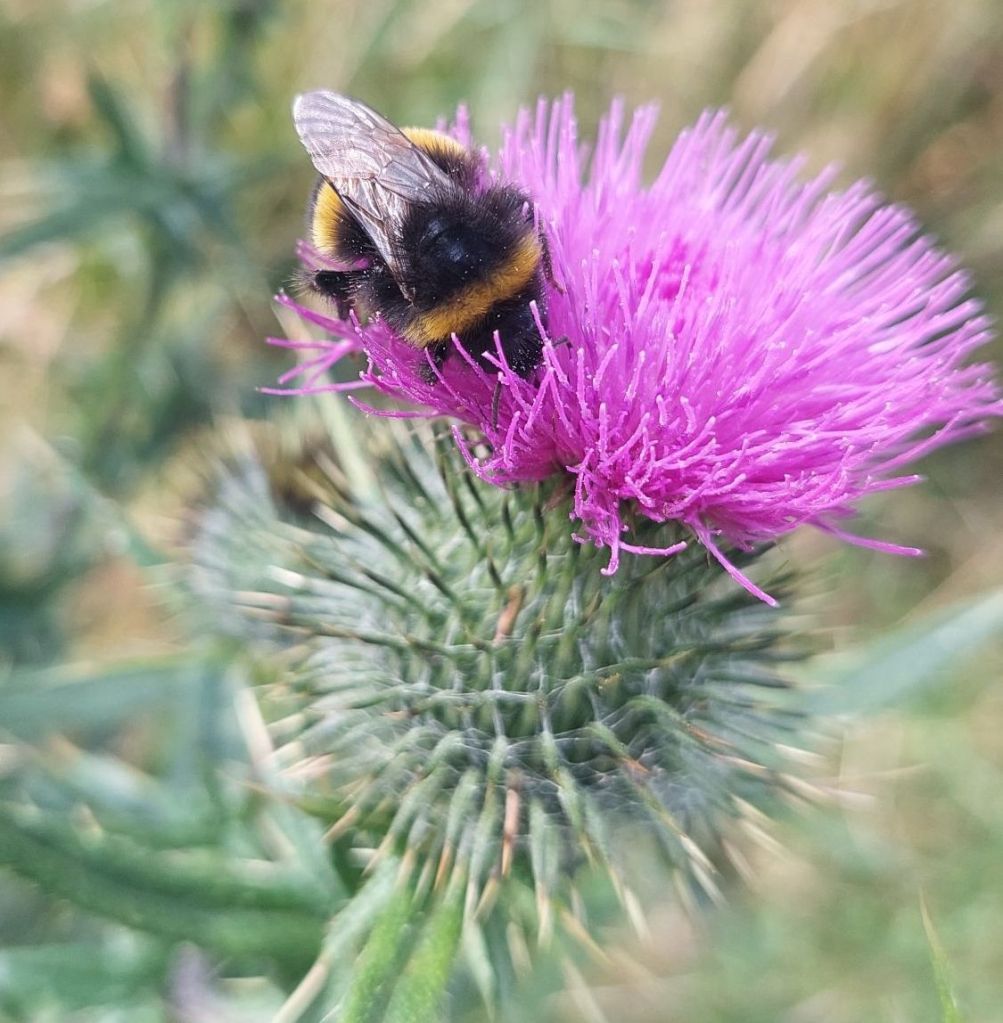
After seeing nobody else at all, we stopped for a break on a little knoll protected from the wind.Out of nowhere, a tour of 5 Jeeps parked beside us and disgorged their contents of lazy lazy tourists who trooped by us as we lay sprawled on the trail.Felicity is a master of what we’re calling “Canadian sunbathing”. Mum is less expert at this and some of her important digits were left out to get toasted. We’ve seen many bumblebees – far more than any other kind of bee or wasp.
After an hour or so (when some of us napped), we headed back to our home base for Thai food. Then we packed up our gear, to be ready to fly to the north island tomorrow.
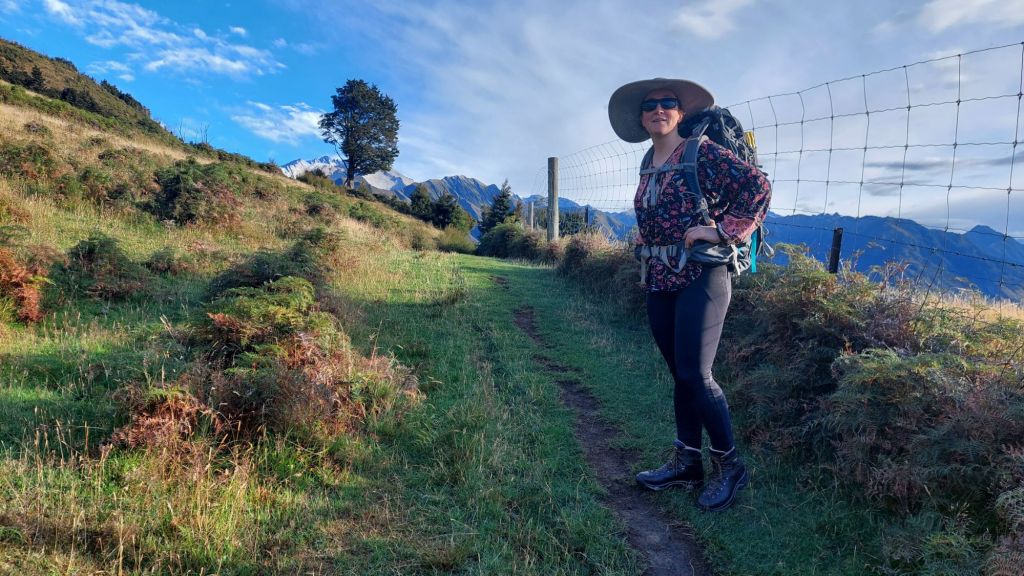
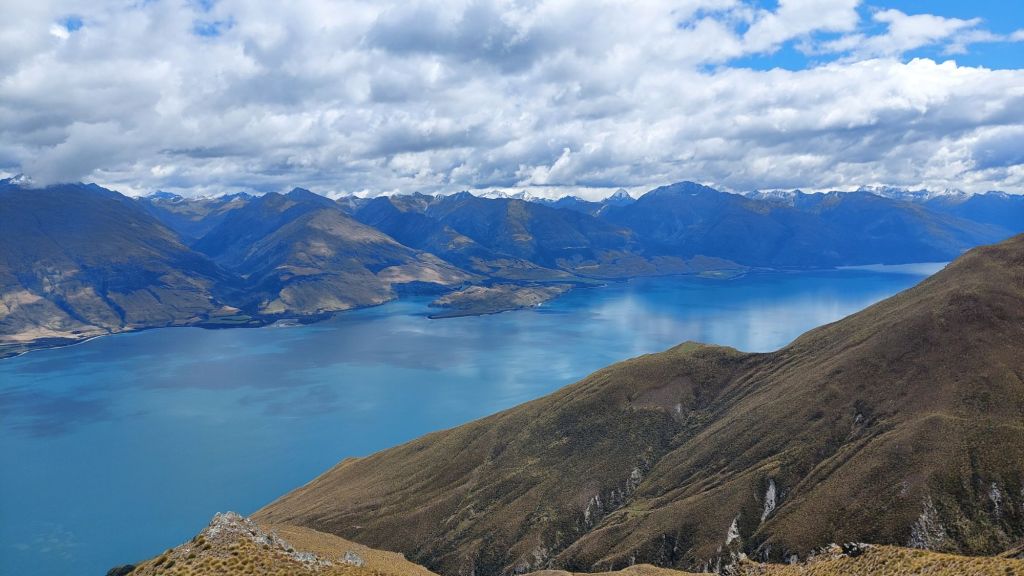
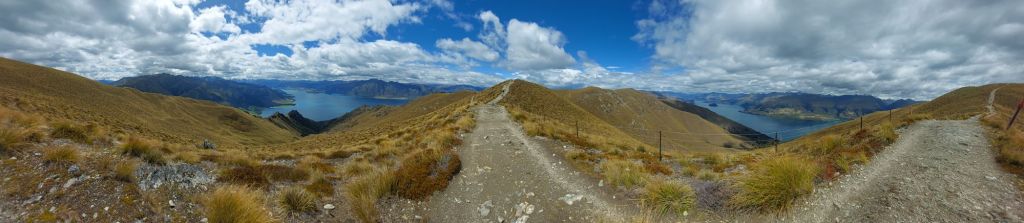
Felicity and I made an early start, and were at the trailhead around 7:30.15.8km with 1155m of elevation gain to the summit of Isthmus Peak so we wanted to give ourselves plenty of time.
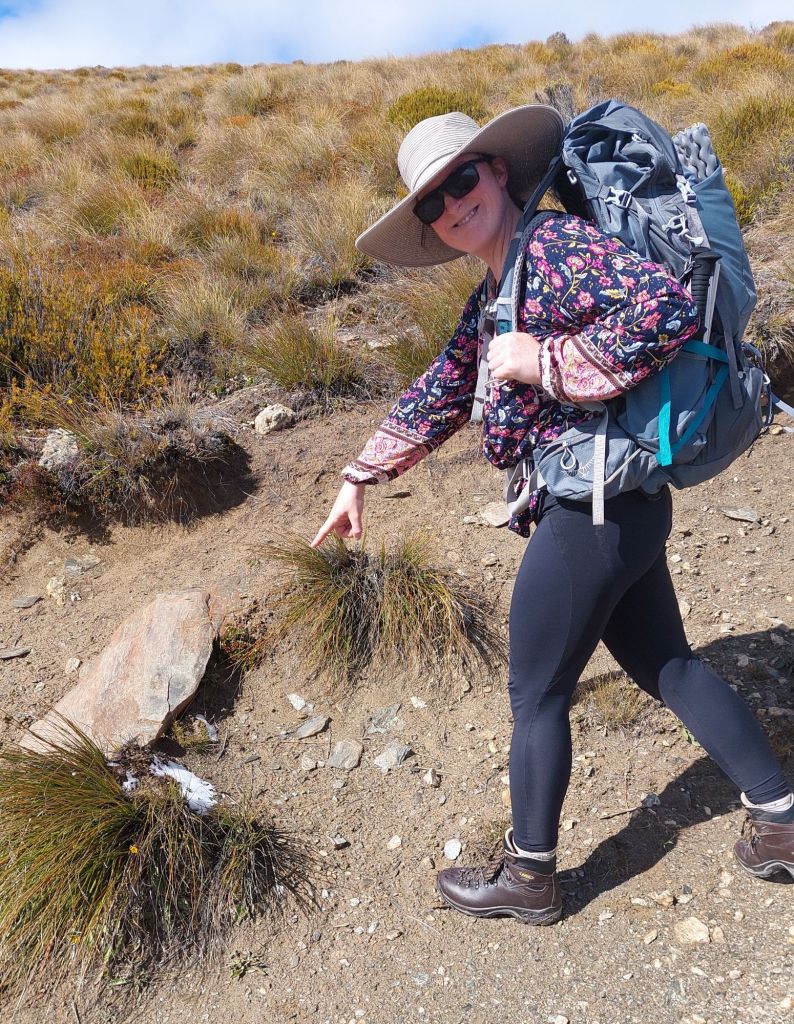
As it turned out, this was probably one of the more manageable >1000m gain hikes I’ve done, and we added our own detour along the ridgeline near the top for good measure. On the way up, we saw land maggots and a herd of fallow deer (fawns nursing and racks of bodiless antlers moving down a creek).
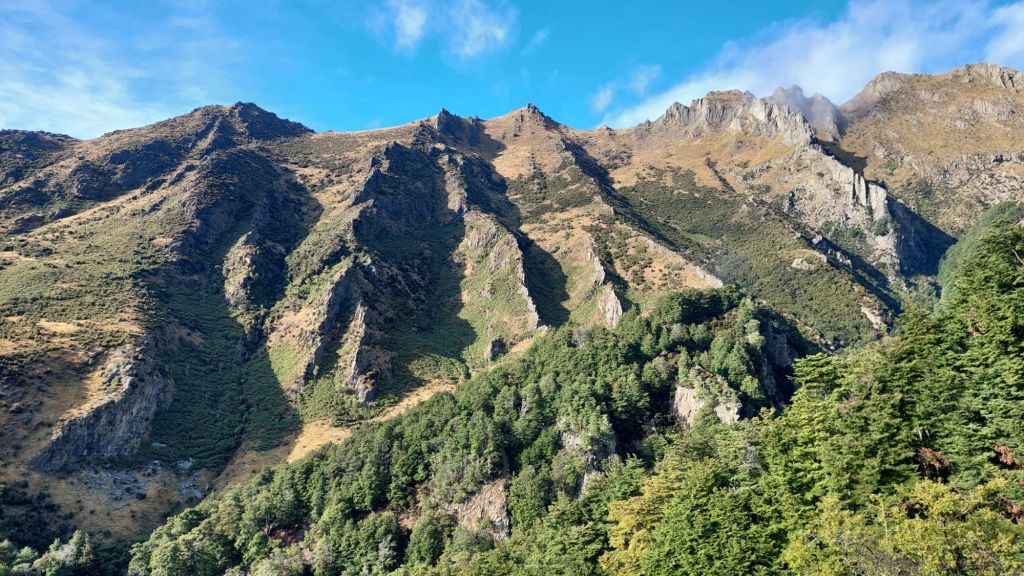
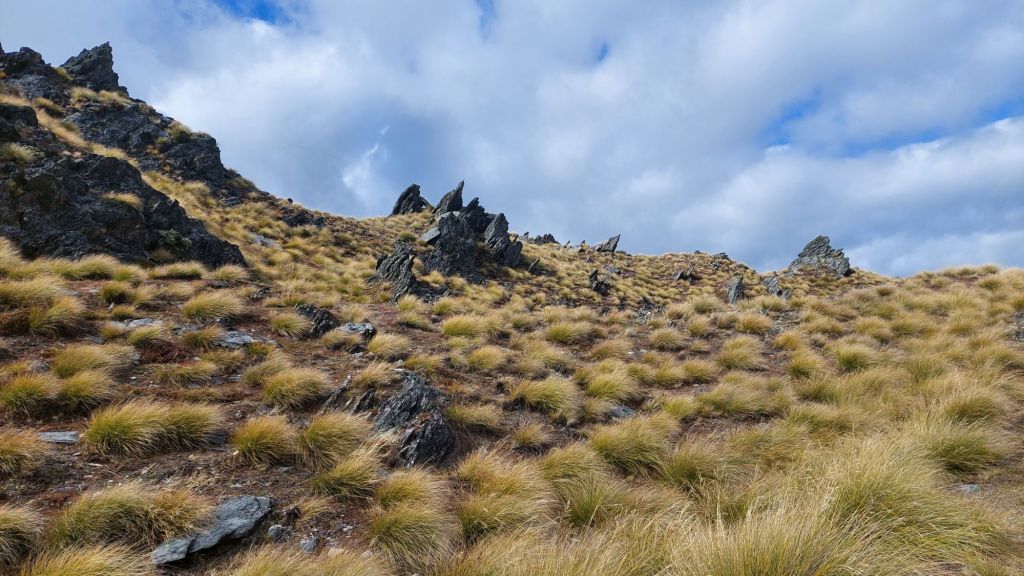
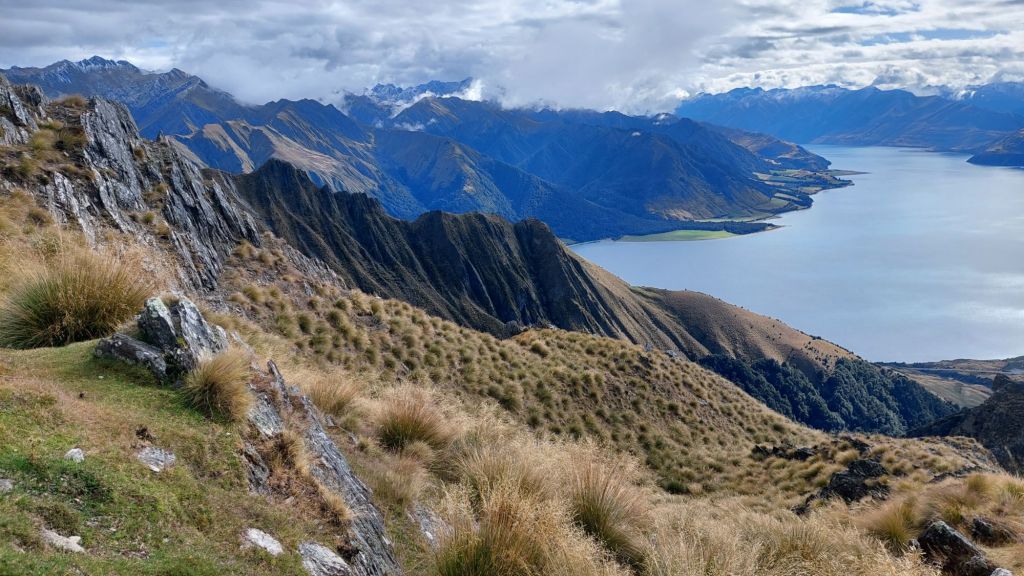
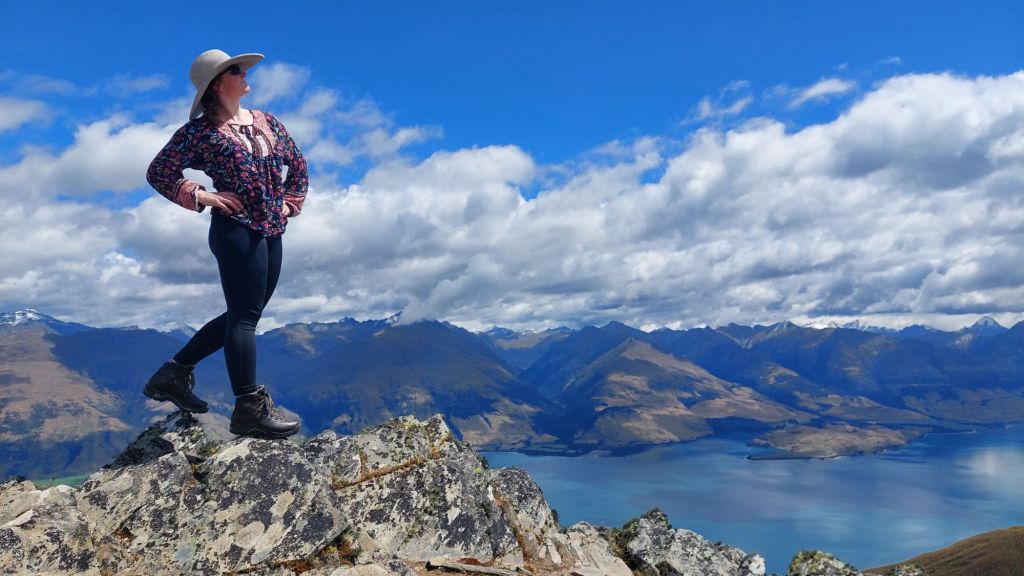
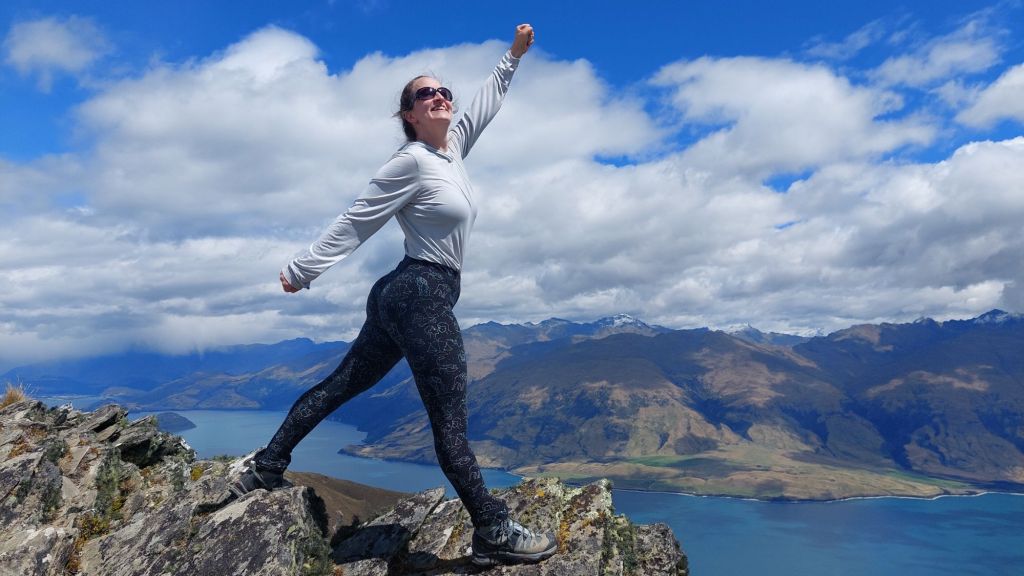
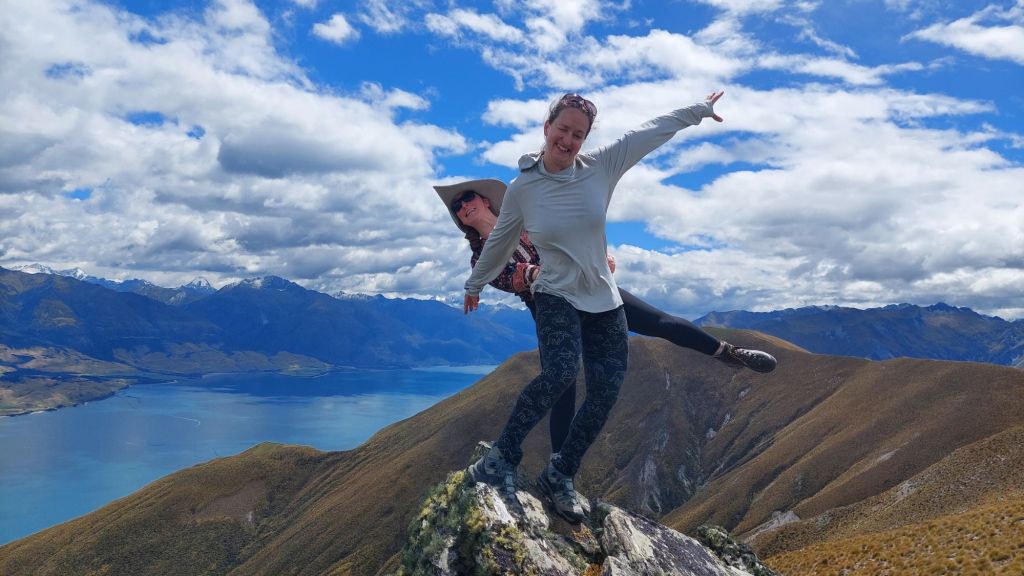
The rock poked out of the hills at jagged angles. It looked like schist or something similar.Razor sharp rocks!We climbed from Lake Hāwea and there were eastward views the whole time.We had the trail almost to ourselves on the way up, and were the third party to reach to summit.From the top, we could see both Lake Hāwea to the east and Lake Wānaka to the west.RockStars“So you wanna be a rap superstar And live large A big house, five cars, you’re in charge Comin’ up in the world Don’t trust nobody Gotta look over your shoulder constantly”
After our detour in search of a bit of privacy for our rockstardom hilarity (which we totally laugh at other people for doing in public), we headed down.
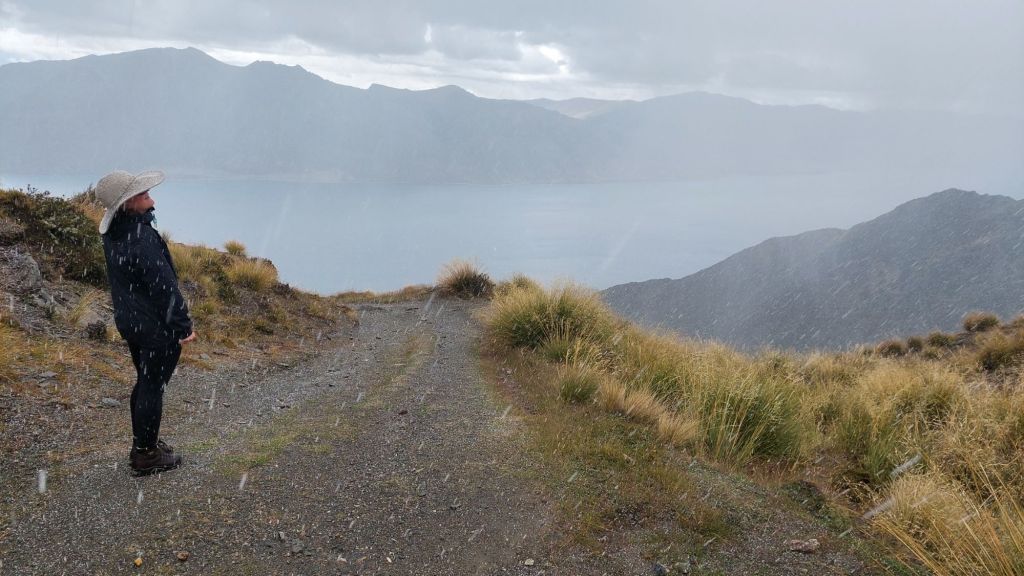
Snow!And a brief hailstorm…
We collected mum and some ice cream from town before heading home to the bunkhouse.
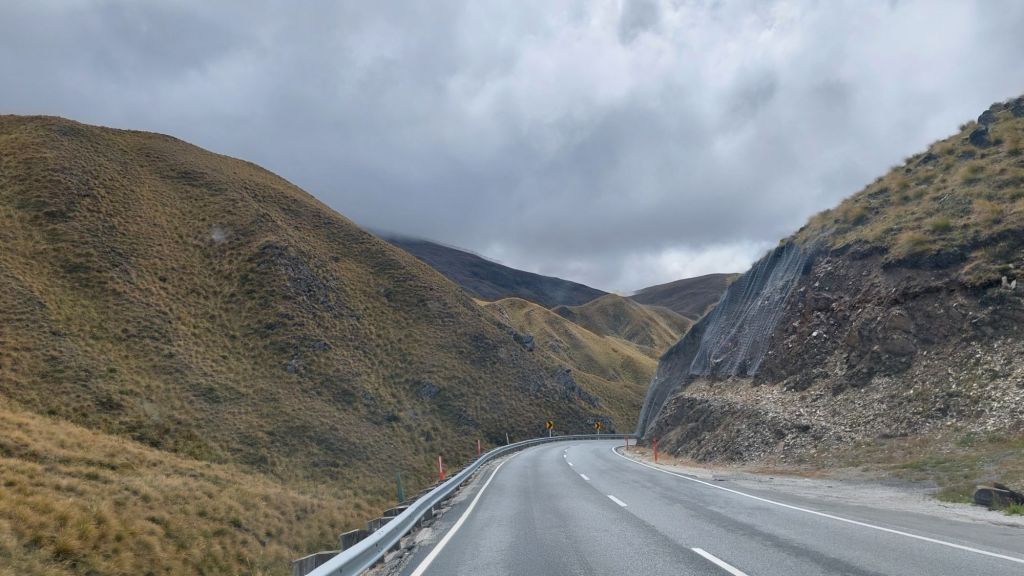
A quieter catch-up day. We headed north to Wānaka through a scenic pass.
There is a flatter highway route we could have taken instead, but this was more fun.
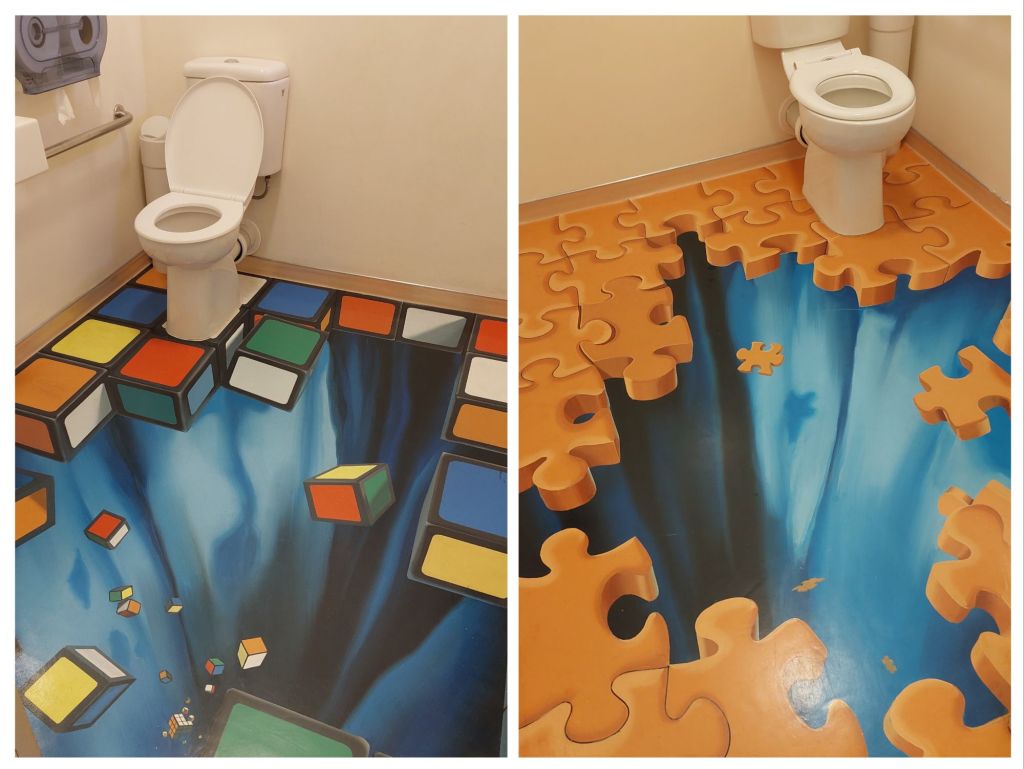
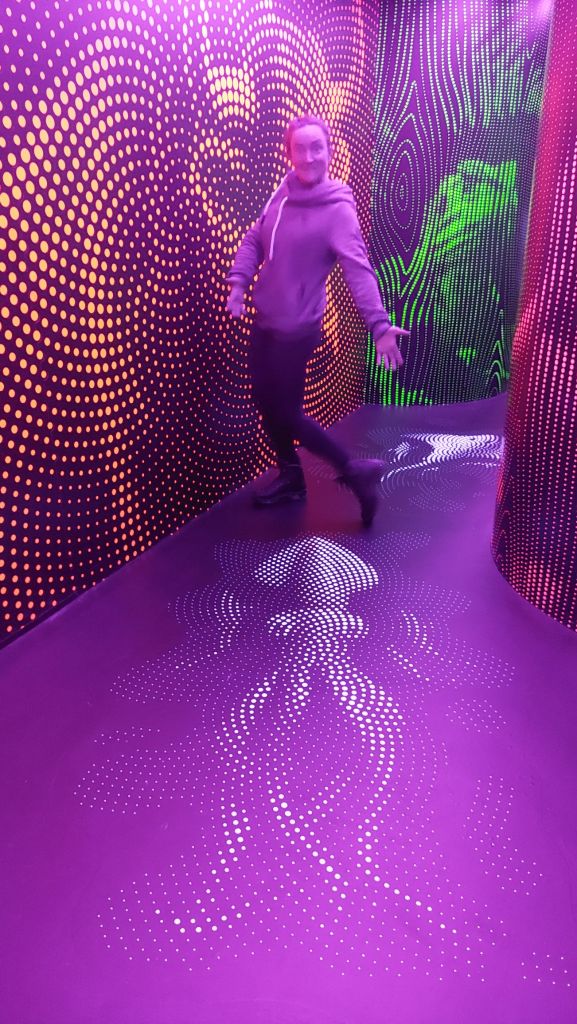
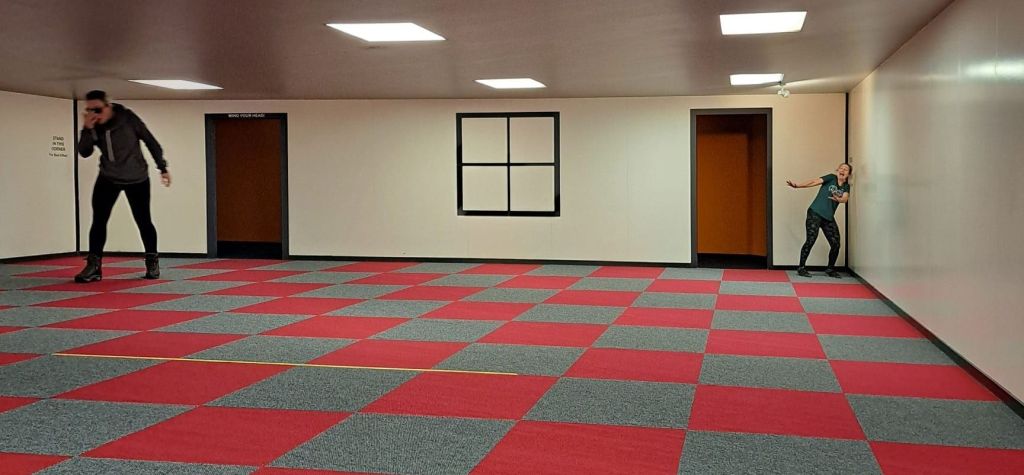
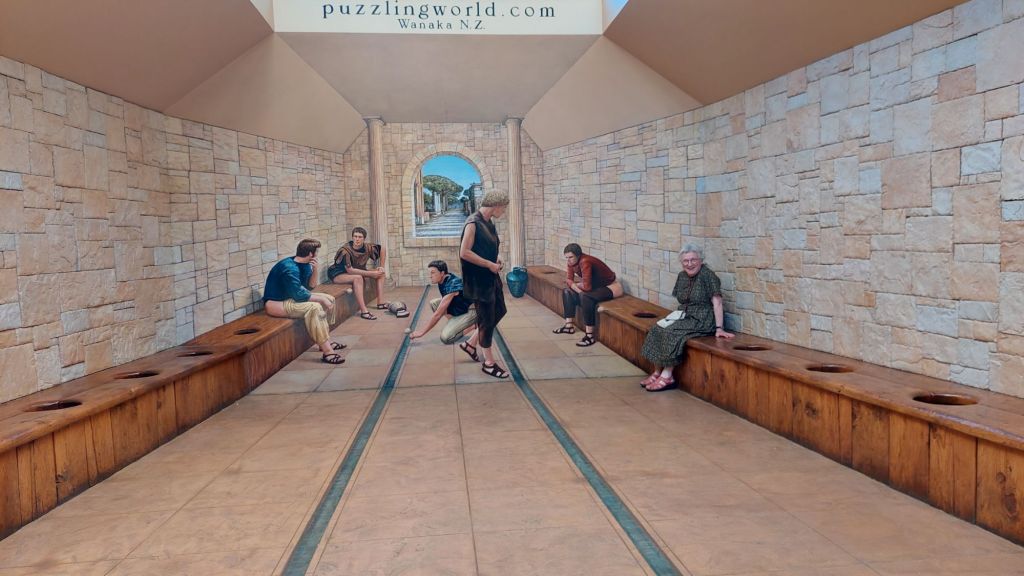
We stopped at Puzzling World in our way in. We could have spent all day just on the puzzles on the table in the lobby, but made it through the illusion rooms.
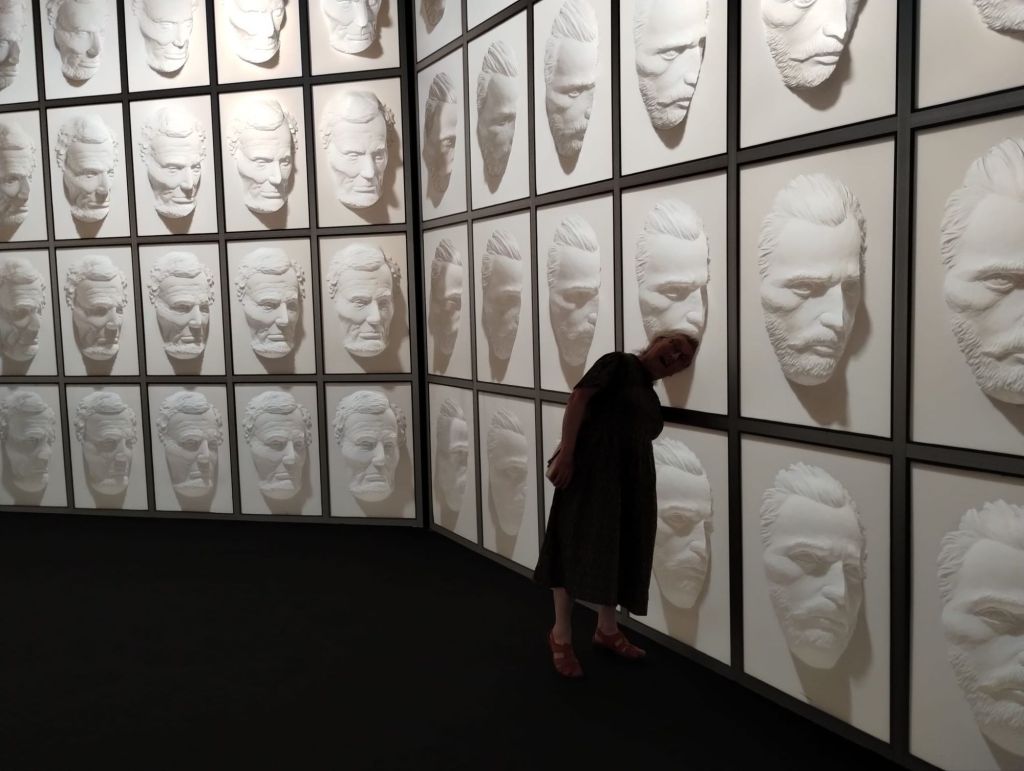
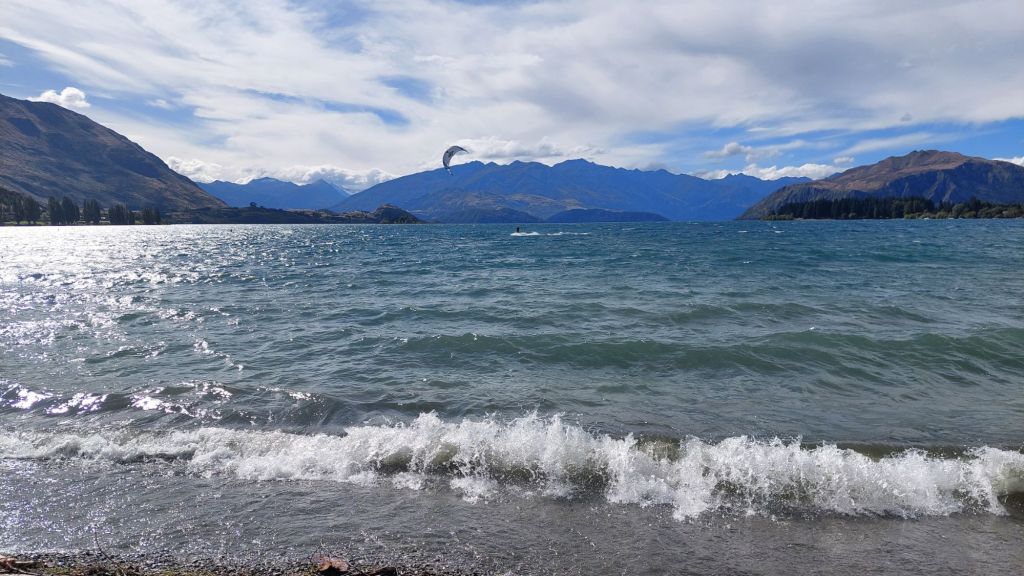
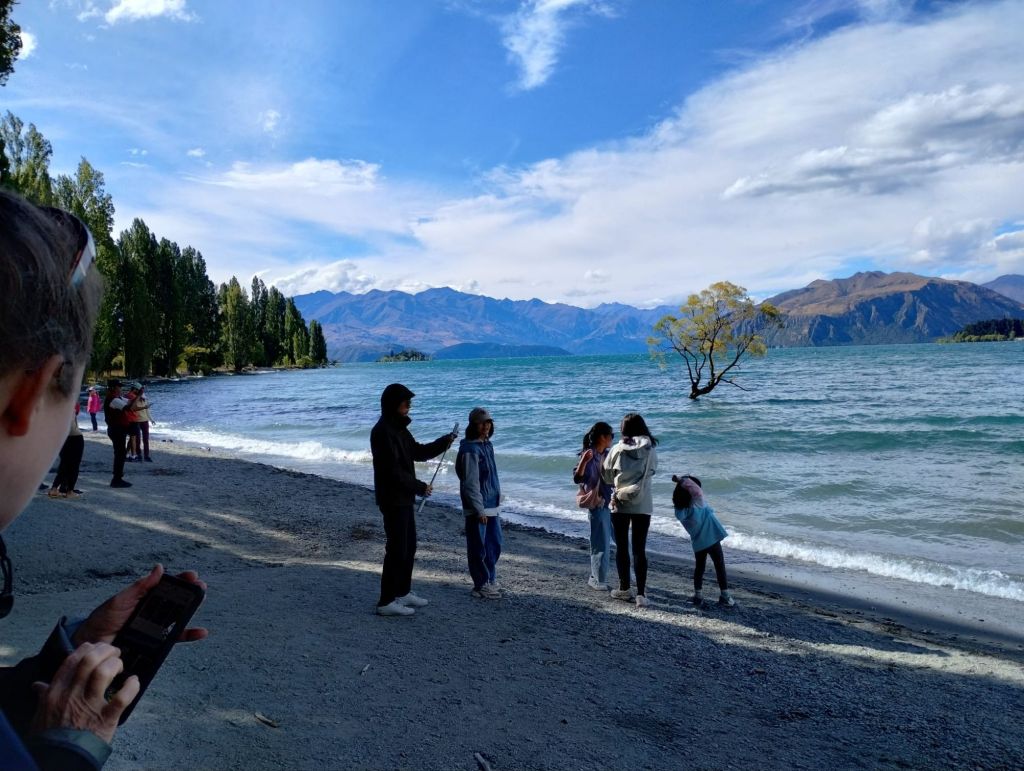
At Puzzling World, only the brave use the toilet.This interactive art installation is designed to be viewed with your phone. It’s much easier to see the creatures through the camera.Perspective mattersShe must be peeing right through her skirt! What a heathen.Are they ‘innies’ or ‘outies’?Wind+water sports are a good combo for wānakaWe visited #ThatWanakaTree and its admirers. Look closely, and you can see the shag on the trunk!
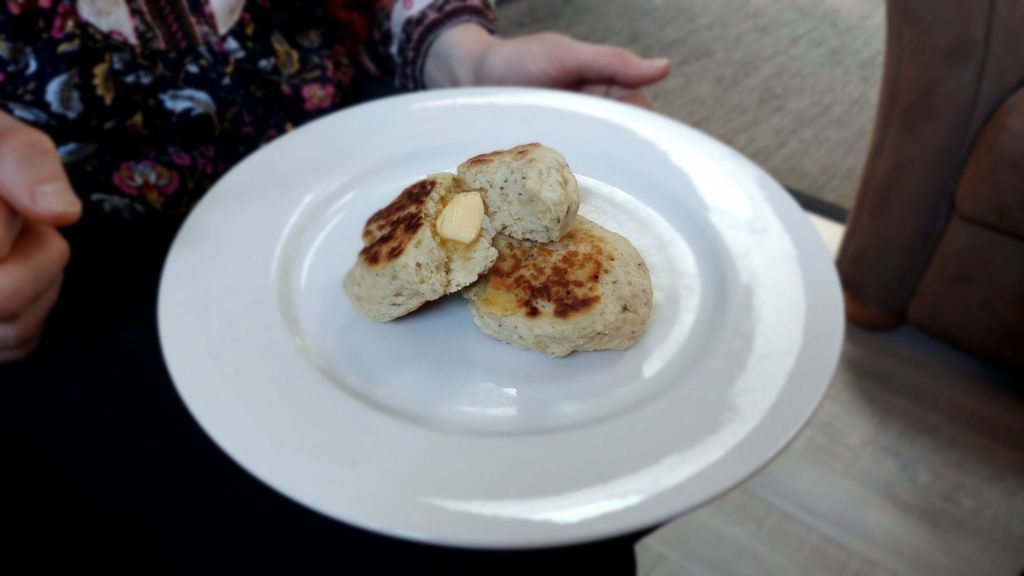
Then, a grocery run to get hiking supplies and so that the scone master could create again in our compact airbnb in nearby Albert Town.
This time, cooked with no oven at all! (Electric frying pan for the win.)
We had a lazy morning to make up for a few short nights, and then wandered out in search of birds.Metal bird, sighted in its natural habitat.
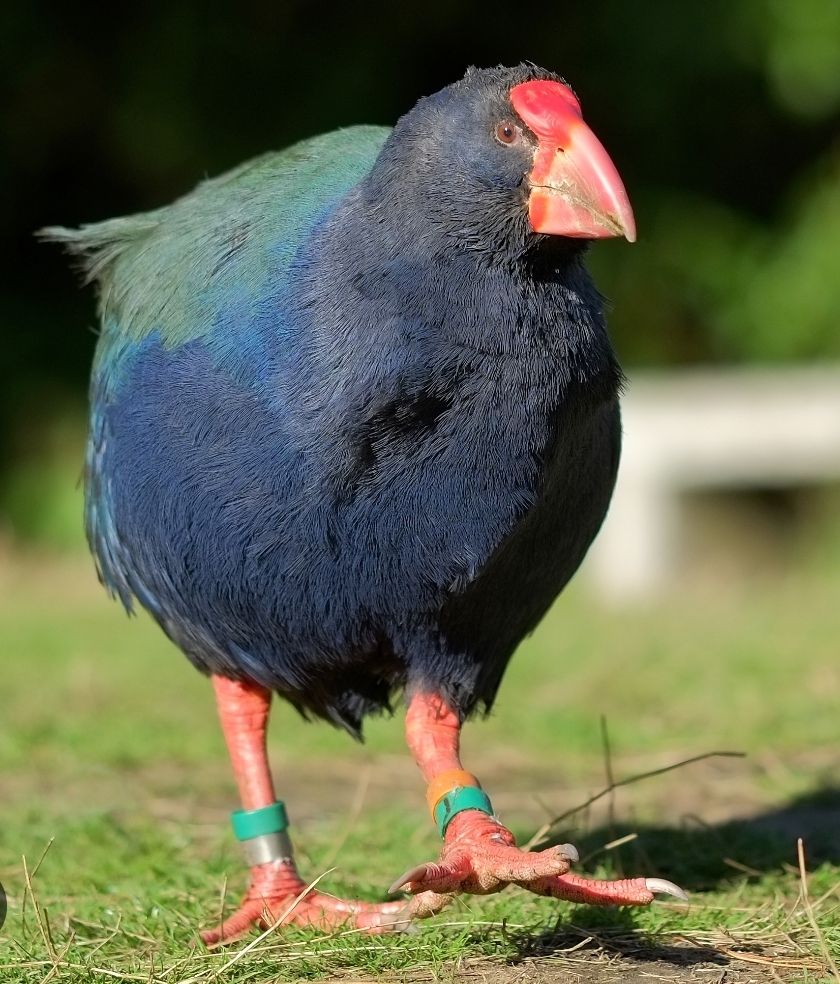
As I’ve already mentioned, there are a lot of unique birds here thanks to the lack of endemic mammalian predators. Today we got to see a few (bird photos are mostly from DOC website – you’ll see why when you see the photos I did take!):
Takahē
Takahē – a large (3kg) ground bird (specifically a rail). They were thought to be extinct until 1948 when a population was found in fjordland. They are at risk because of egg predation and competition for food from deer. There are now back up to 300 individuals. We watched a couple tromp around and eat grass together. (Apparently they eat, and poop, a LOT).
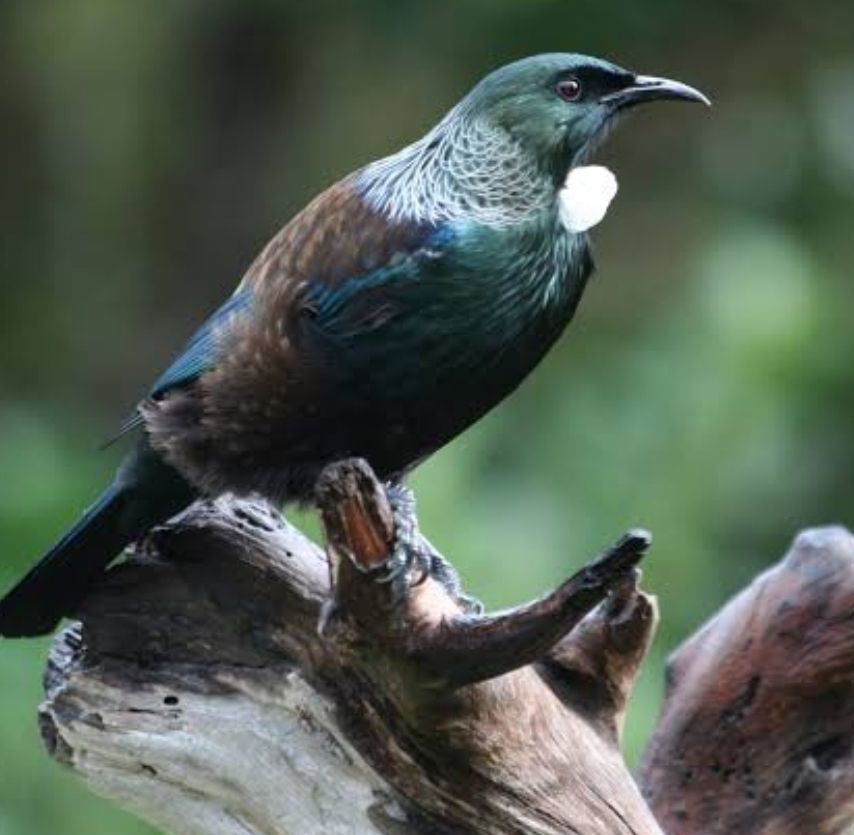
Tui
Tui – medium-sized bird with distinctive white neck frills. They are important pollinators of flowering plants and some fruits, and they aggressively defend their territory (even just part of a tree). They are not threatened. We watched them fly, call, swoop, and dive.
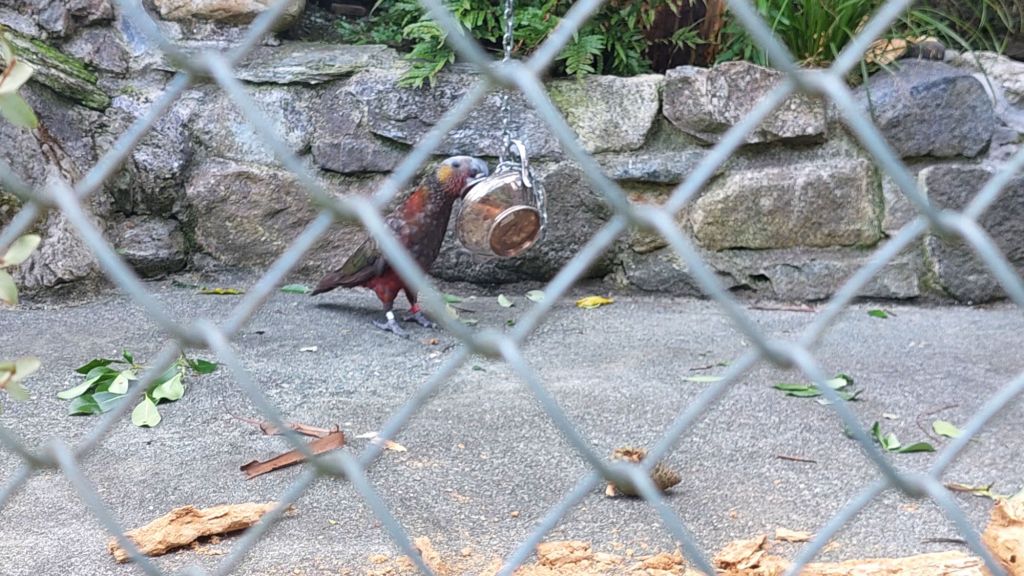
Rata the Kākā
Kākā – a chatty, medium-sized parrot. They are endangered because mums and their eggs/chicks are found in ground-nests. We watched Rata open a teapot on a chain looking for treats and dismember a tree cone.
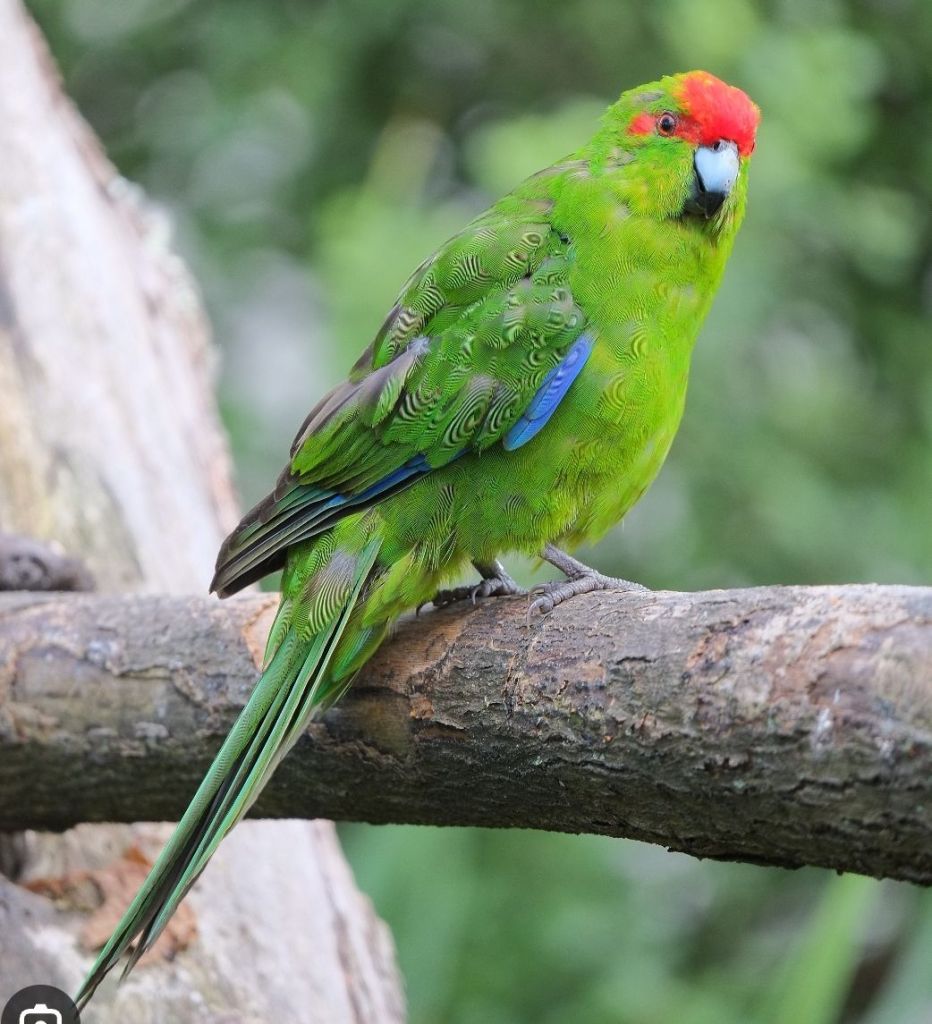
Kākāriki
Kākāriki – bright green parakeets. Varies by sub-species, but very rare, only found on islands free of predators, as they are vulnerable during nesting like the Kākā. We watched them hop, eat, fly, and preen.
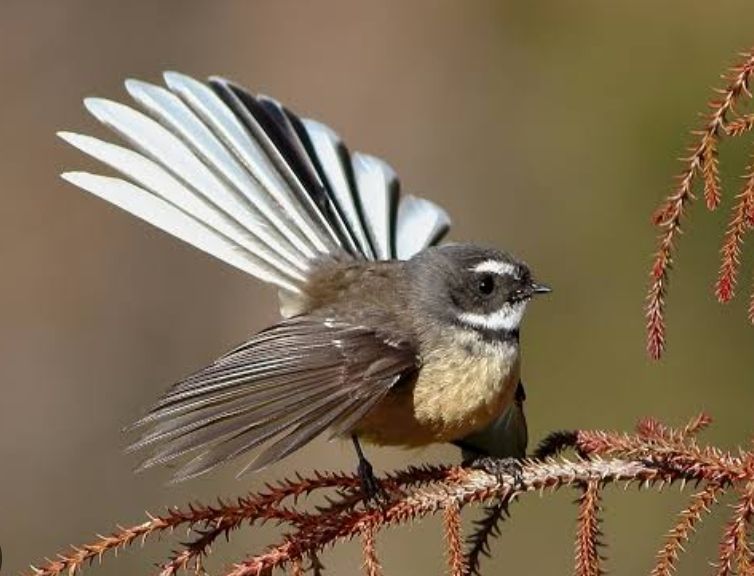
Fantail
Fantail / Pīwakawaka – small, fast, insectivorous songbirds who sometimes follow humans down the trail because we stir up the insects they like to eat. We watched them do just that.
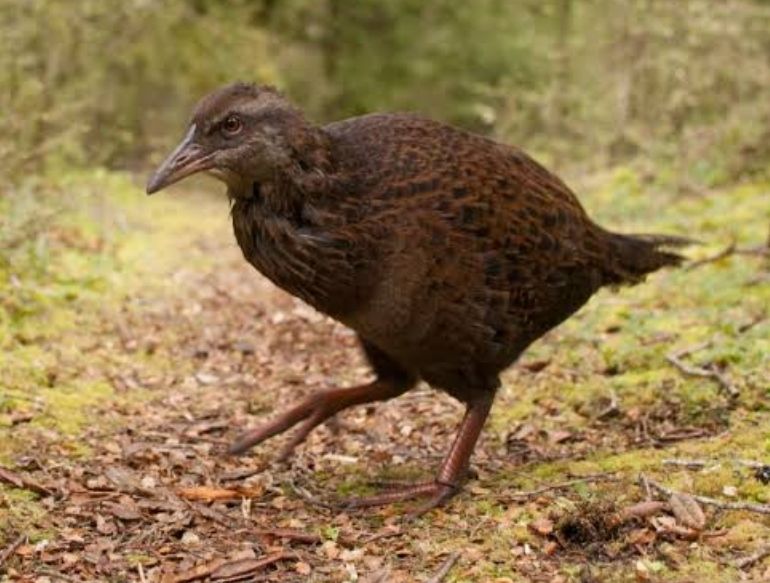
Weka
Weka – a large flightless rail. Threatened depending on subspecies. We saw one running around with a dead mouse in its bill at our DOC Cascade campsite; it dodged a dive bombing raptor of some kind, and continued on.
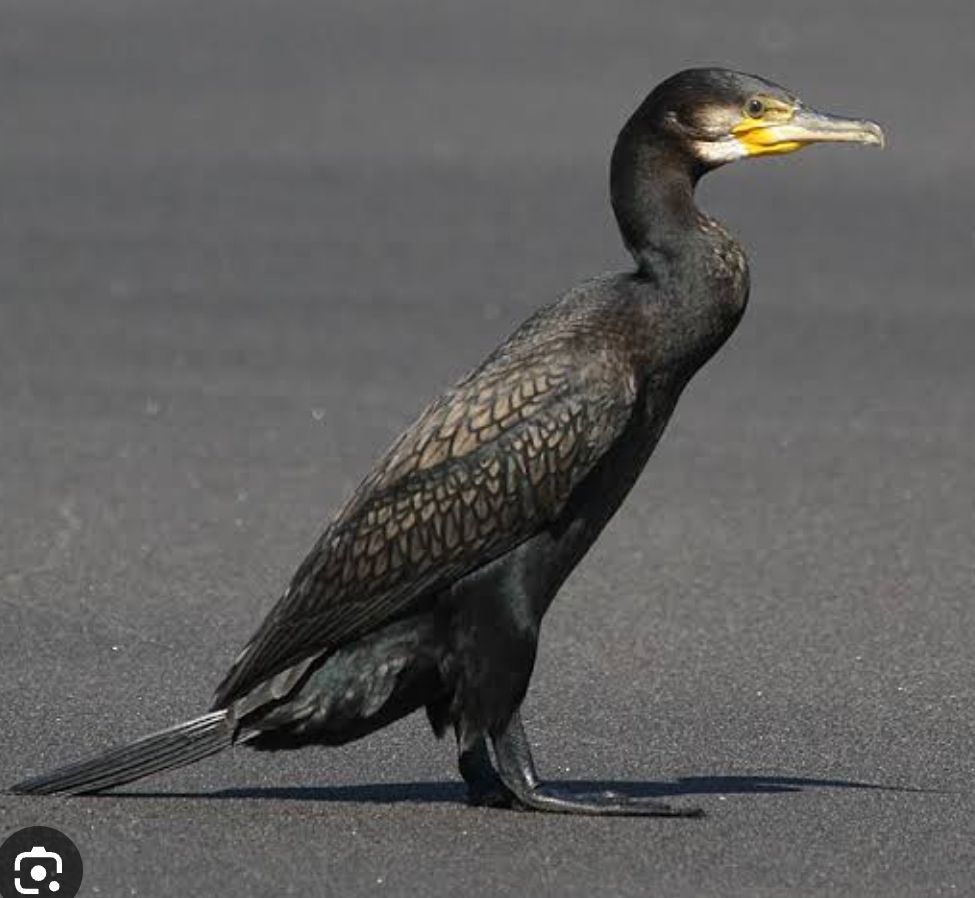
Shag
Shag – a smaller cormorant-like fish-eater. Seen along Queenstown’s shoreline, in Milford Sound, and getting lots of instagram traffic by perching on #thatwanakatree (yes, that’s me mentioning things from the future because I’m a few days behind with writing this).
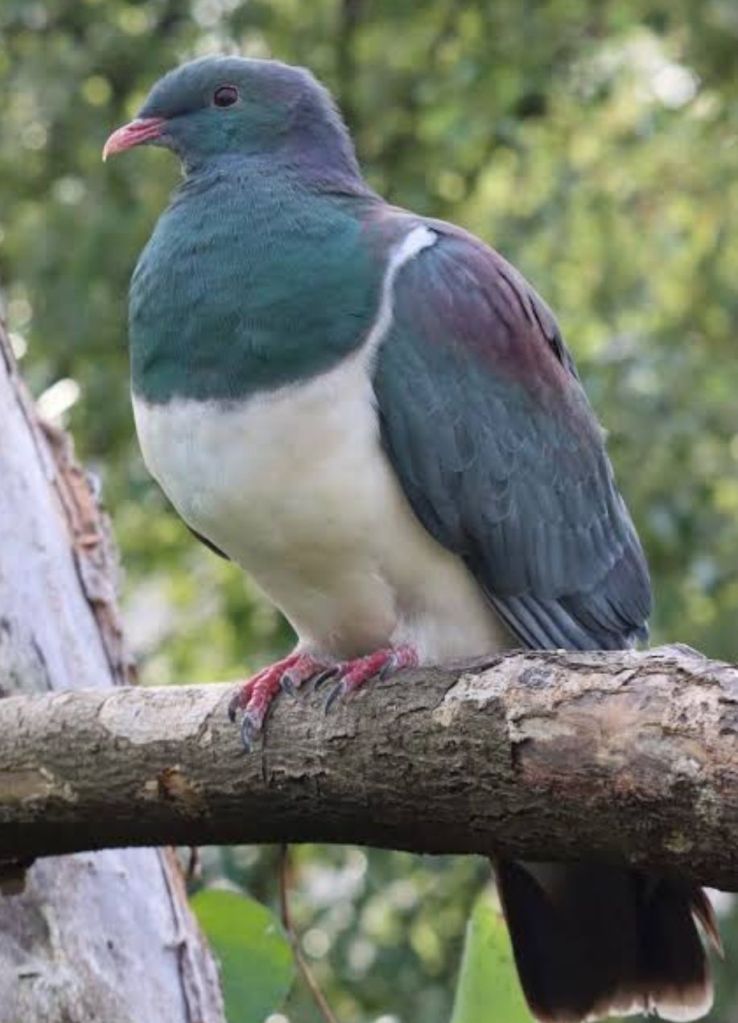
New Zealand pigeon / Kererū
New Zealand pigeon / Kererū – large (650g!) pigeon with irridescent plumage and a distinctive white apron. We watched them fly around in the trees up to Marian Lake and around Te Anau.
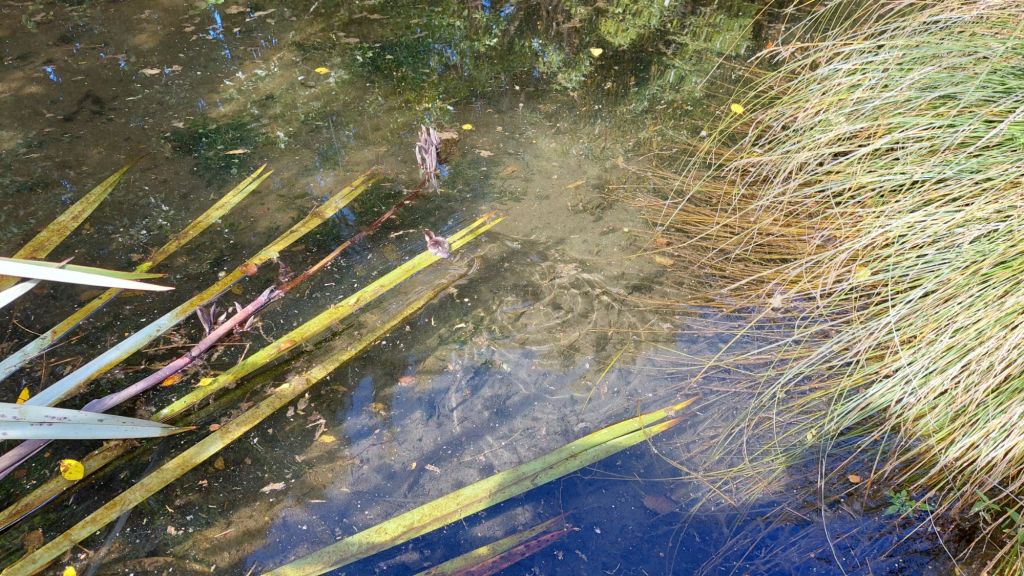
We also saw these cute ducklings diving for food, but I couldn’t identify which kind of duck they were confidently enough to include them here.
Our wishlist of birds to see includes: Penguins (there are several species) Kea (very smart parrot) Kiwi Moa (… womp, womp, they’re extinct, but as Flis points out, people thought the Takahē were, too)
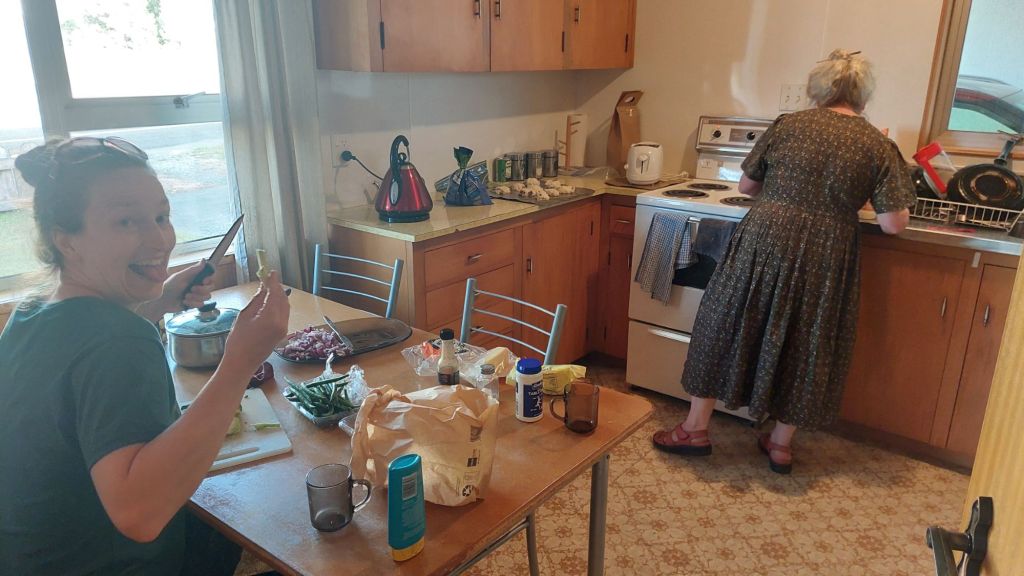
Cooking supper in the kitchen full of mid-century relics… unfortunately, the bottom burner of the oven did not work.
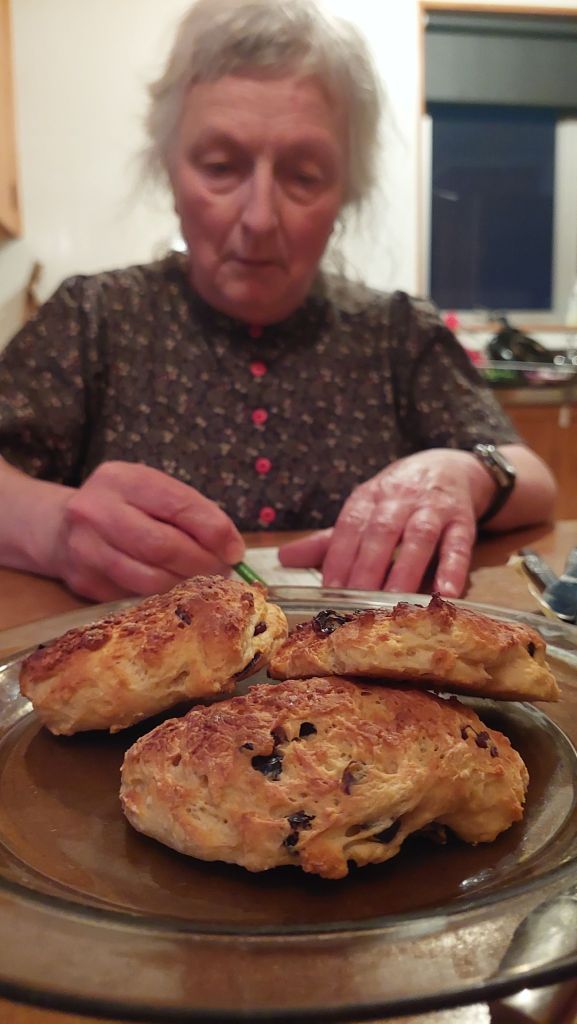
With the oven going less than half strength, roasting potatoes and baking scones took soooo long that our need for entertainment exceeded what Yahtzee and wine could offer. “It Only Thunders When it’s Raining” dance moves to the rescue!
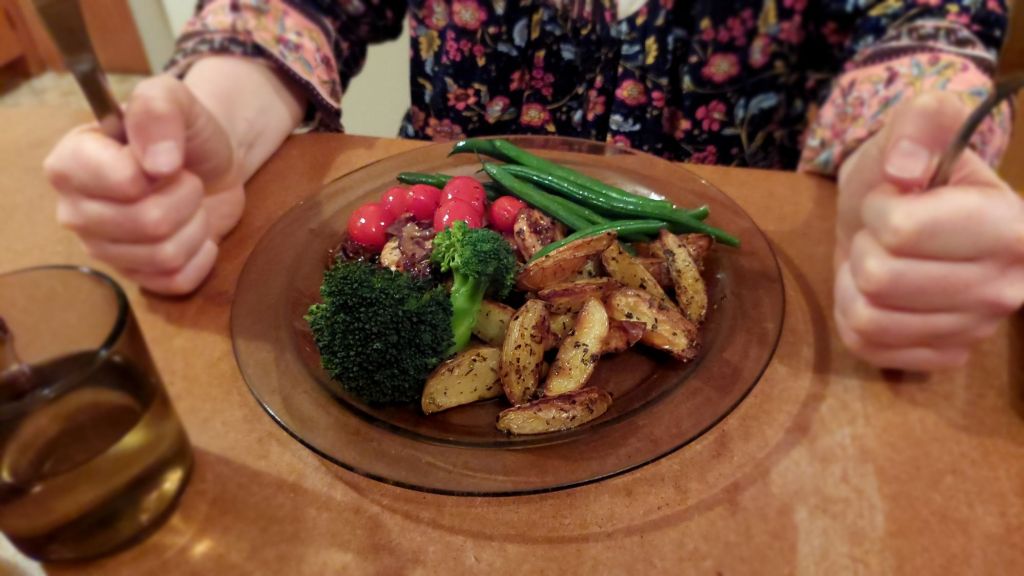
Eventually victorious over both scones and Yahtzee Dinner at last!
Jan 31, 2024: DOC Cascade Campsite on Milford Rd -> Te Anau
Today was another full day.
We were up at the crack of doom, and on the road to get to Milford Sound for 7am kayaking.
We had signed up to kayak before the wind kicked up (day breeze predictably makes for windy conditions every afternoon). The access road is no joke.
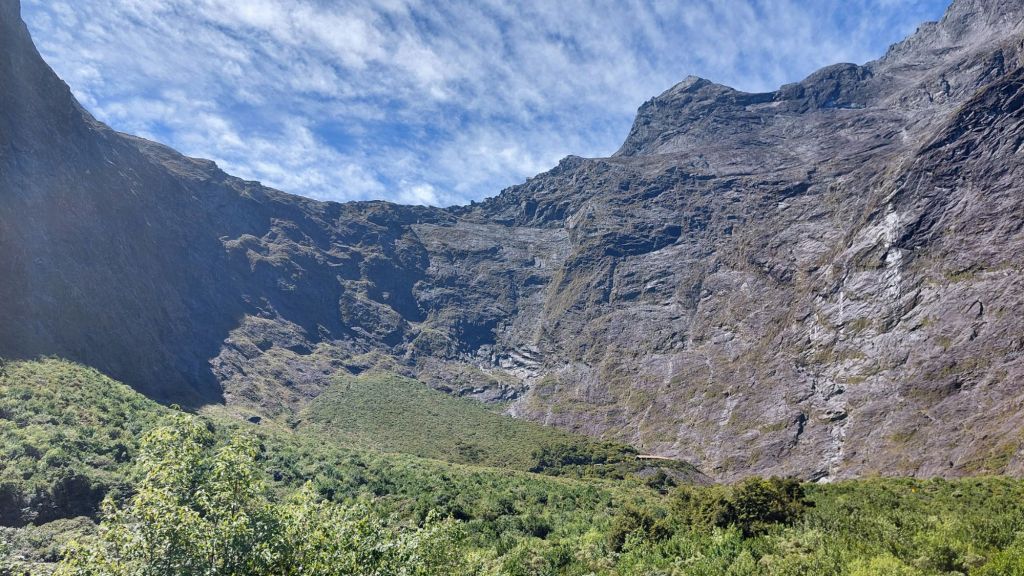
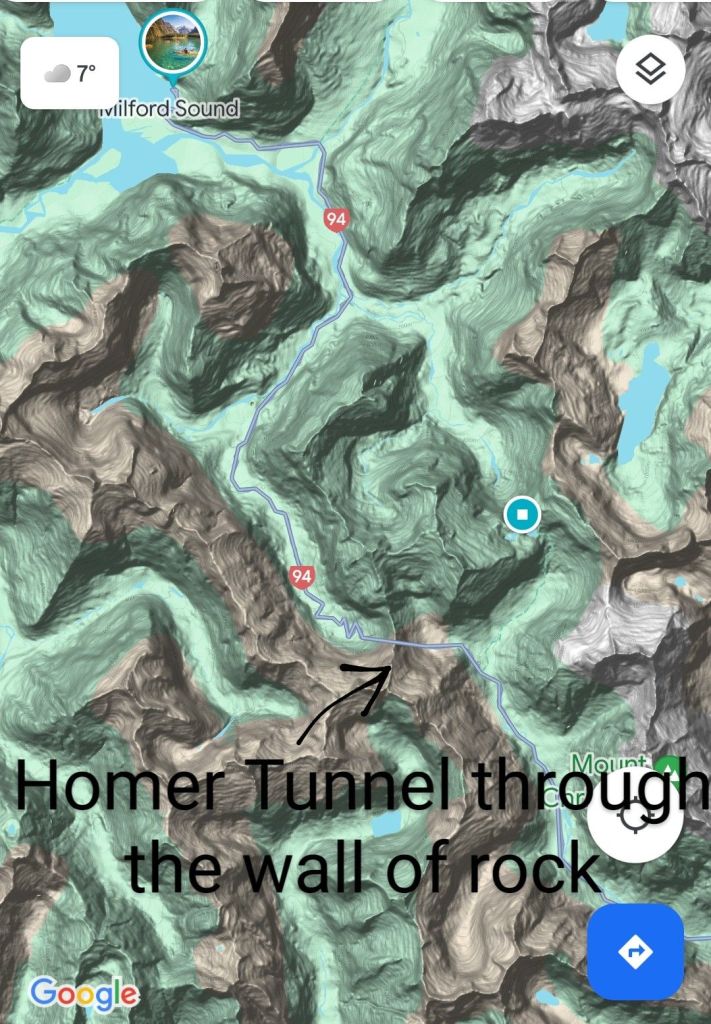
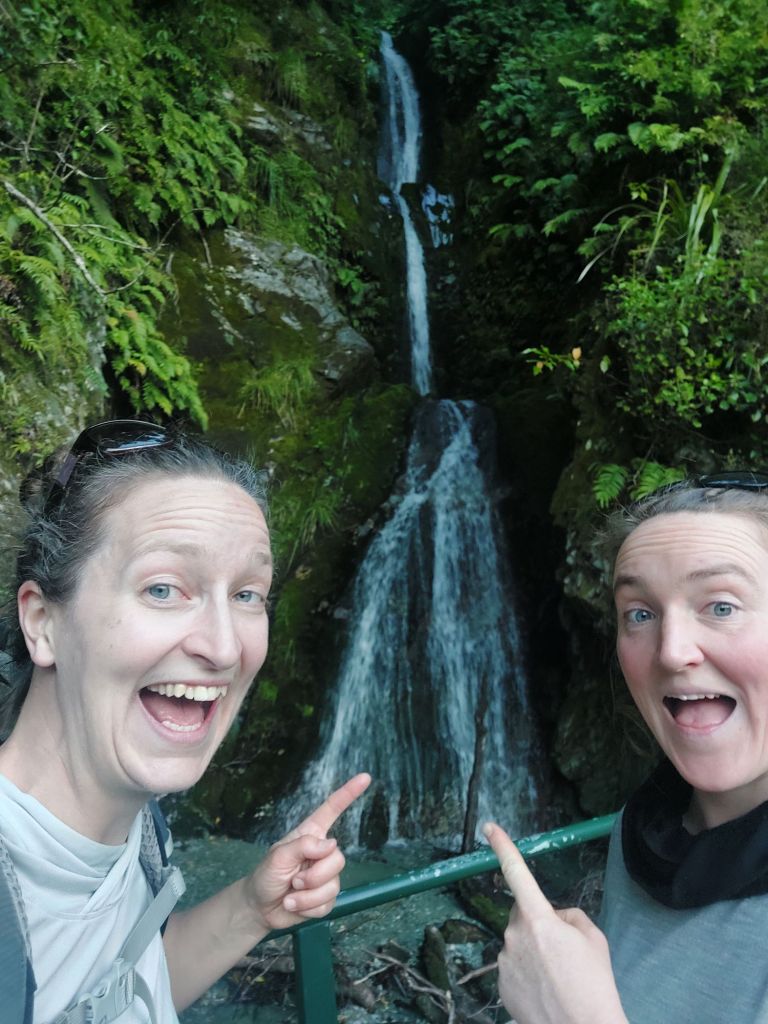
There is a massive wall of granite (Darran Range) between the valley where our campsite is and the head of Milford Fjord*. (How would you cross this??)Through this wall goes the Homer Tunnel at 945m above sea level. (Points if you can spot the opening in the photo above!)It took 19 years to build and was opened in 1954.
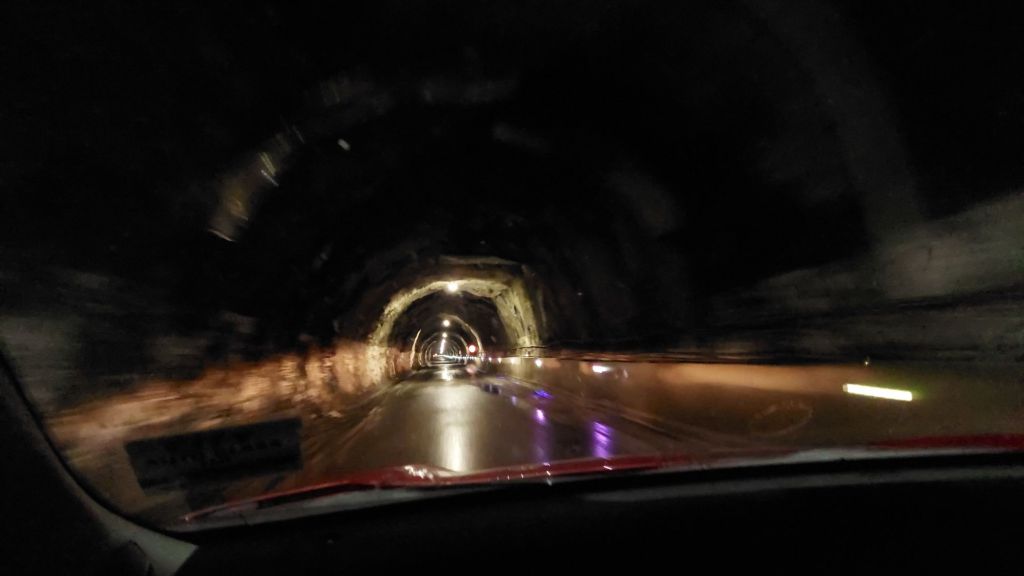
We ascended to the wall, then descended steeply through the 1.2km tunnel, and continued down many switchbacks to sea level.
We arrived early for our kayaking excursion as the alternating one-lane lights sending batches through the tunnel were in our favour. The thing about being early is waiting, and although waiting is usually fine, waiting in Milford means dealing with “sandflies”. These are actually black flies and were added to the region by Hine-nui-te-pō, Maori goddess of the underworld, “to remind humans of their frailty and mortality”.
We paddled doubles. I knew this in advance, so wasn’t sad, but still made me miss my kayak!
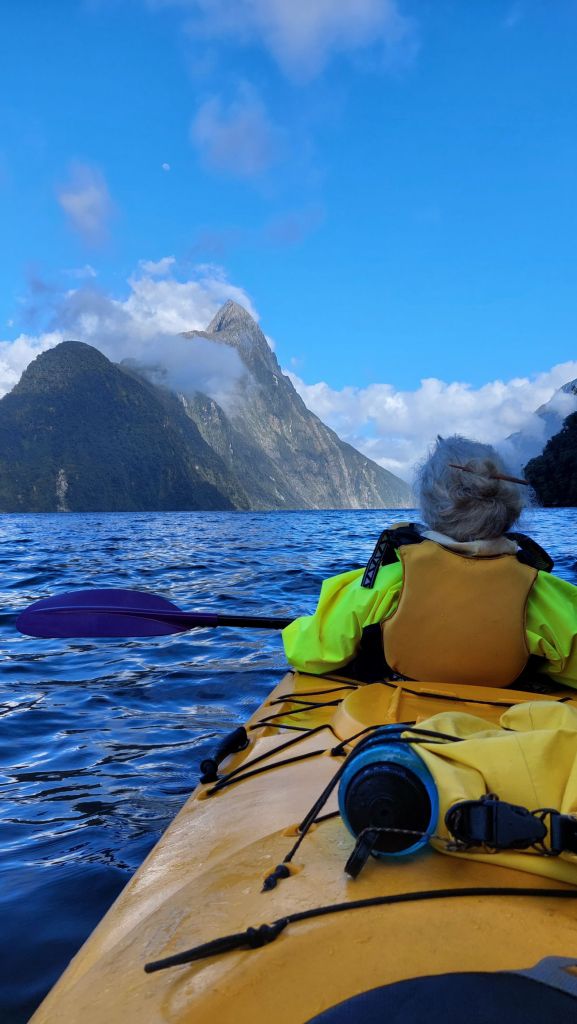
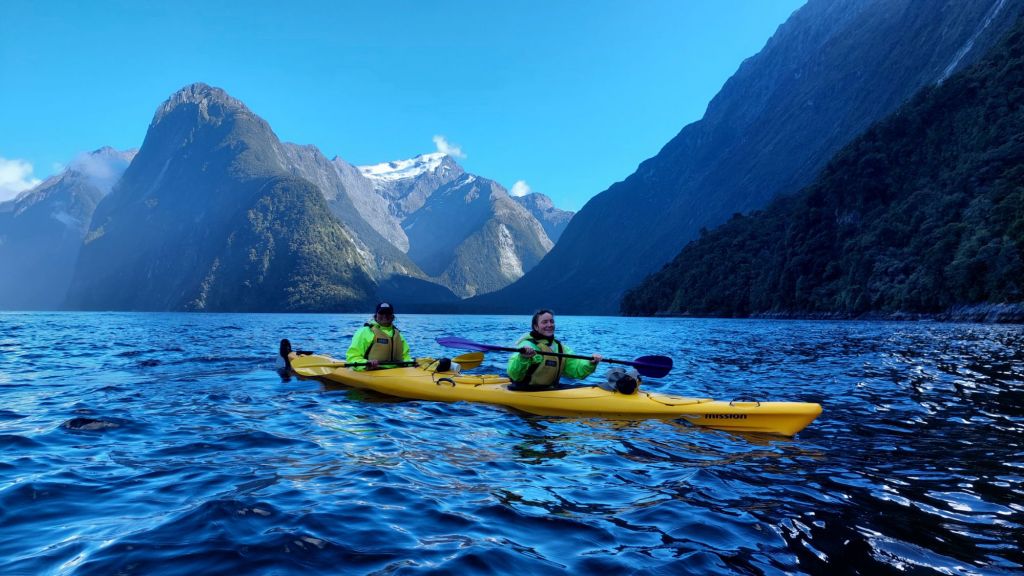
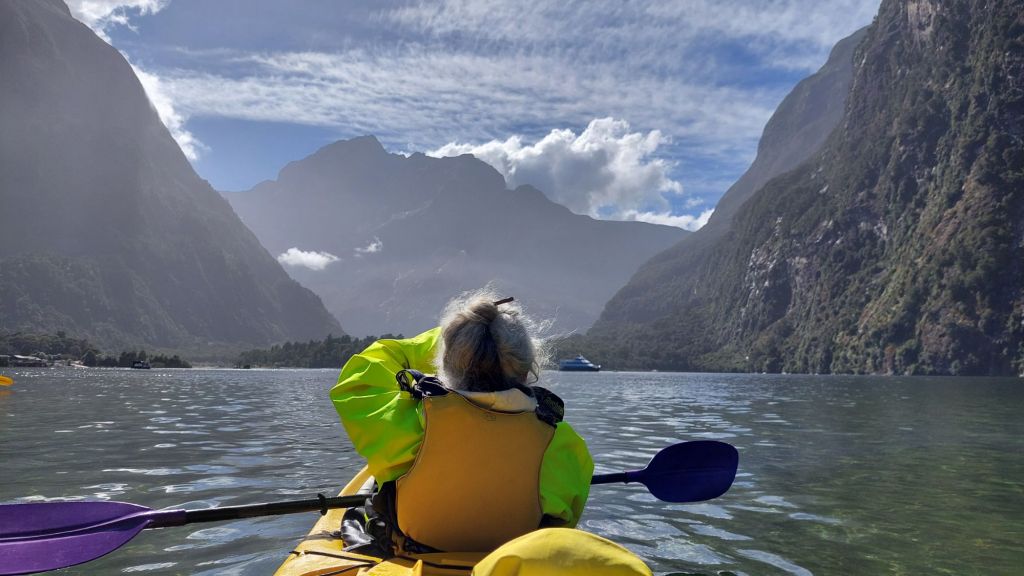
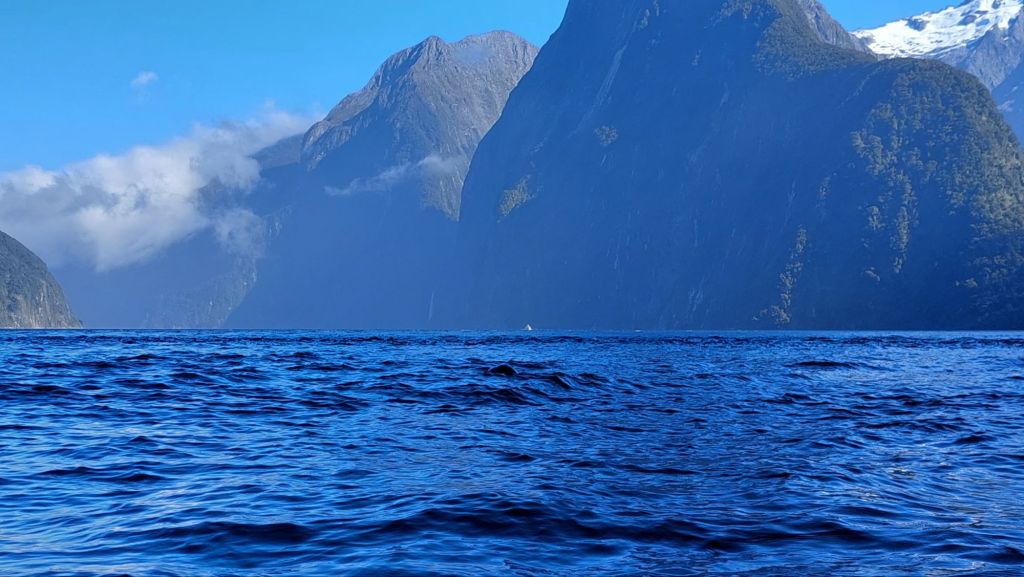
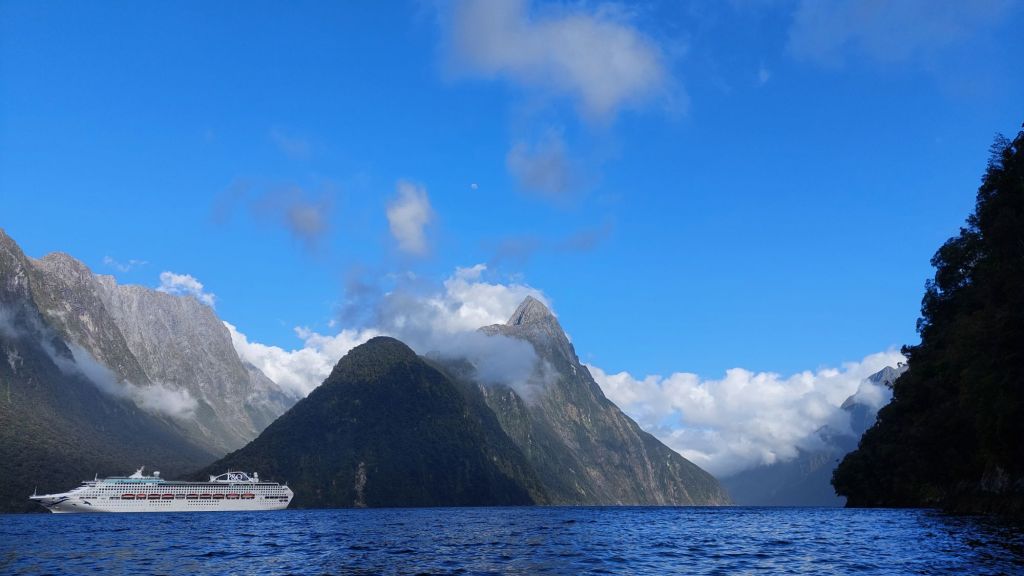
We visited the famous Mitre peak (shown with mum and moon)… and the nearby Lion, and Elephant (those are the mountains in the background, not the kayakers, just to be clear!)Not all the kayakers in our group were as keen as us – mum and I were the speediest by an alarming margin.Despite this, we enjoyed watching fur seals (that curving lump in the middle is a seal, I swear!) playing and eating…… and a cruise ship practicing pirouettes.
My snazzy water filter got some more love as I talked M and F into hiking up to Marian Lake. This was the lesser of my two shortlisted hikes, and I’m glad we hadn’t embarked on the longer, steeper option.
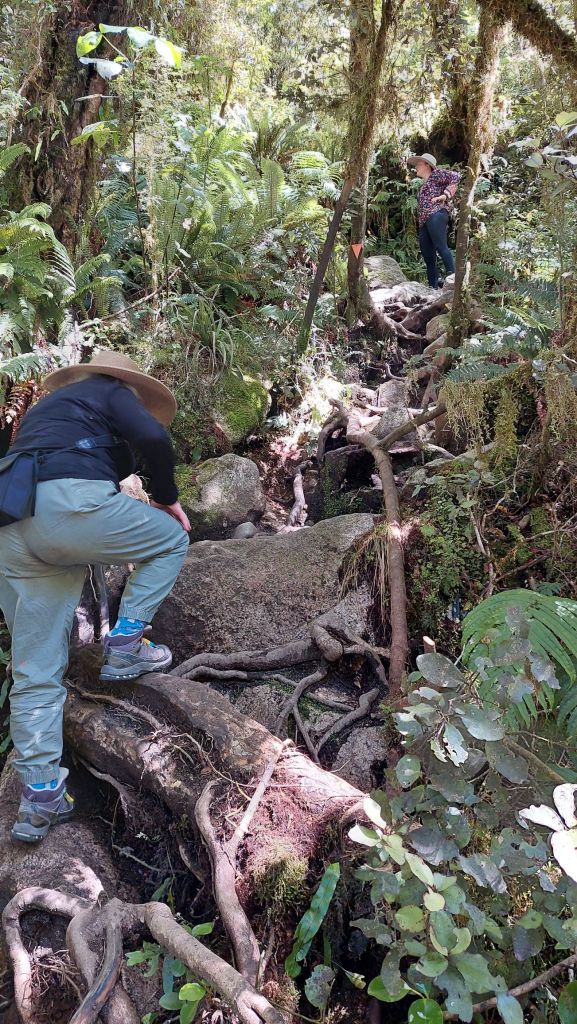
As it was, the trail up to Marian Lake was tougher and more technical than anticipated (possibly something to do with being up since 5 and already kayaking for 3 hours beforehand).
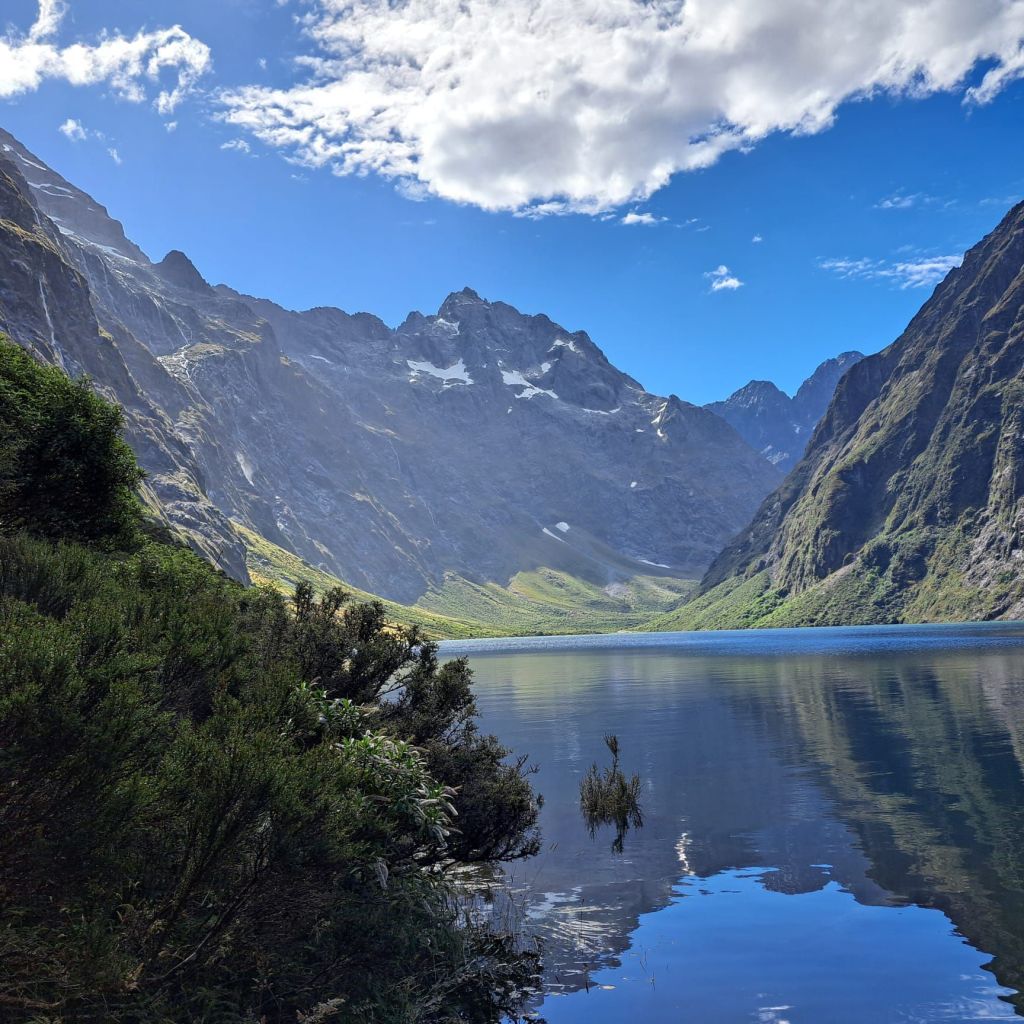
But, it was worth it for the spectacular views and awesome swim that awaited us at the top. Despite being a glacier-fed lake, we were not the only swimmers thanks to swimming (or at least committed wading) being required to see the views.
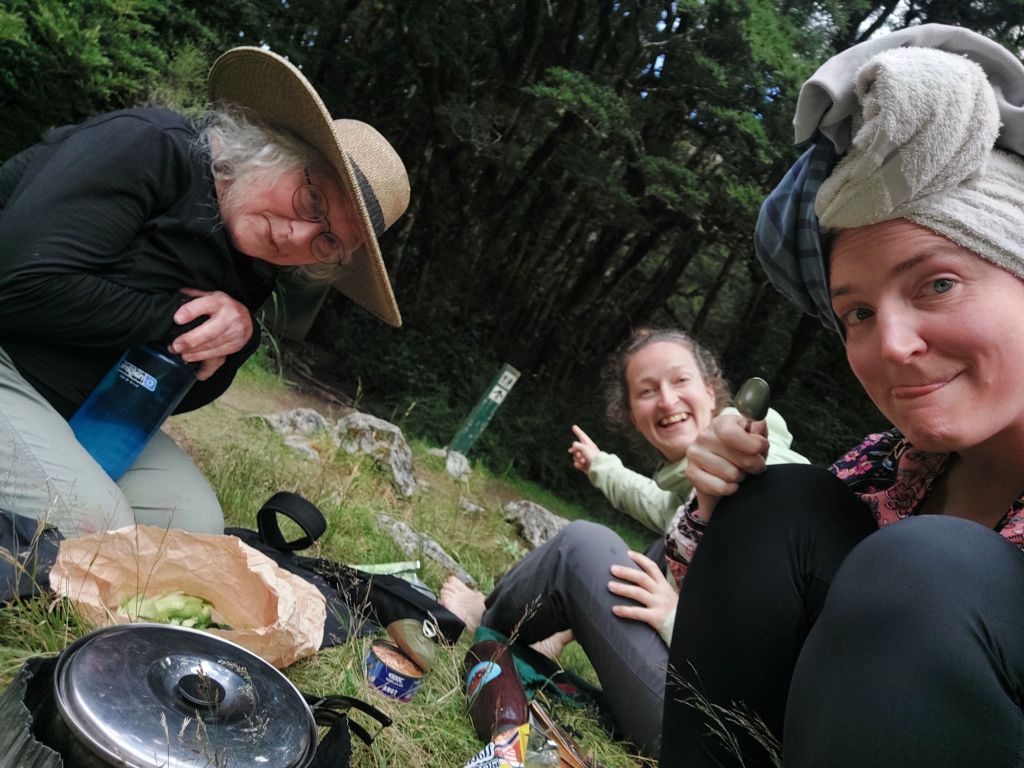
There was no clear area at the lakeshore, and no beach space from which to enjoy the view.The only flat spot in which to have our elaborate (hot soup!) picnic was… not a very classy one.
We have had spectacular luck/timing with weather so far.
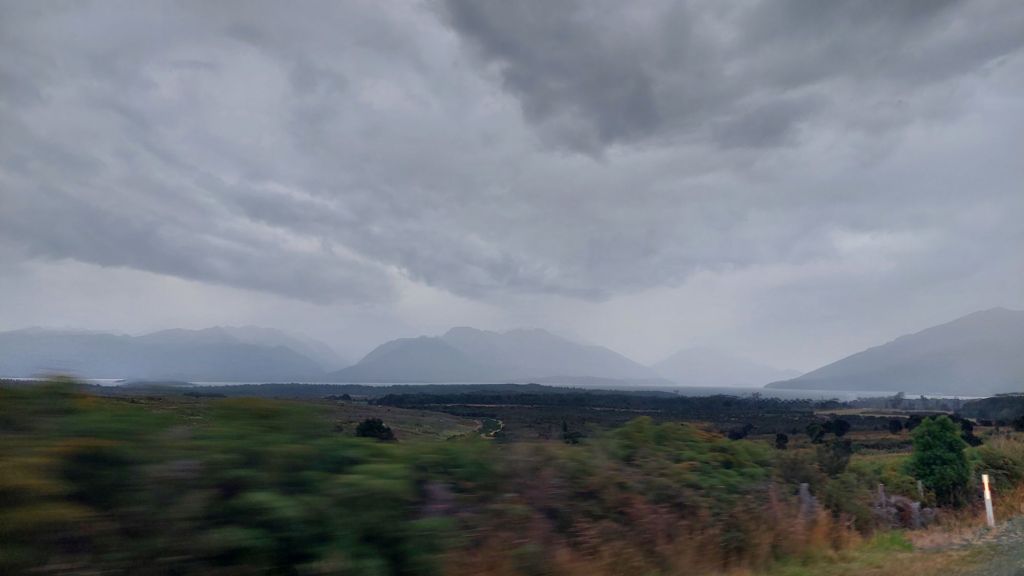
It started rain once we were in the car to Te Anau.
Alice
*Fjord vs Sound. A sound is a drowned river valley (i.e. the sea fills in a valley that was previously eroded by a river). A fjord is a drowned glacier valley, which is the case for Milford, Doubtful, Dusky and many other “sounds” down here – all technically fjords.
Jan 29 and 30, 2024: Manapouri -> Doubtful Sound -> DOC Cascade Campsite on Milford Rd
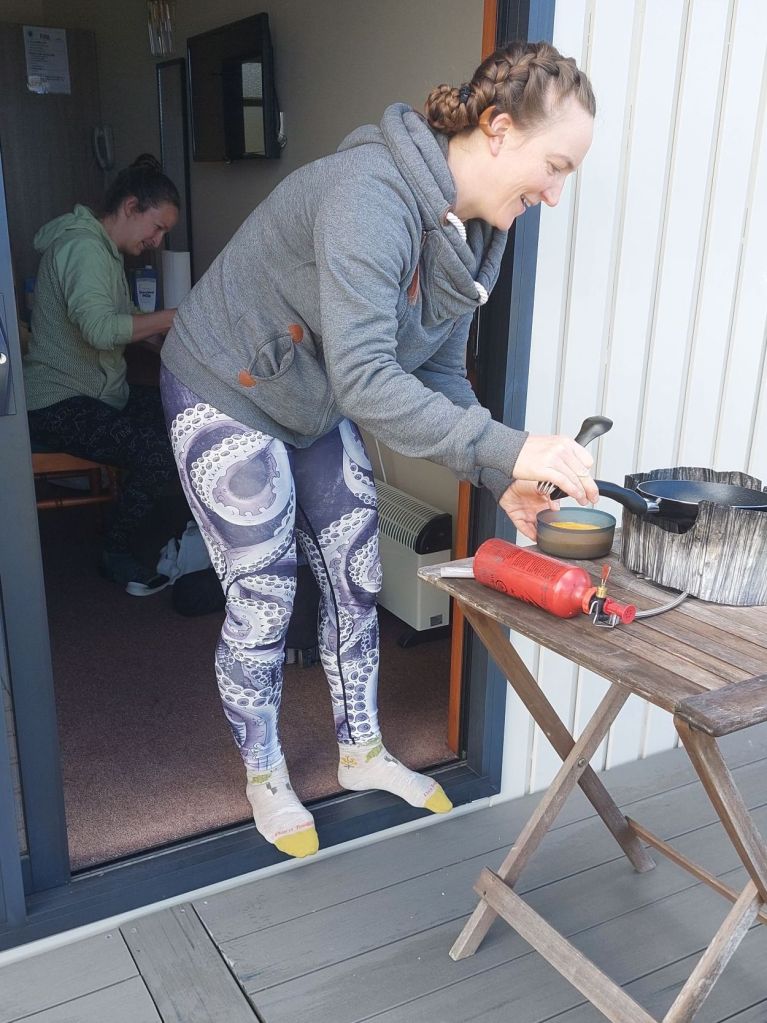
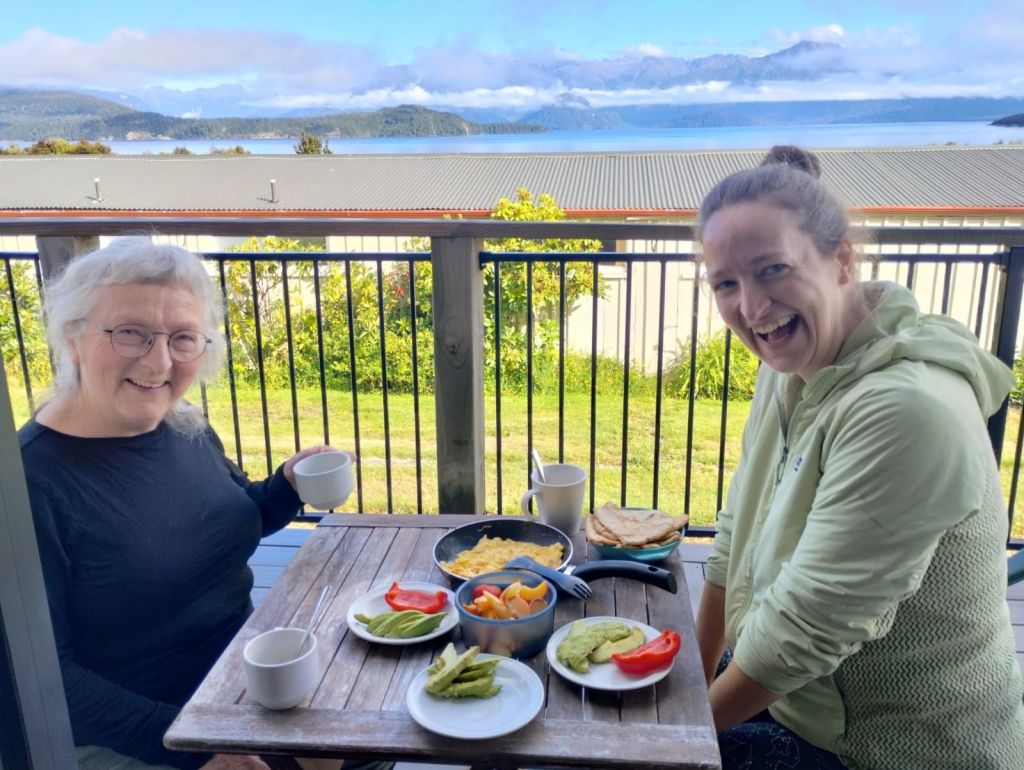
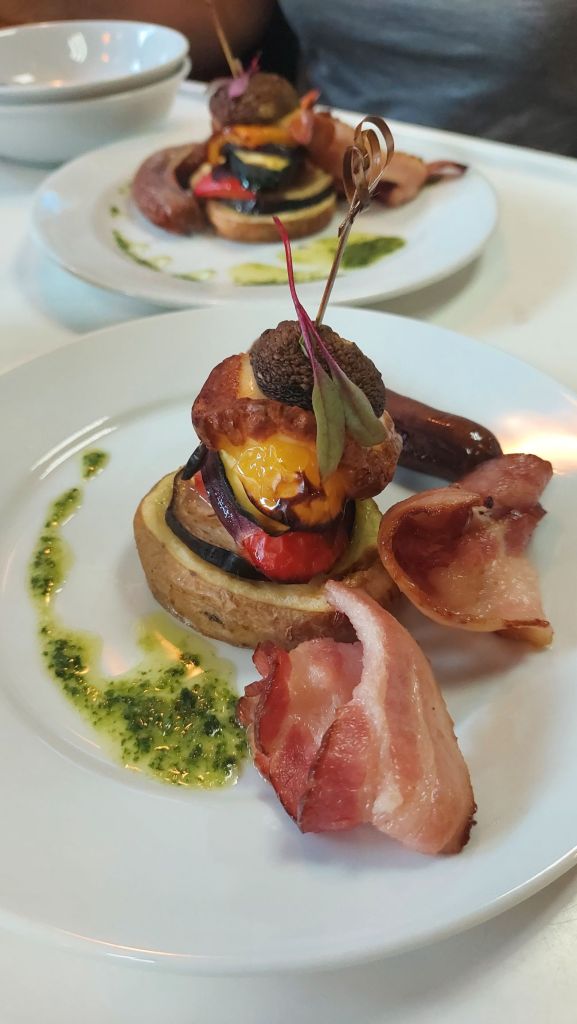
Zero regrets about staying in the motel.We woke to a gorgeous day and had an extravagant breakfast in our improvised patio kitchen, before heading down to check in for an overnight cruise on Doubtful Sound.
After checking in, we went for a walk along the Lake Manapouri shoreline. We found many new ferns, and more of Alice’s exercise regimes. Mum and I were introduced to “Thunder Only Happens When It’s Raining”. For details, see YouTube. (You can also try asking Felicity for a demonstration.)
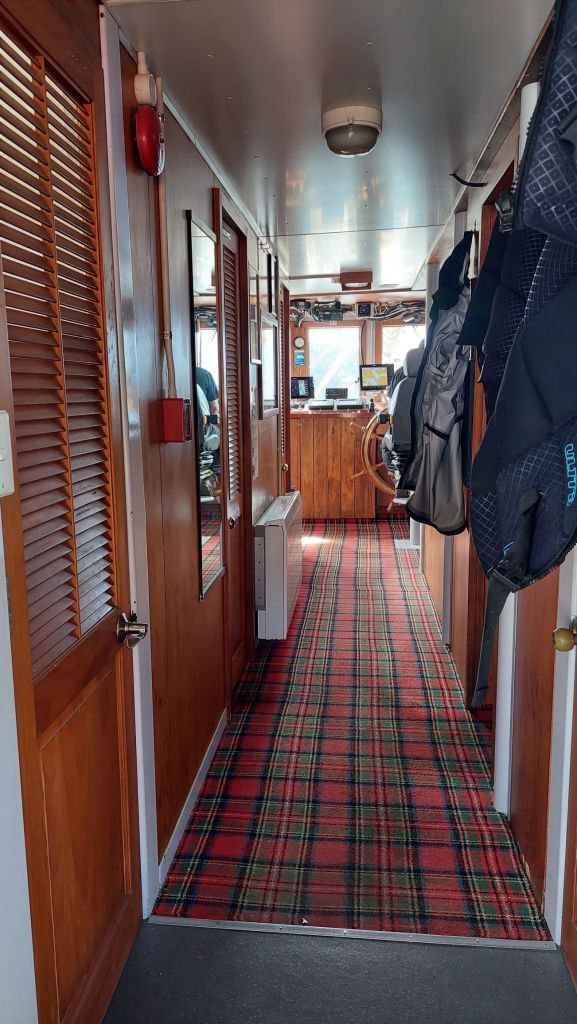
I mentioned earlier that our overnight cruise vessel, the Navigator, had “a personal encounter with New Zealand” earlier this week. The guests were evacuated and there have been multiple investigations, and only on the day of our departure was the Navigator declared fit for service again. Although bad for others, this was great for us, as they rebooked us on their smaller sister boat, Wanderer (which had been our first choice when booking, but we were not allowed to without paying for a 4th person).
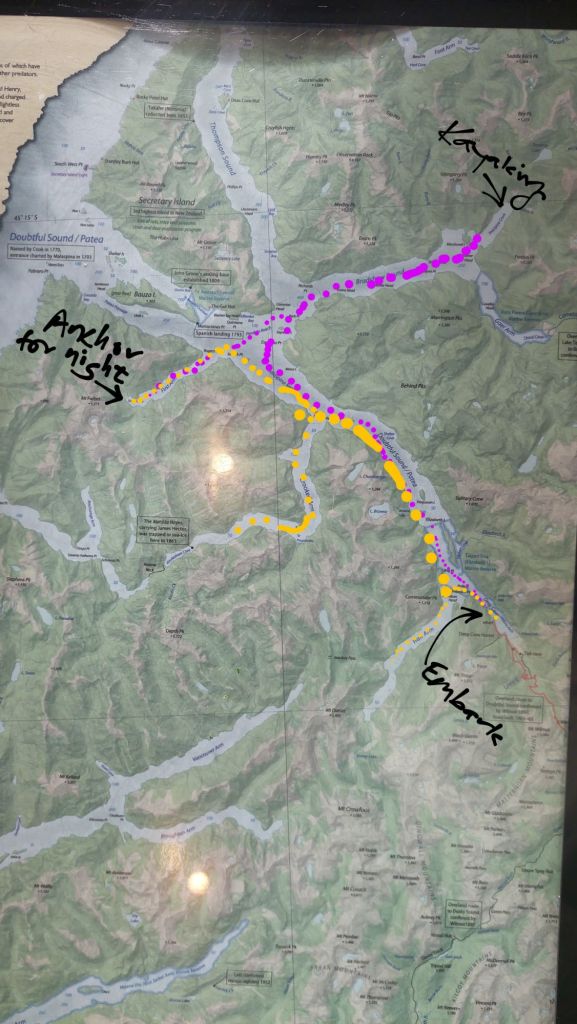
Lucky us! Our preferred vessel – and – it was a gorgeous sunny day where it rains 200 days a year!Getting out onto Doubtful Sound is a bit of an adventure in itself, involving two boats and one bus.The name “Doubtful” apparently came from Captain Cook, who doubted that his ship could beat its way against the wind to get back out to the open ocean.
The first leg was a boat across Lake Manapouri, and then a bus ride along a 21km section of road that is only there because of the Manapouri power station.
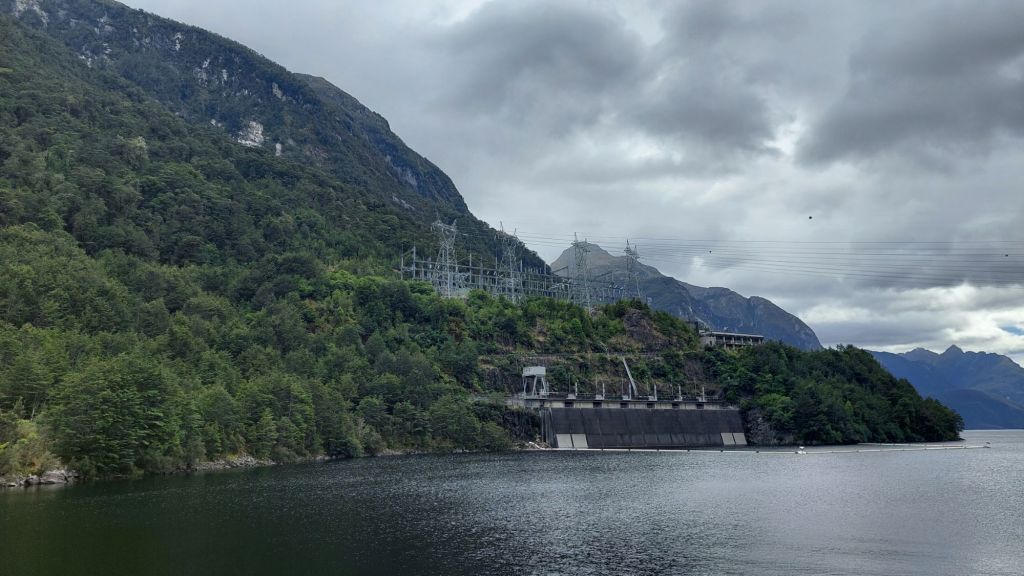
It’s the largest hydro-electric station in NZ, and was built in the 1960s almost entirely underground – this is the only bit you can see.
It takes water from Lake Manapouri and Lake Te Anu and drops it 178m down to sea level in Doubtful Sound via tunnels in the mostly granite rock. The power station was originally started in connection with an aluminum smelting company and was going to raise the lake levels 30m, but 264,907 people (more than 10% of Kiwis at that time!) signed a petition objecting to this because of the impact on the surrounding environment. Since then, new legislation (in addition to the Parks Act which had been broken by the original plan) has been enacted to protect these lakes.
We had an awesomely passionate bus driver who told stories the entire ride as well as a guide on the lake boat and a guide-host onboard the Wanderer.
We learned a lot of fun facts:
The road was very expensive to build (est. 50-60$/cm in today’s dollars).
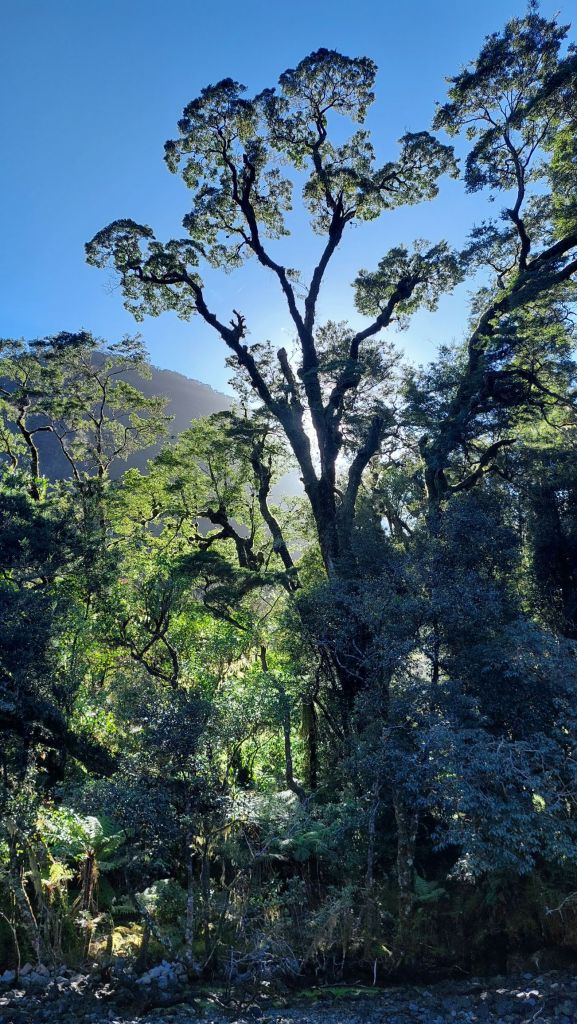
The main trees here are beeches and their leaves are acidic, which prevents many other plants from establishing under them, except where there is enough rainfall to dilute this sufficiently.
The Fjordland area here gets between 4-8m of annual rainfall depending where you stick the pin on the map.
The beech tree leaf runoff is full of tannins and is dark in colour (like cedar water on BC’s west coast, but darker).
This dark fresh water sits on top of the salt water in Doubtful Sound creating a distinct halocline that varies with rainfall and is between 3-10m deep.
The tannins in the water prevent light transmission which provides habitat for some rare species (e.g. black corals) which are otherwise only found at much greater depths.
Humpbacks (mum suggests I specify ‘whales’ here, in case you were feeling doubtful, ha!) come in on their migration to rid themselves of parasites that cannot handle fresh water.
A population of bottlenose dolphins lives in the Sound. Whales and seals are really the only endemic mammals. When Gondwana separated, its fauna evolved without land mammals, and birds and insects filled some of the ecological niches that mammals occupy in other parts of the world. Unfortunately, this also meant that the species here had no defense against mammalian predators, so when humans (Maori first, and Europeans and others later) brought mammals with them, the flightless and ground-nesting birds here were easy prey. More on birds another day, but the list of notorious introduced mammals includes:
Rats and mice: (conniving stow-aways) Rabbits: (brace of coneys, anyone?) Possums: (don’t you want some nice furs, like the Aussies have?) Stoats: (to kill the rabbits, but turns out, bird eggs are easier) Moose: (gifts from Canada, sorry!) Elk: (gifts from US Roosevelt) Deer: (venison, anyone? The gentry want to hunt!)
and last but not least, Humans: (worst of the worst)
It’s really hard to hit ‘undo’ on introducing a species when it successfully establishes itself. A lot of work is going into trapping and reducing numbers of predators here in Aotearoa me Te Waipounamu. Efforts have been intensified on islands including Pomona Island (NZ’s largest mainland island located in Lake Manapouri), which has been de-mammaled, with ongoing work to maintain this status quo. (That’s right, many of the mentioned mammals can swim). Pest eradication has also had more adrenalin- filled eras. In the 1970s, there were what are known as the “helicopter wars” with bounties incentivizing hunting and capturing live deer for farming. One of the established strategies involving leaping out of choppers onto a terrified deer. What the heck!?
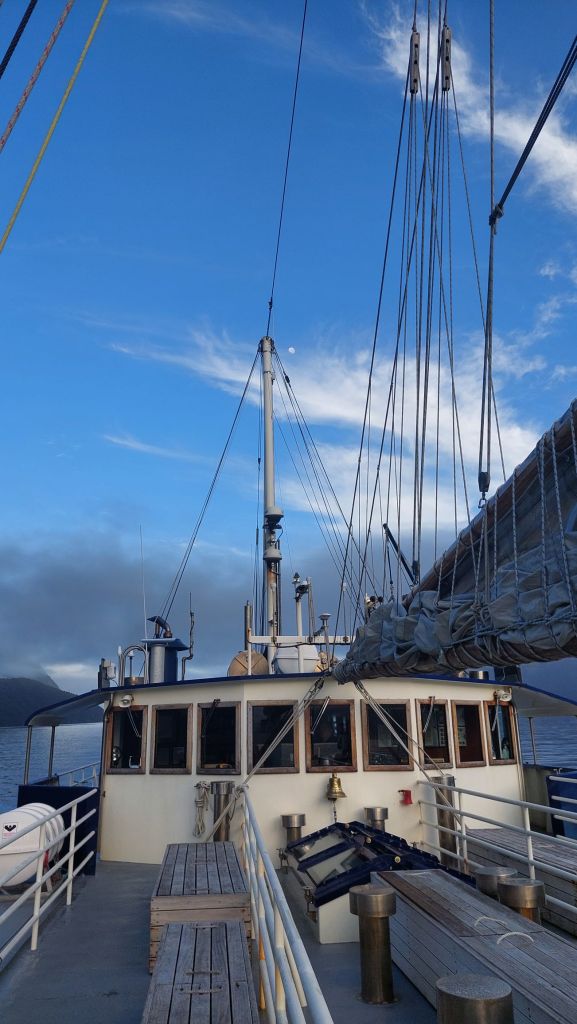
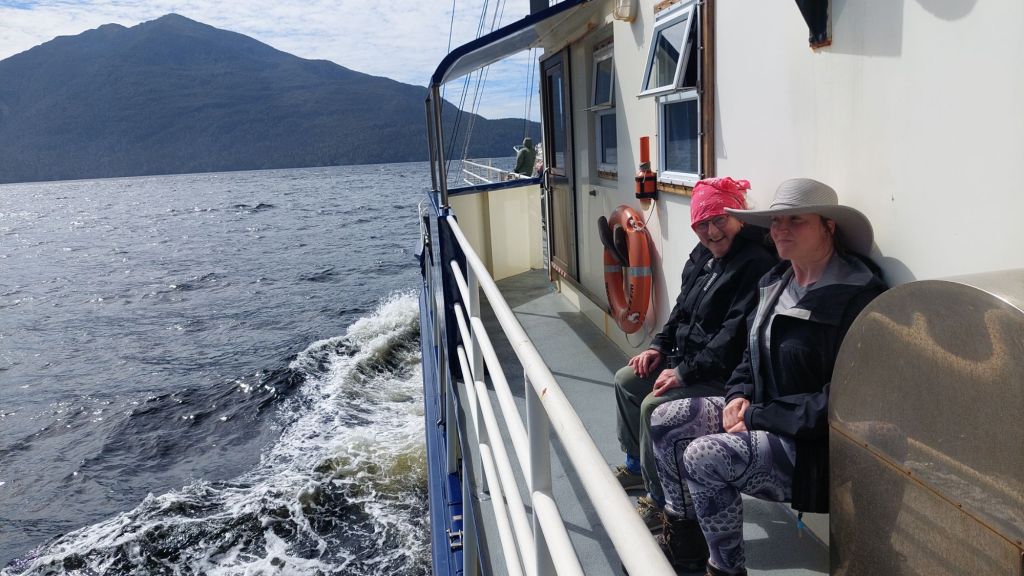
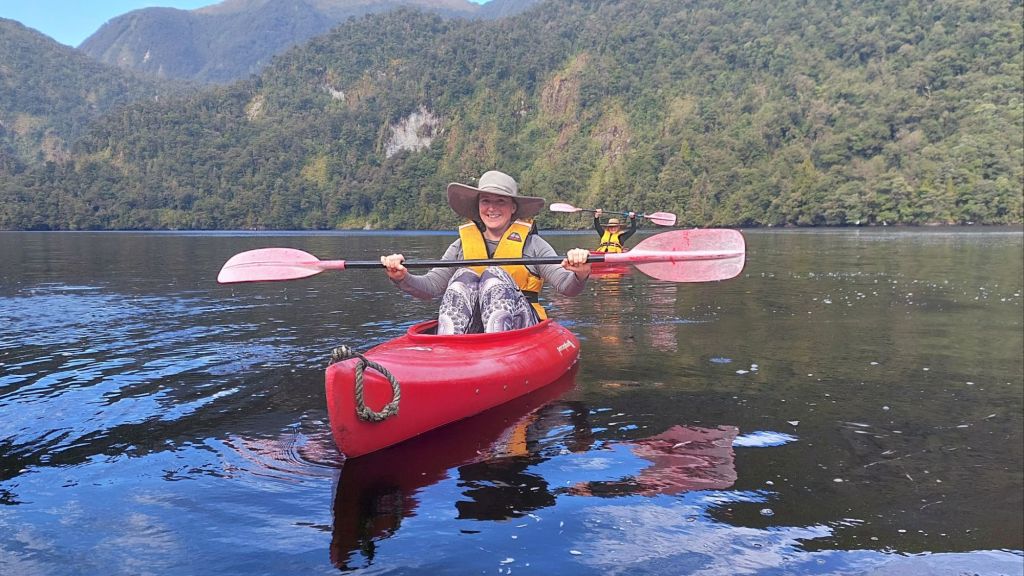
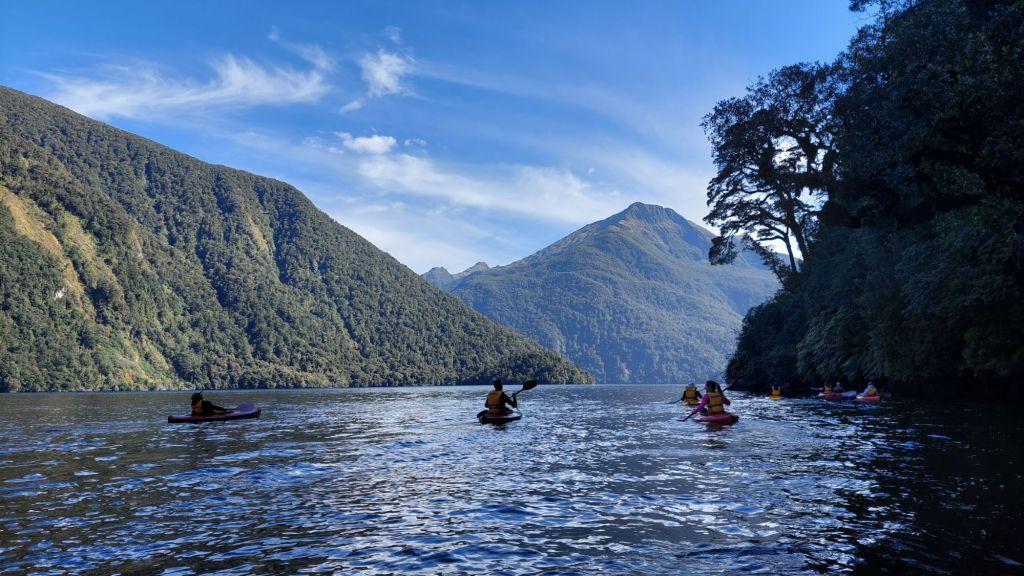
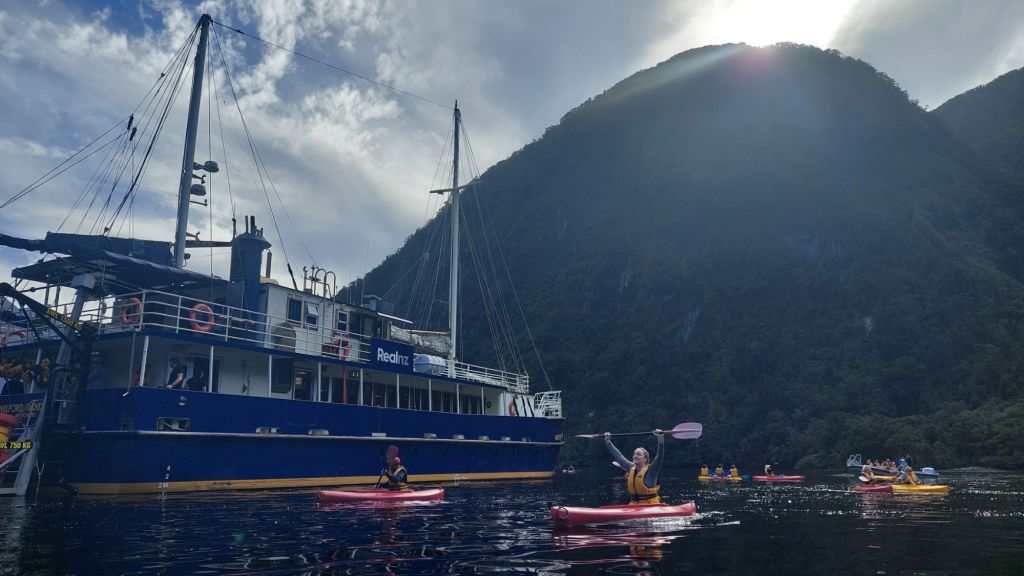
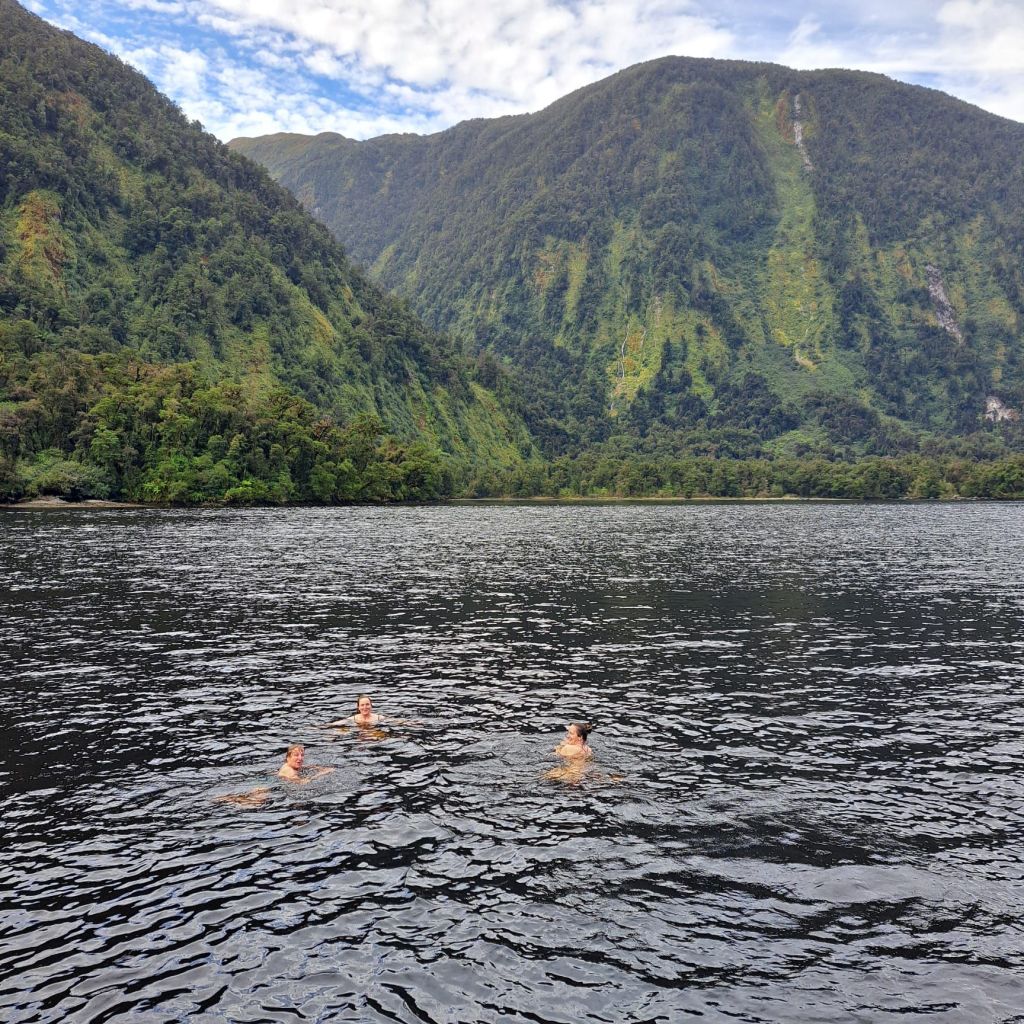
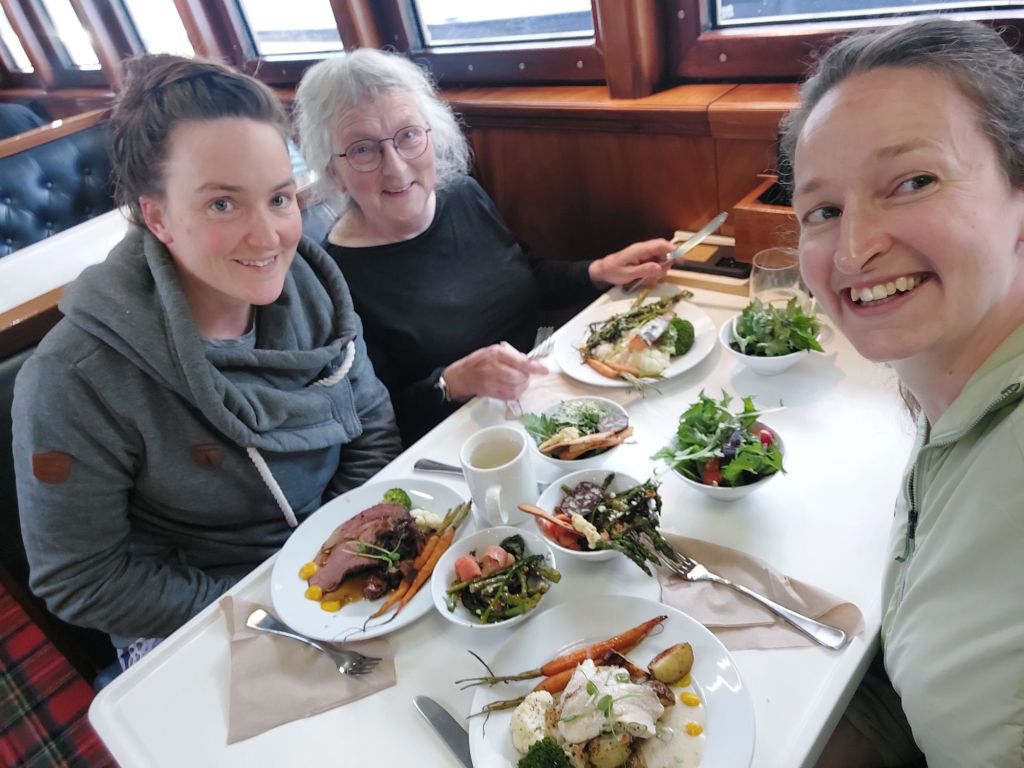
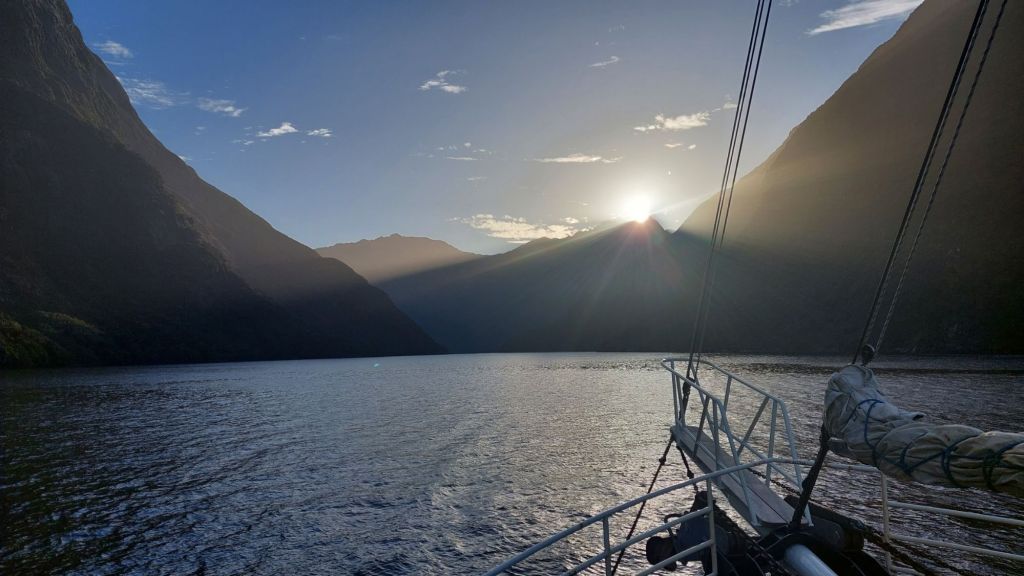
So back to what we actually were doing… we boarded the Wanderer, and cruised out in brilliant sunshine to Precipice Cove, ogling Coronation peak on the way.We bumbled around in kayaks in this protected area.… and I learned that drinking from a waterfall from a kayak is more difficult than it looks.The (gaff-rigged!) sails are apparently functional but are essentially just for show (not a lot of canvas there given the size of the boat!).We stopped briefly to drop off some chocolate bars in the zodiac of another tour operator who was doing an overnight hike up Mt Gorno with his daughter. It would be awesome to have that kind of insider access to wild terrain like this.Only one other passenger (32 of us total) came swimming with Felicity and me. It was refreshing both to have a laid back approach to swimming safety and also to have a good laugh trying to get our torsos and tushes as far out of the water as possible.We tried the 3 supper options: ribeye, salmon, and grilled chicken.We mosied over into Snug Cove for the night.
After dinner, we played a game of scrabble. Gabe, the entertaining host, excelled at the kind of chameleon skills I don’t have, and invited himself to our game. He gracefully helped Felicity, who helped me triumph over Scrabblemaster mum.
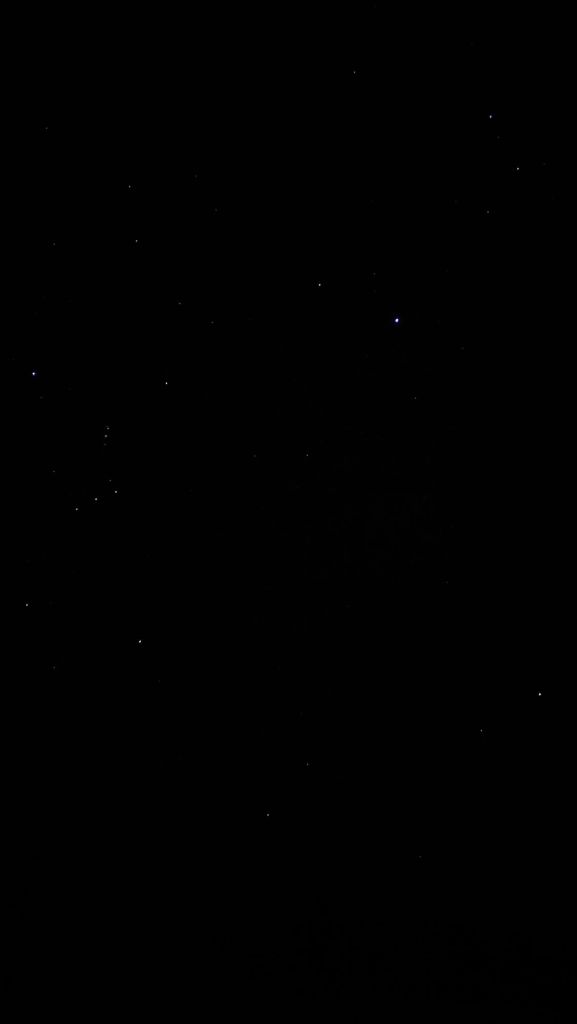
The stars were brilliant with only the ship’s nighttime lights to interfere. We found orion (left) as usual, as well as the southern cross (not shown), and some new ones for me: big dog (top right), and little dog (bottom right).
This was a really lovely day, and extra special knowing that 2 out of every 3 days it rains here, so this is pretty rare.
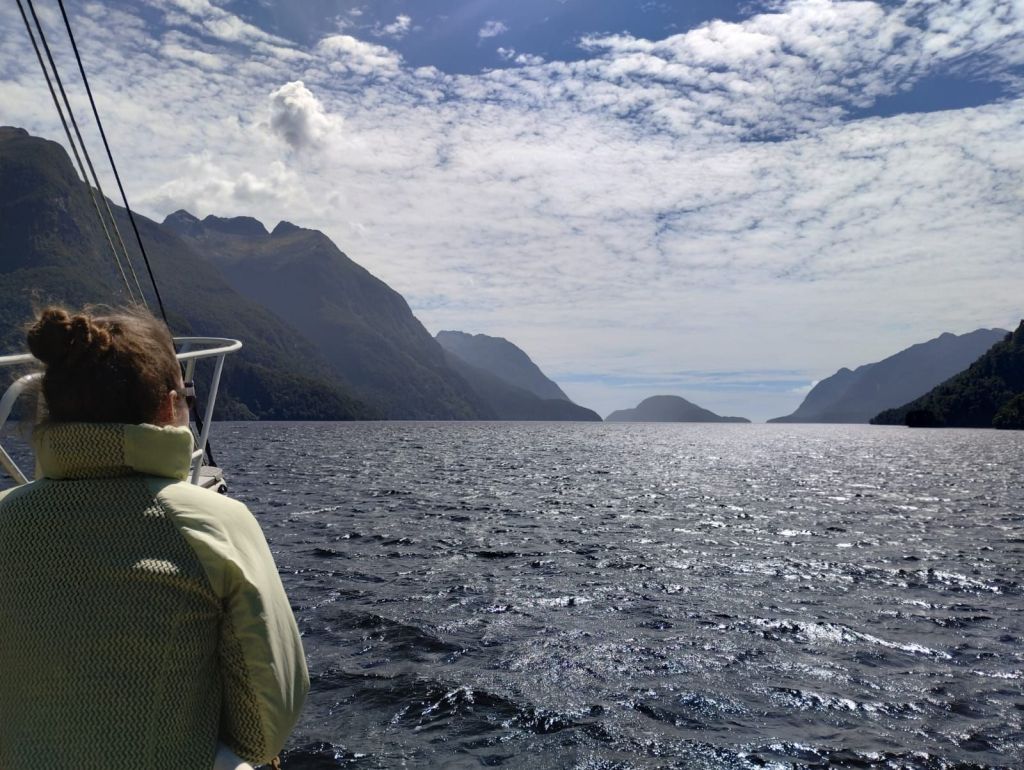
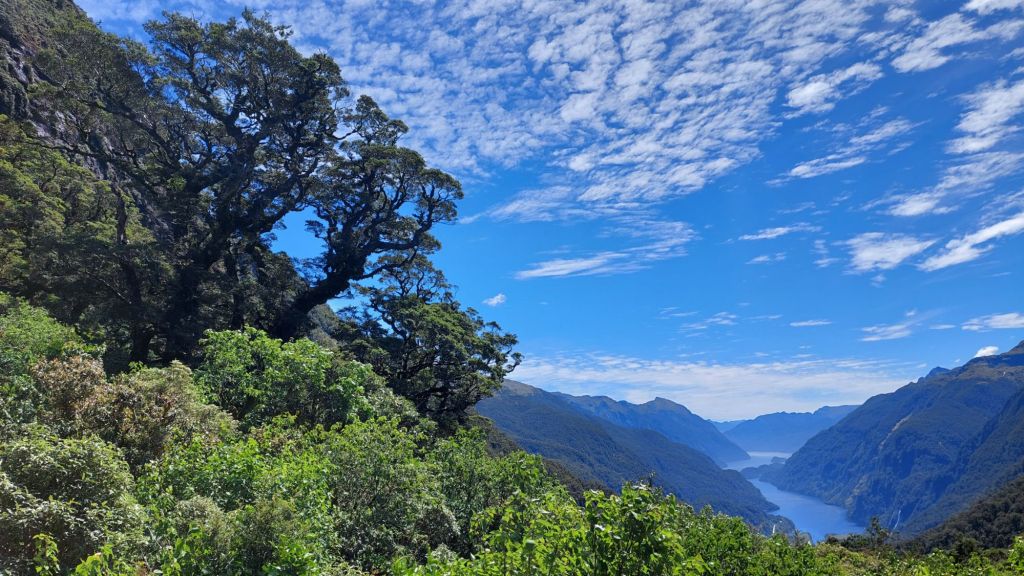
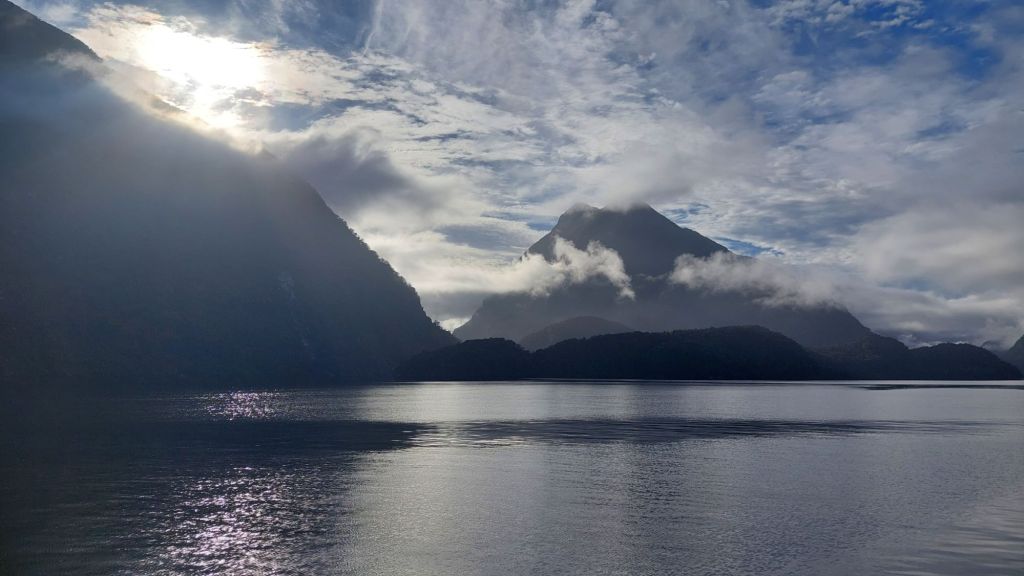
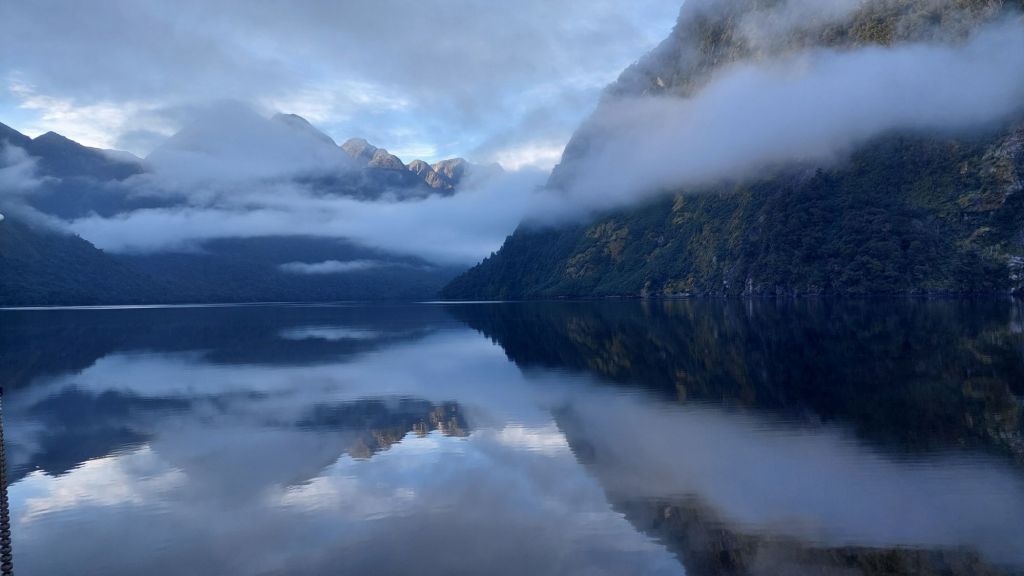
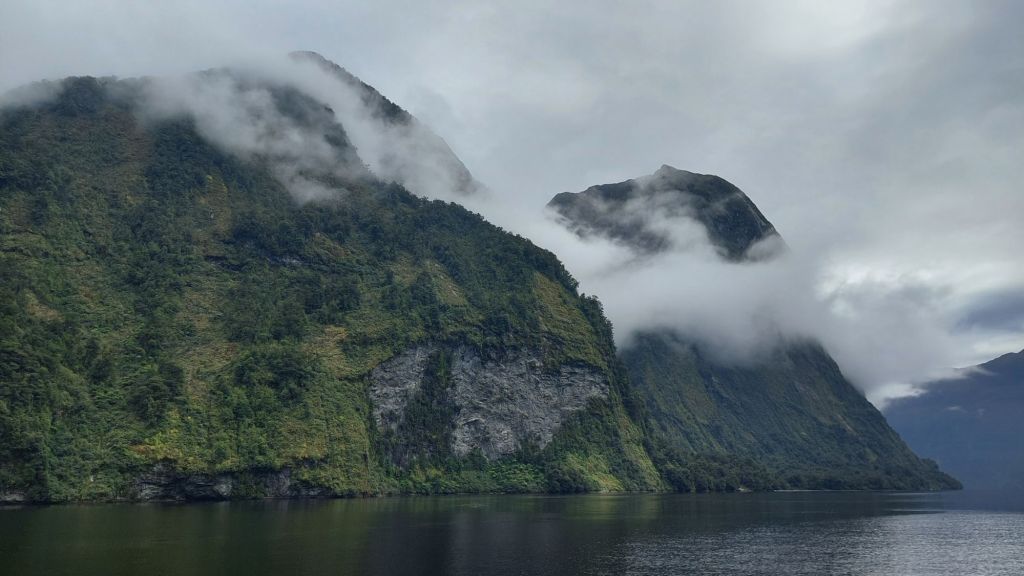
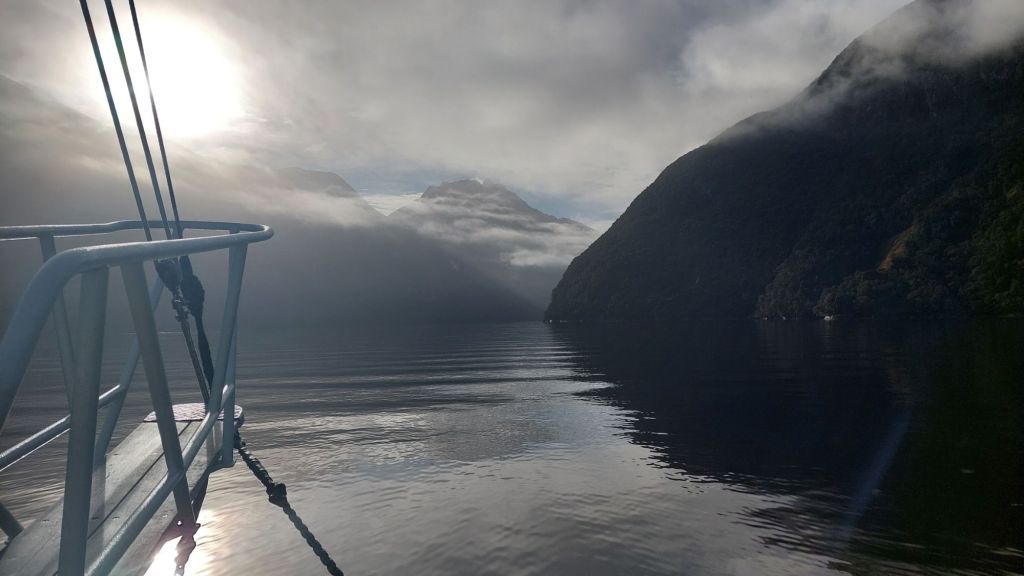
We woke early for the 7am breakfast, and dodged out on deck…… to enjoy the sunlight through clouds and reflections in very calm water. It would’ve been perfect kayaking touring weather! We cruised up Crooked Arm, admiring the varied greens of beeches and tree ferns, and had second breakfast of cinnamon bunlets.In Hall Arm, we stopped for a moment of quiet (engines off, generator off, no talking, no walking around – just being still and listening to the sounds of birds and waterfalls and boat wake hitting the shore).
We continued back to Deep Cove past a “Parsons Rock”, so named because a religious guy was dropped off there at low tide, and when the boat returned to pick him up, he appearing to be standing on water.
Without a doubt (ha!), the overnight cruise was a fabulous trip.
We retraced our journey back to Manapouri, and headed towards Te Anu, where we stocked up on groceries, and then continued on to the Milford Road.
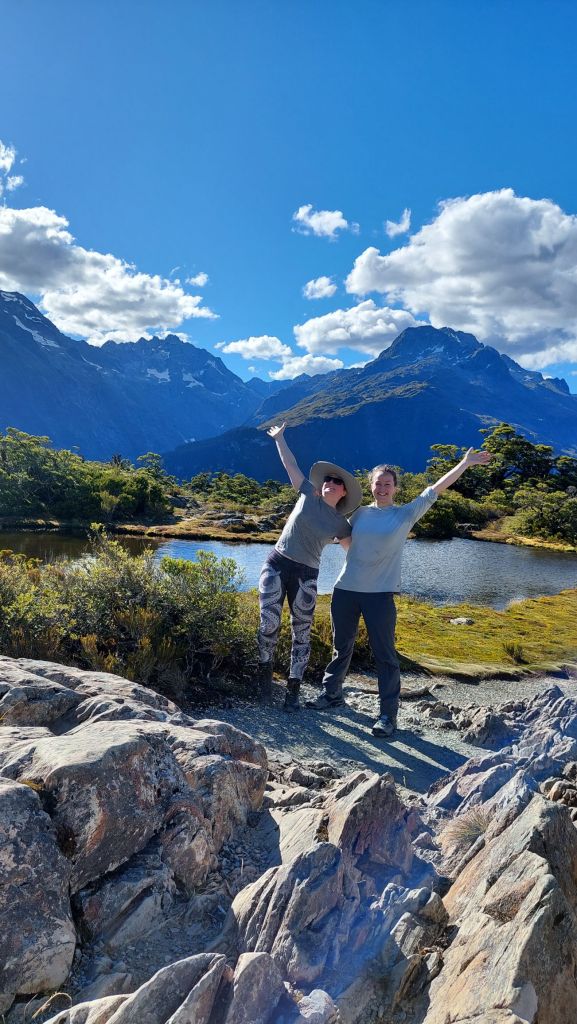
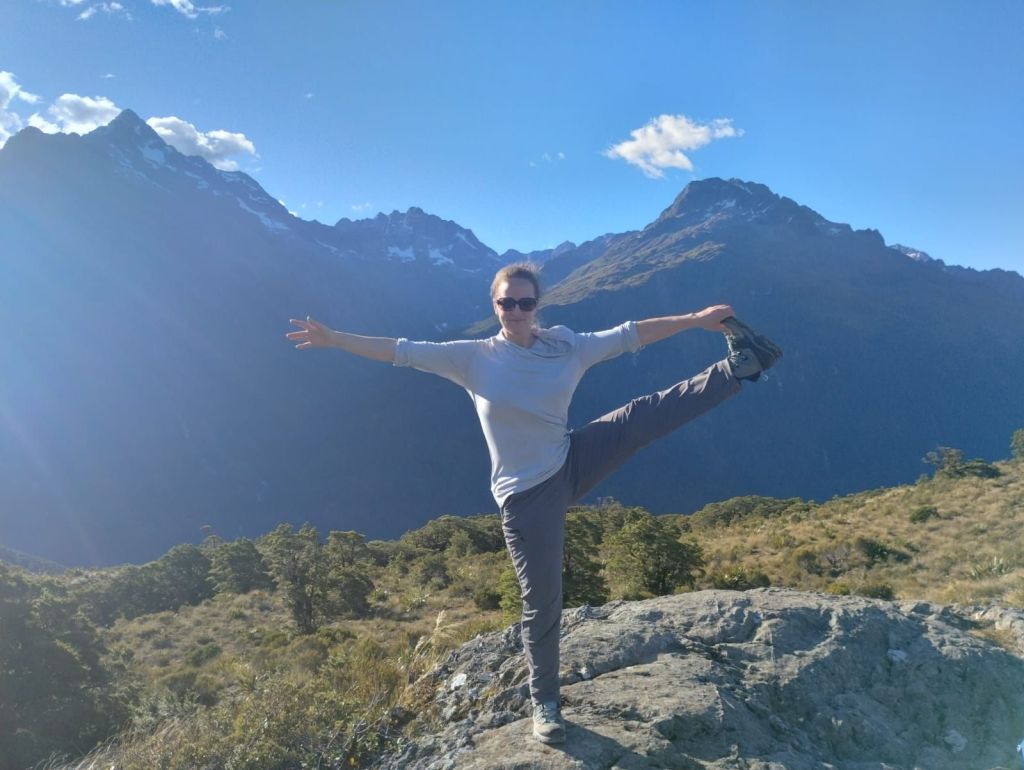
Rarely seen sloths on their way to Mistletoe Lake for lunch. Another WtF (waterfall)Felicity and I hiked up nearby Key Summit for a view of Marian Lake (not pictured – it’s in the valley behind F’s right hand).I’ve only missed 2 days of my nightly stretching routine since Sept 2, and they’ve both been in the last week.
We appreciated my water filter and made it an early night, as the alarms were set for 5am.
Alice
PS. So how does rainfall here in Fjordland compare to places I know? I went down a rainfall rabbithole: So here gets 4-8m/y. That’s a lot. For comparison, soggy Prince Rupert gets a measly 2.6m/year, Tofino gets 3.27m/y, and Port Renfrew gets 3.5m/y. But those are sizeable communities. There are some smaller communities like Hartley Bay (140km south of Prince Rupert) which gets 4.5m/y. It’s probably more fair to compare with wilder places in BC such as Haida Gwaii’s Mitchell inlet which gets 6.37m/y and Vancouver Island’s Hucuktlis Lake (Henderson lake), which gets a comparable 6.9-7.3m/y.
Congratulations for reading this novel, you dedicated fiend!
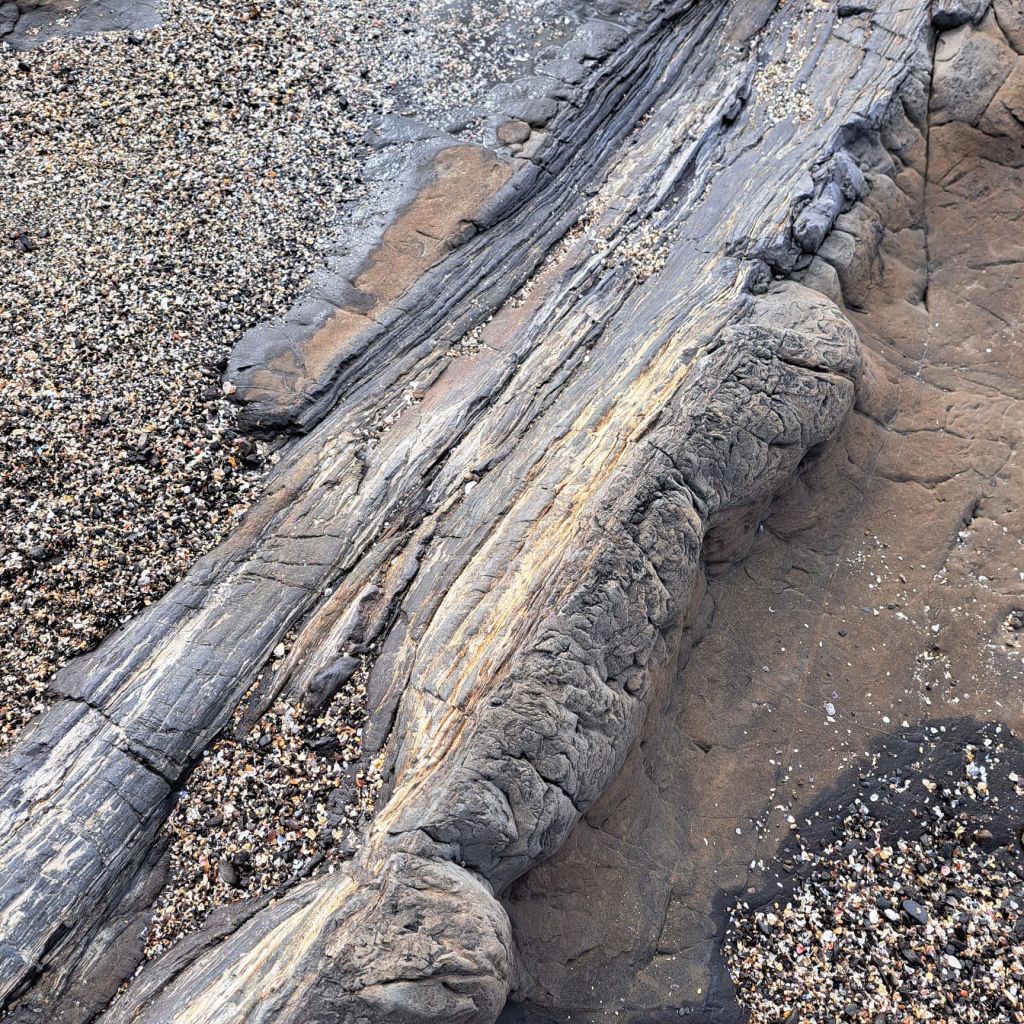
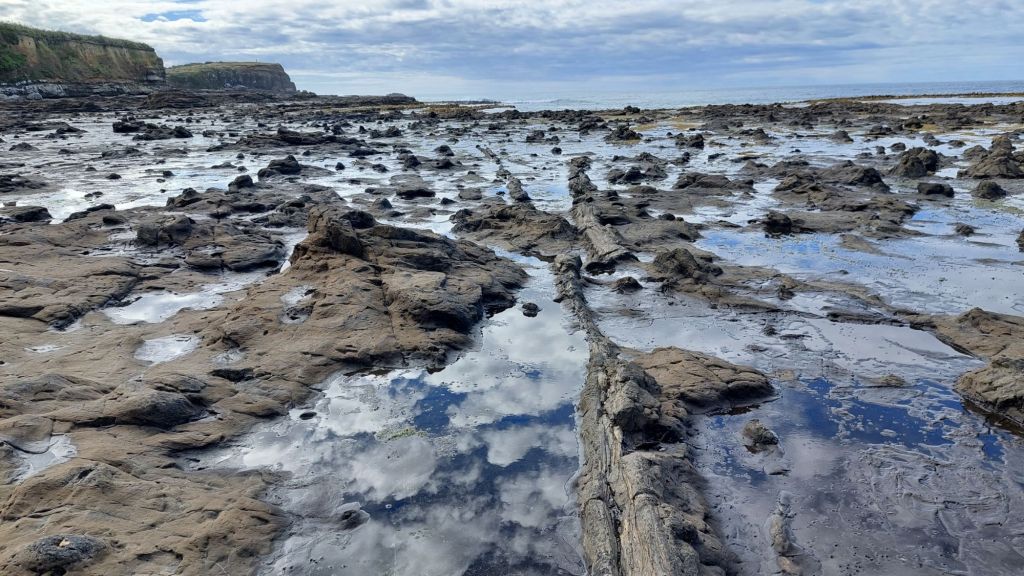
We packed up and went to explore Curio Bay, which was all but invisible to us from the wind protected campsite. Curio Bay is home to some really old trees. Like Jurrasic era old. On the now beach, there are fallen logs and stumps of a forest that was flooded and then petrified.
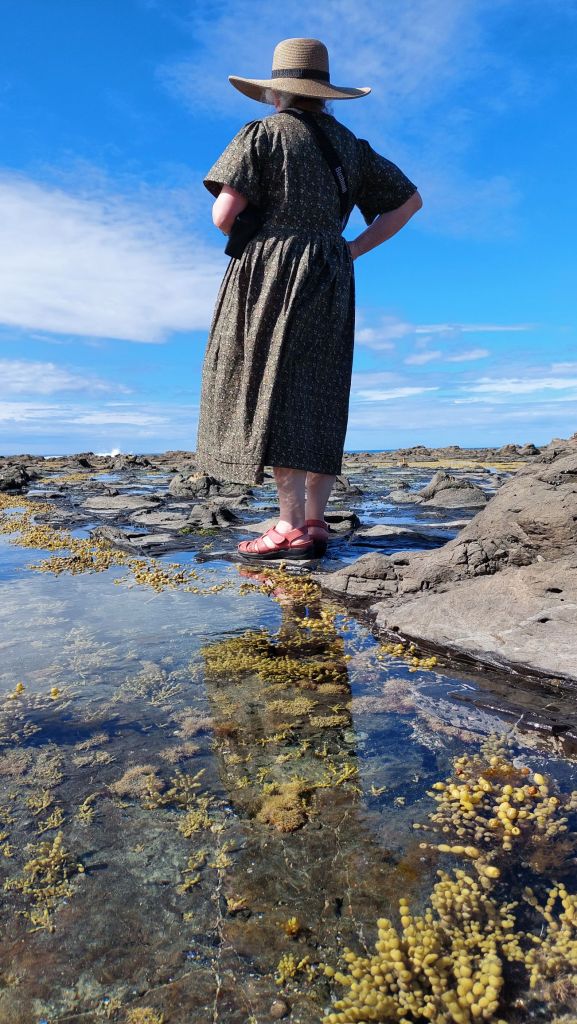
Tree trunk that was trapped in the wet sediment without oxygen and with a lot of mineral content, which eventually replaced the wood’s cell wall structures.Looked like mud from above, but it’s all solid rock.The tide pools here are home to a bubble bladder seaweed just as stompable as their BC coast cousin.
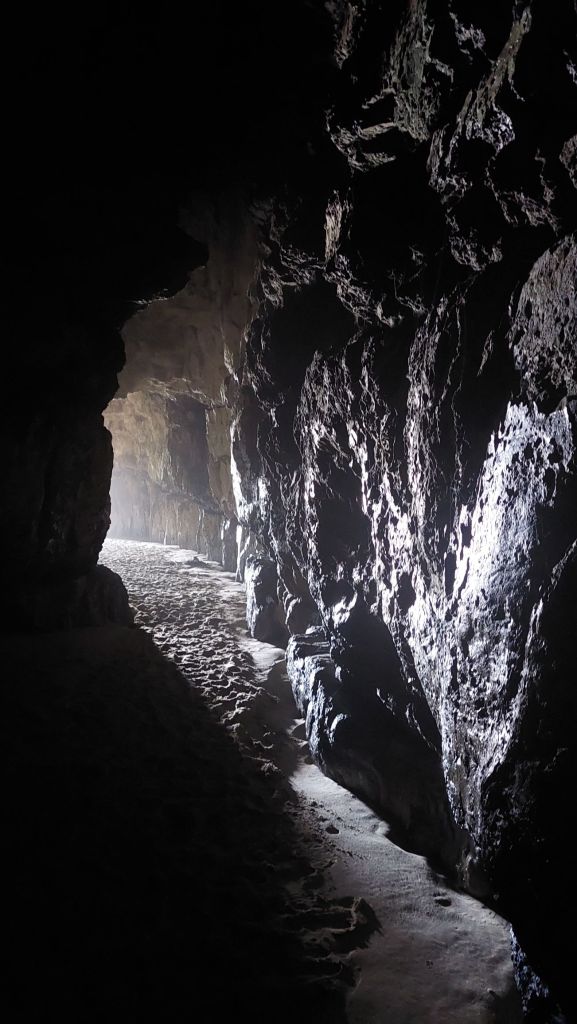
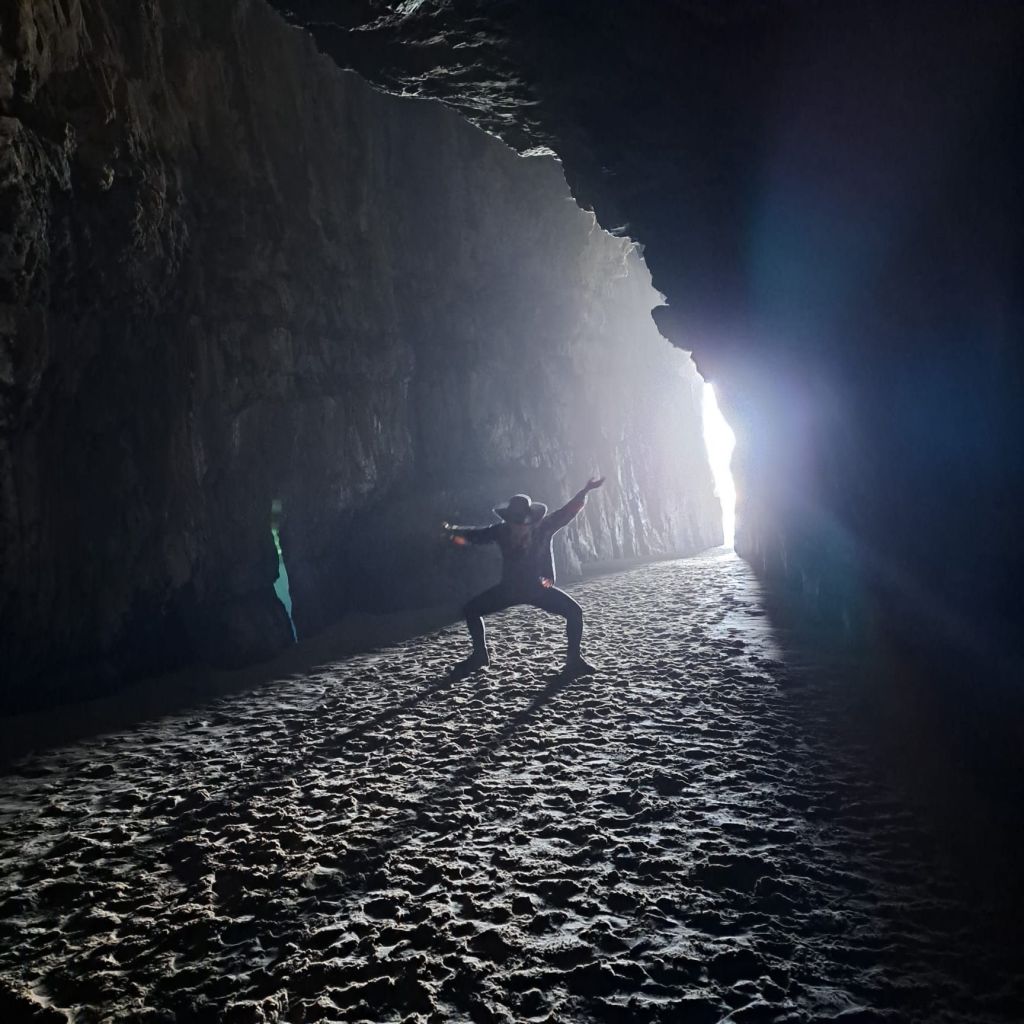
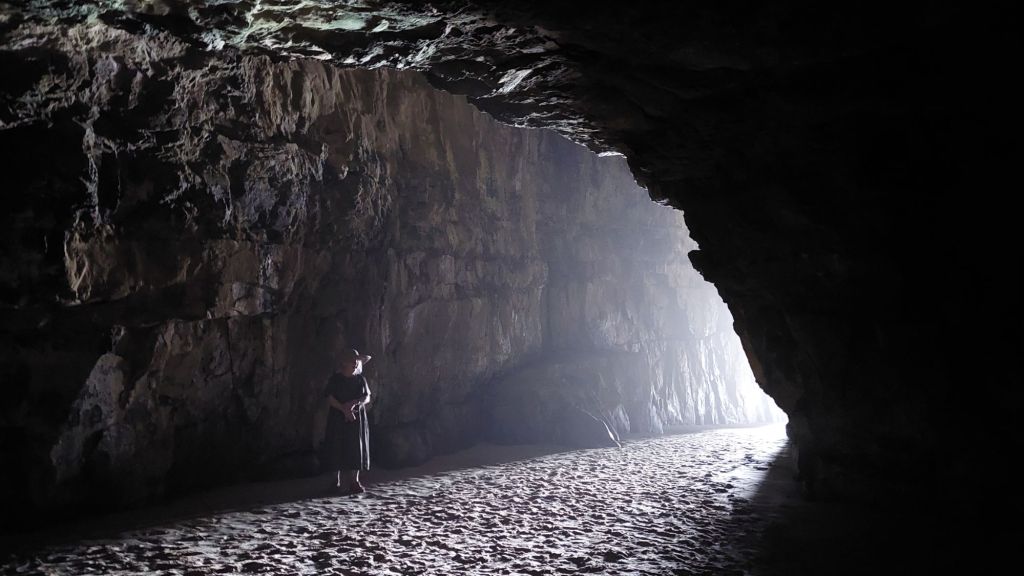
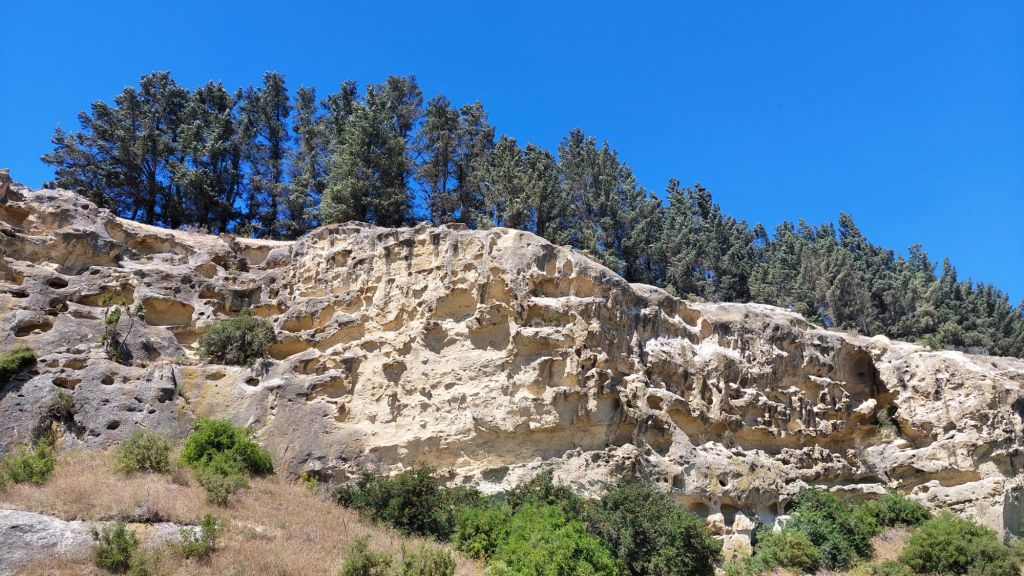
We then backtracked a bit to Cathedral Caves, which can only be visited at low tide. The base rock is ignimbrite, “a white, massive rock formed from pumice and ash that was erupted about 8 million years ago”. It erodes easily – in this location into a tunnel with a U-bend (or a cave with two entrances).
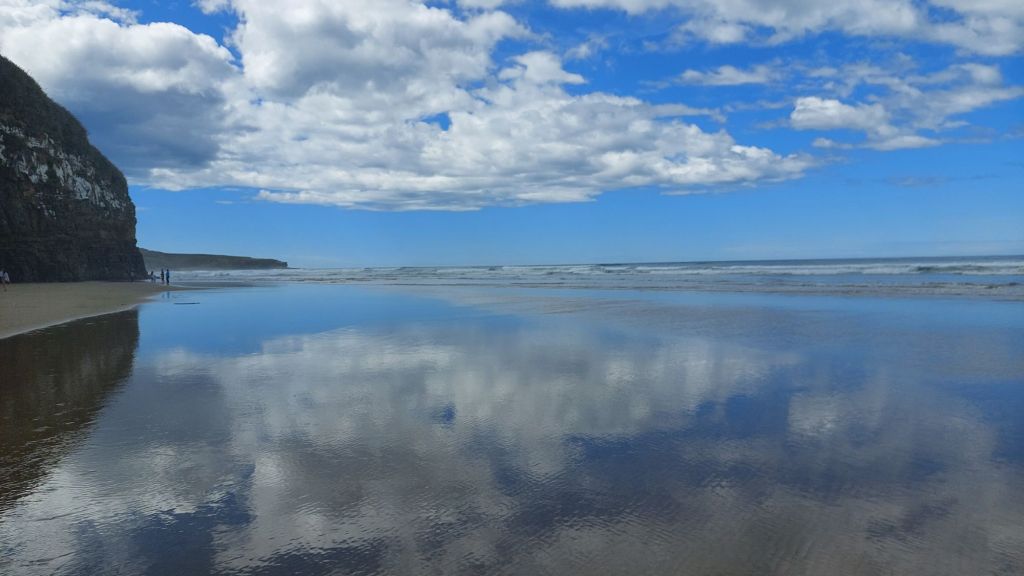
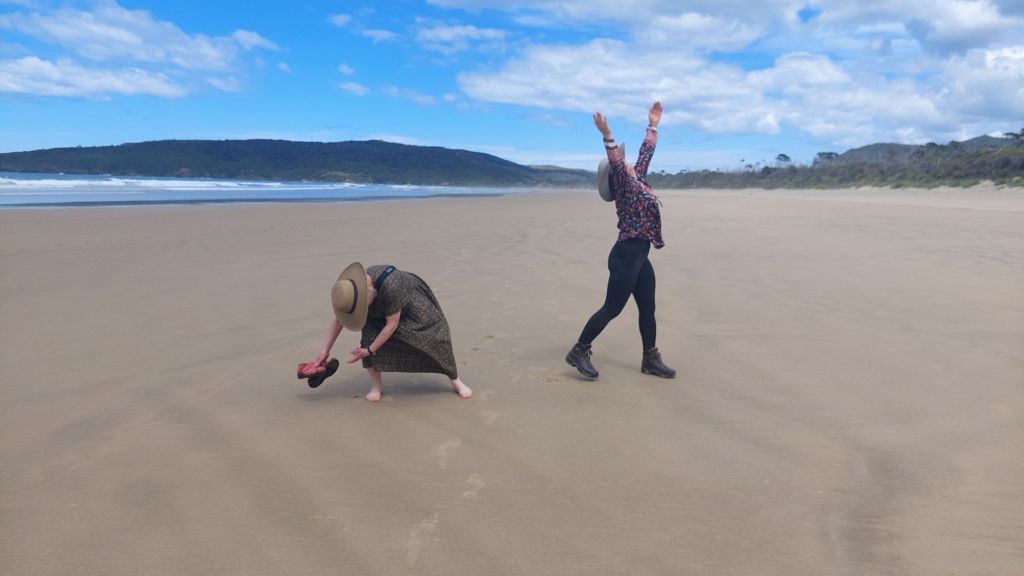
At the back of the cave, there was a pile of human skulls! Ok. Actually just rocks.Longshanks of the caveShortshanks of the caveThis coast is apparently a place where both (rare) yellow-eyed and (tiny!) blue penguins make their nests. We didn’t see any nests or penguins, though.The beach was inspirational for artistic talent, and other visitors may have marveled at the interpretive dance, but fortunately they’re unlikely to have heard the singing as the breeze blew our belting voices away.
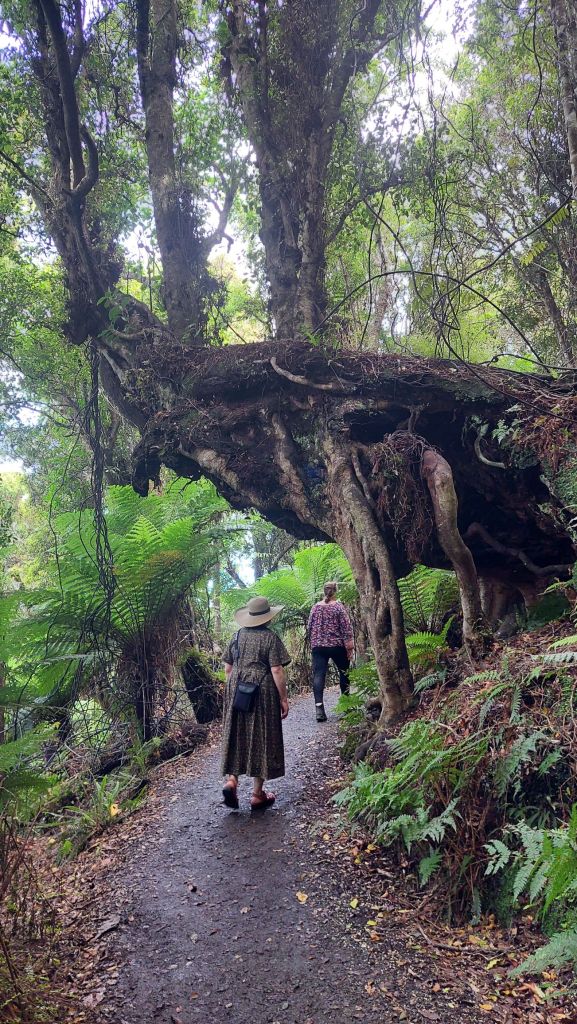
I’ve been hearing that Kiwis are really laid back folk, and often go barefoot or just in “jandles”, so I went back up the forest track carrying my shoes and socks.
I’m still working on the laid back part though, so I did lunges up the hill while mum and F looked at the awesome tree ferns and other novel plants.
We stopped for lunch at a tasty seafood eatery in Invercargill which was an homage to a spy, Buster Crabb, who lived and died (or did he?!? evidence is inconclusive!) mysteriously on the other side of the world from the restaurant. We did readings of the newspaper-like menu (brilliant accents included) and also ate some of the “land maggots” in taco format.
We passed a roadside sign “Recruiting Boners”. We’re guessing it might have to do with the land maggots, but perhaps they’re short trombone players this far south…
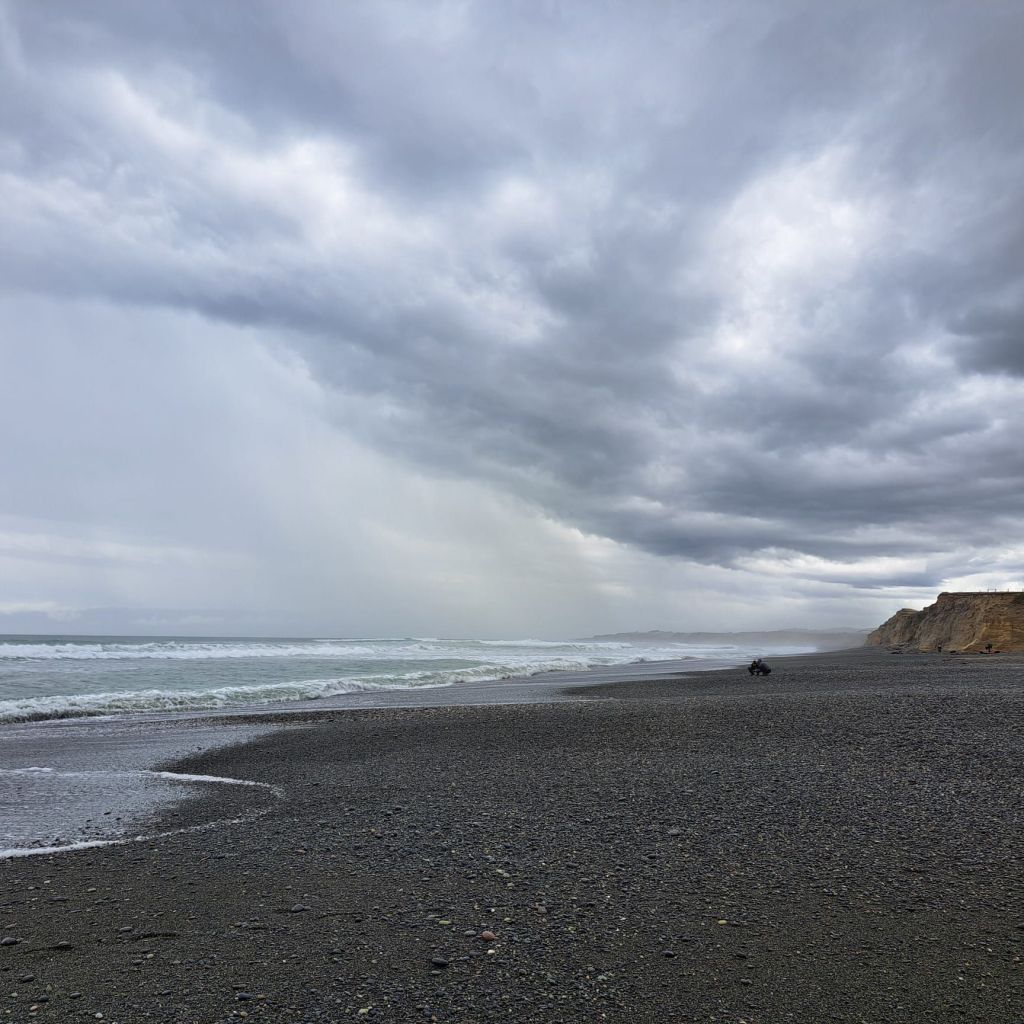
Gemstone beach was our last coastal stop before heading north. It seemed popular with detectorists (metal detector wielding folk).
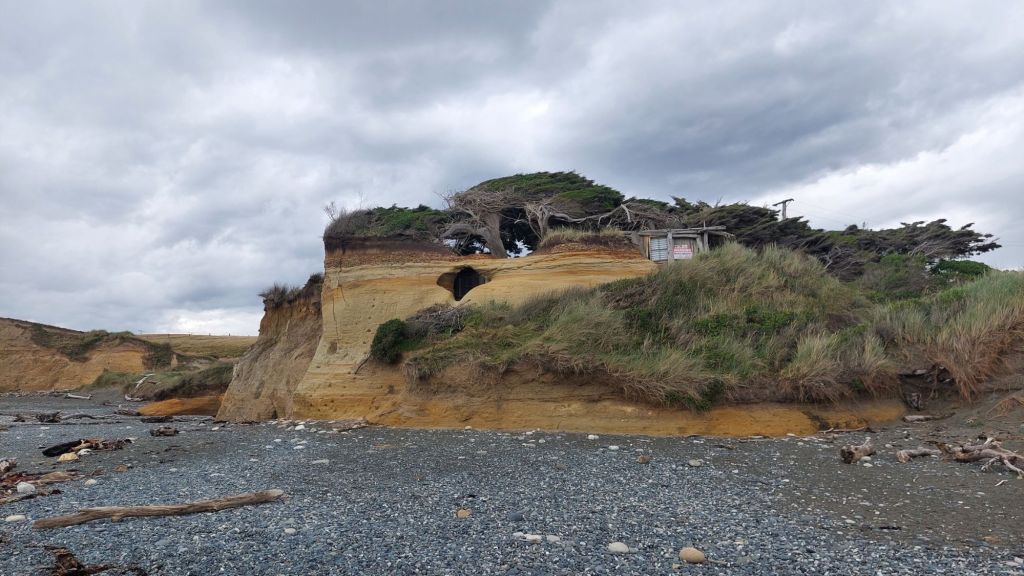
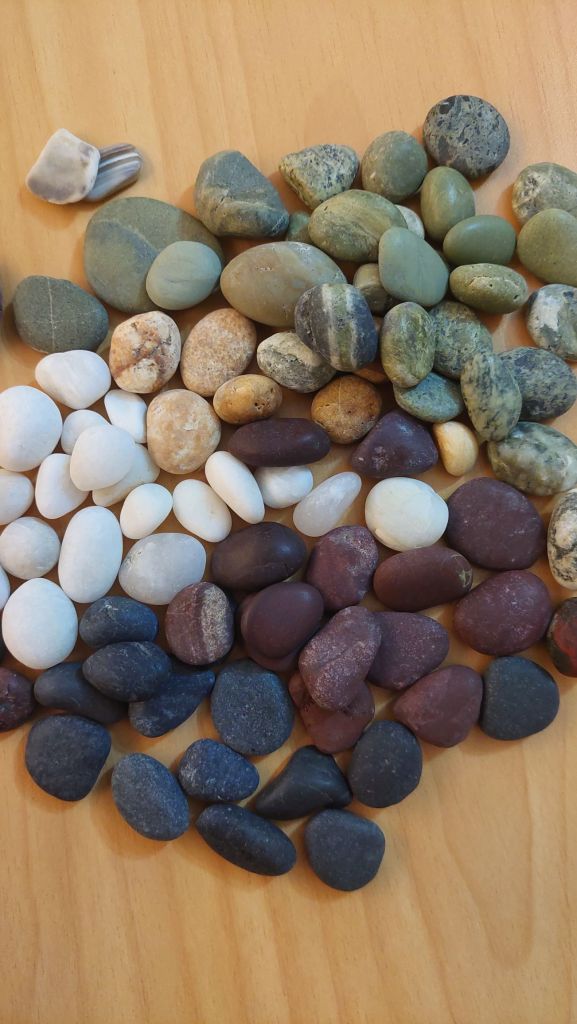
We picked up some “gems” of our own.Oddly, built into this windswept knob is a house-ish structure. (Pirate gemstone hideaway?)
It started to rain again in earnest and the campsite we’d been aiming for turned out to be just a gravel pullout. We caved and finished the drive to Manapouri and booked into a cheap (historic?) motel.
Having a hot bath or shower while it dumped rain outside = zero regrets whatsoever about sleeping indoors. The motel room had a lake view, but didn’t have a kitchenette, so we improvised our own with the camp stove on the balcony table under the eves.
We played my best game of Yahtzee ever, and sorted our “gemstones” before luxuriating in real beds.
Alice (with input and photos from Felicity and Colleen)
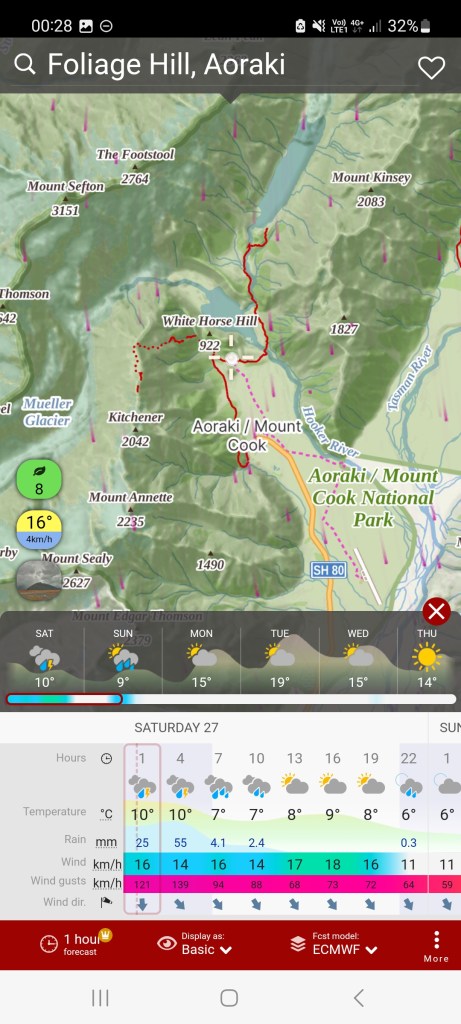
Last night was wild. 140-190mm overnight and wind gusts up over 120km/h. When I’d gone to the bathroom in the late evening, the paths were already all running streams and it did not ease up. At one point, I woke because the tent punched me in the head – the gust of wind had bowed the tent so forcibly the corner pole hit me hard in the head.
I don’t know if I’ve ever adequately appreciated the “Alice Palace” (which is a burly MSR Remote – a winter basecamp tent). It did not break, or blow over, or blow away, and it did not let water in. Long live the tent!
Not trusting the morning showers, we took off and cooked eggy burrito breakfast further down the valley where we worried about getting sunburned instead.
Breakfast viewIntroduced sloth
Mostly today was a driving day, but we made a few stops to break it up. And to make sure we don’t get too far ahead of schedule! (Ha ha.)
We stopped to look at Takiroa Maori Rock Drawings (limestone caves and rock paintings). I got distracted by the flock of birds living in the little upper caves.
Very neat to see the birds take off and land in the wind
We later narrowly avoided paying $20 each to see a penguin in a box near Omaru – the kind lady at the desk pointed out the time to see their yellow eyed penguins is dusk when they come in to feed their chicks and that if we wanted to make it to Curio Bay tonight, we’d better keep driving.
So we only made a feeew more stops…
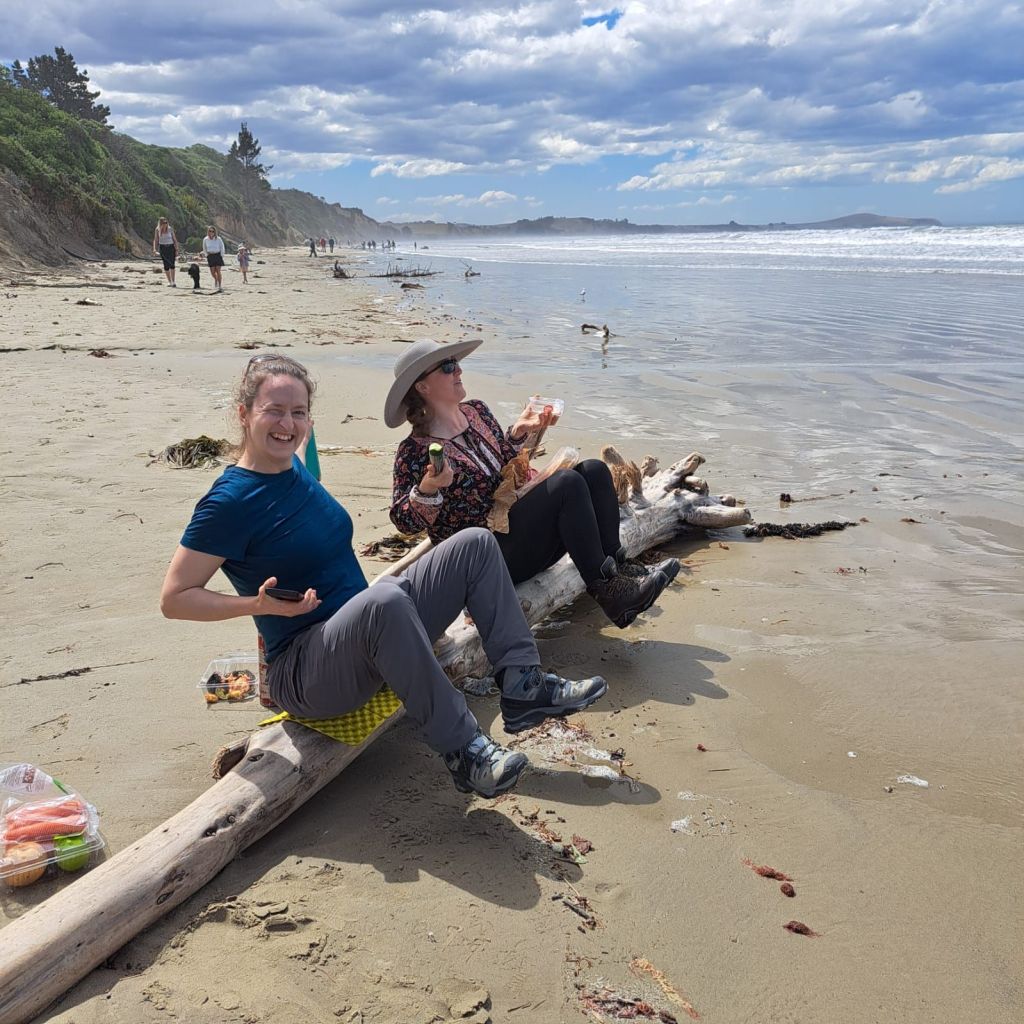
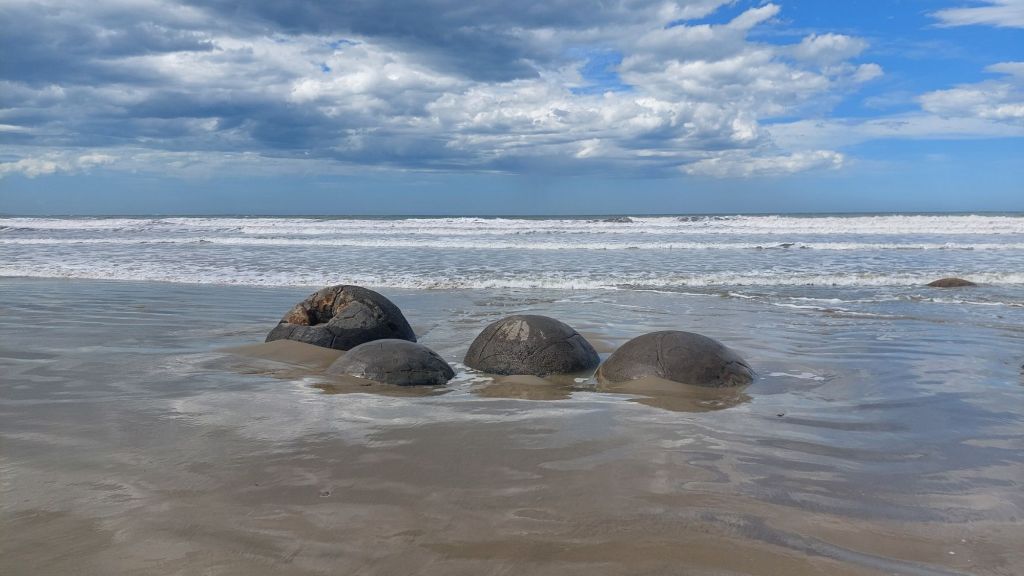
Lunch on the beach, mostly above the waterlineMoeraki boulders
Calcite from groundwater that cemented around shell fragments or pebbles built these harder spheres within mudstone. When the rock was uplifted, the softer mudstone eroded first, leaving these standing out. Alternatively, for Kāi Tahu, these boulders are the washed ashore food baskets and gourds from the Araiteuru waka (canoe) on its return journey from mythical Hawaiki. (The waka crashed and ended up as a reef at Matakaea (Shag Point).)
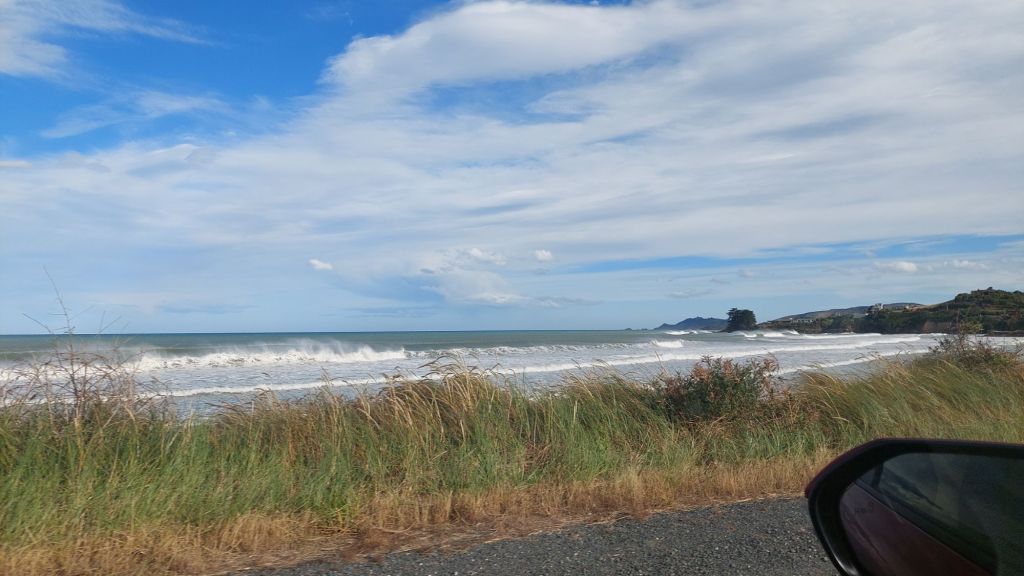
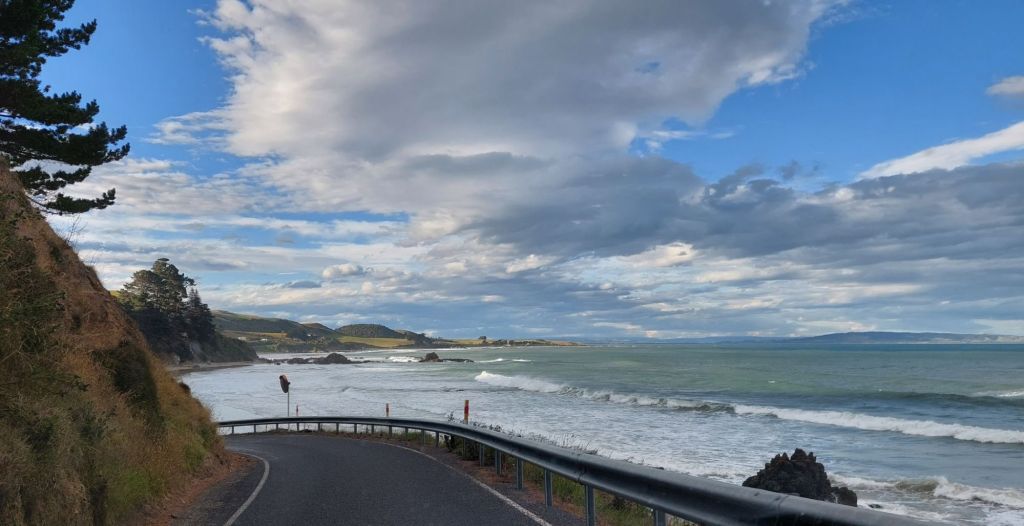
Looking west along the Catlin coast
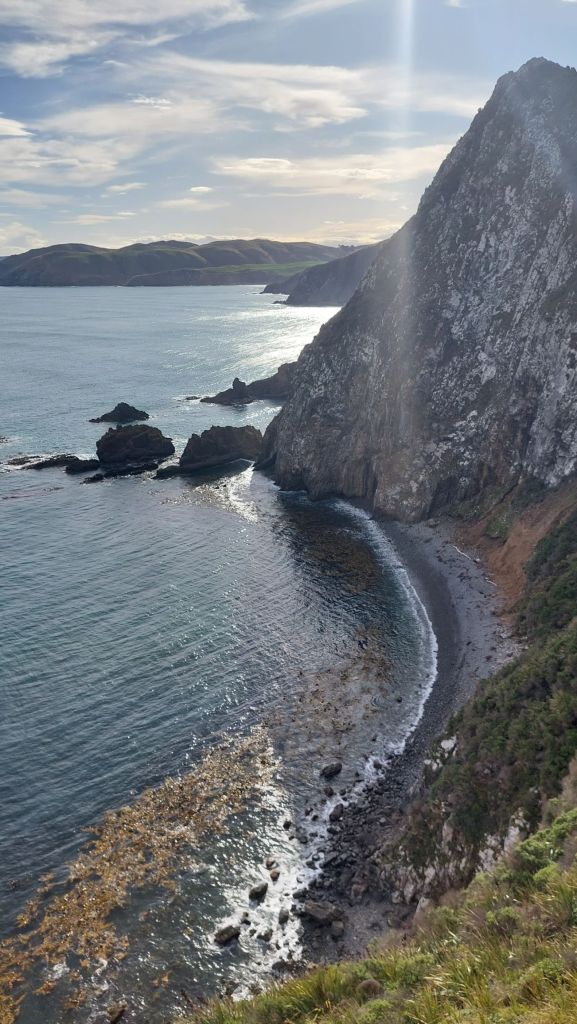
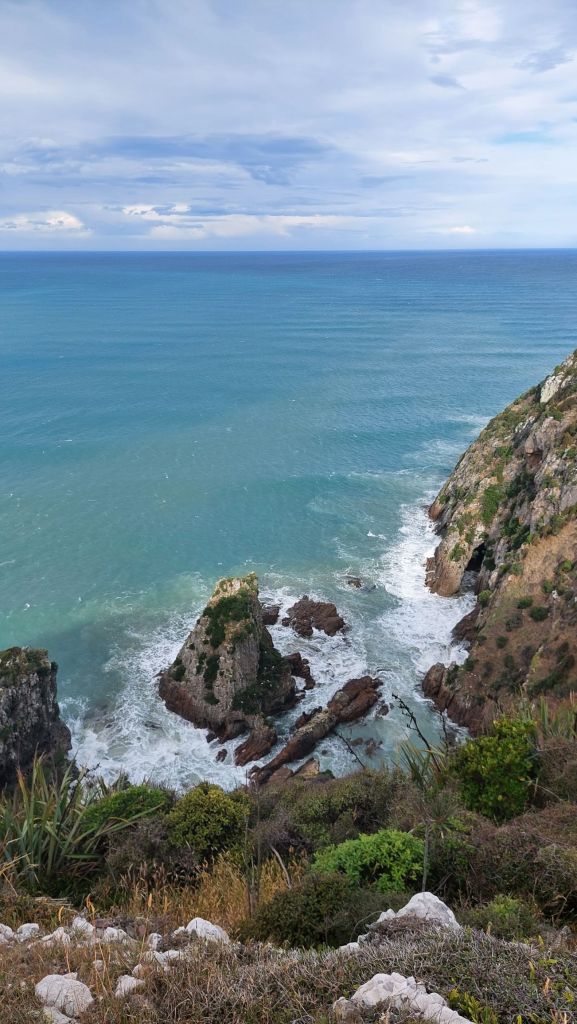
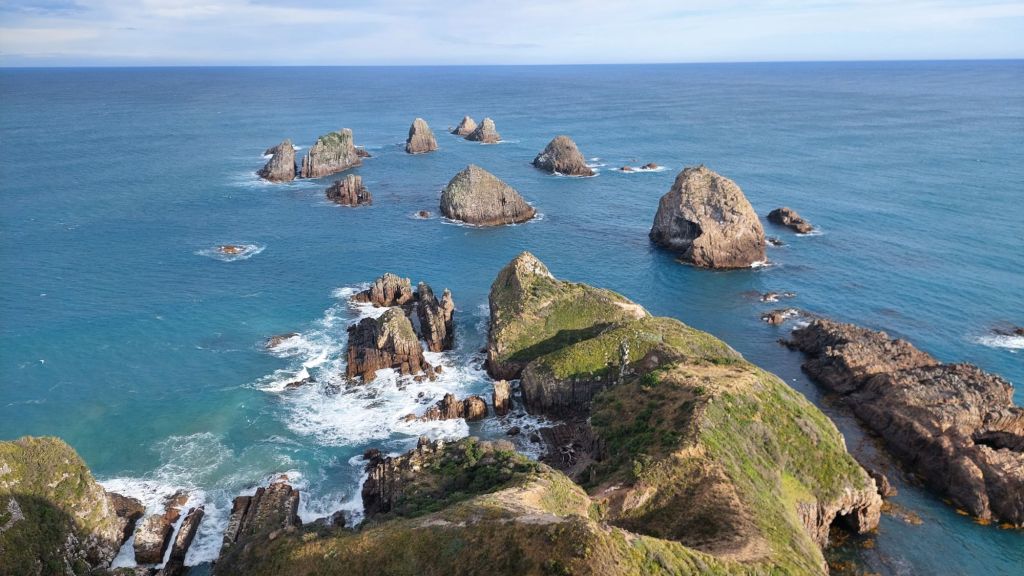
We also stopped at Nugget Point Lighthouse via a road that was very nearly at sea level.
What do they do when a high tide and a storm occur at the same time??
At the lighthouse, we saw animals! We saw spoonbills (those white lumps are birds, I promise!) and many seals including lots of pups playing in oceanic kiddie pools
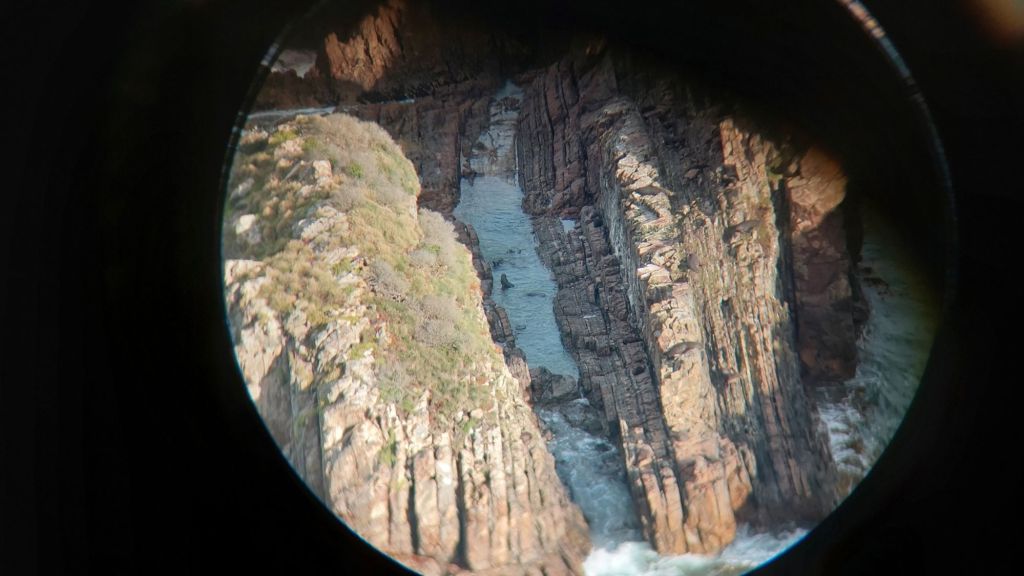
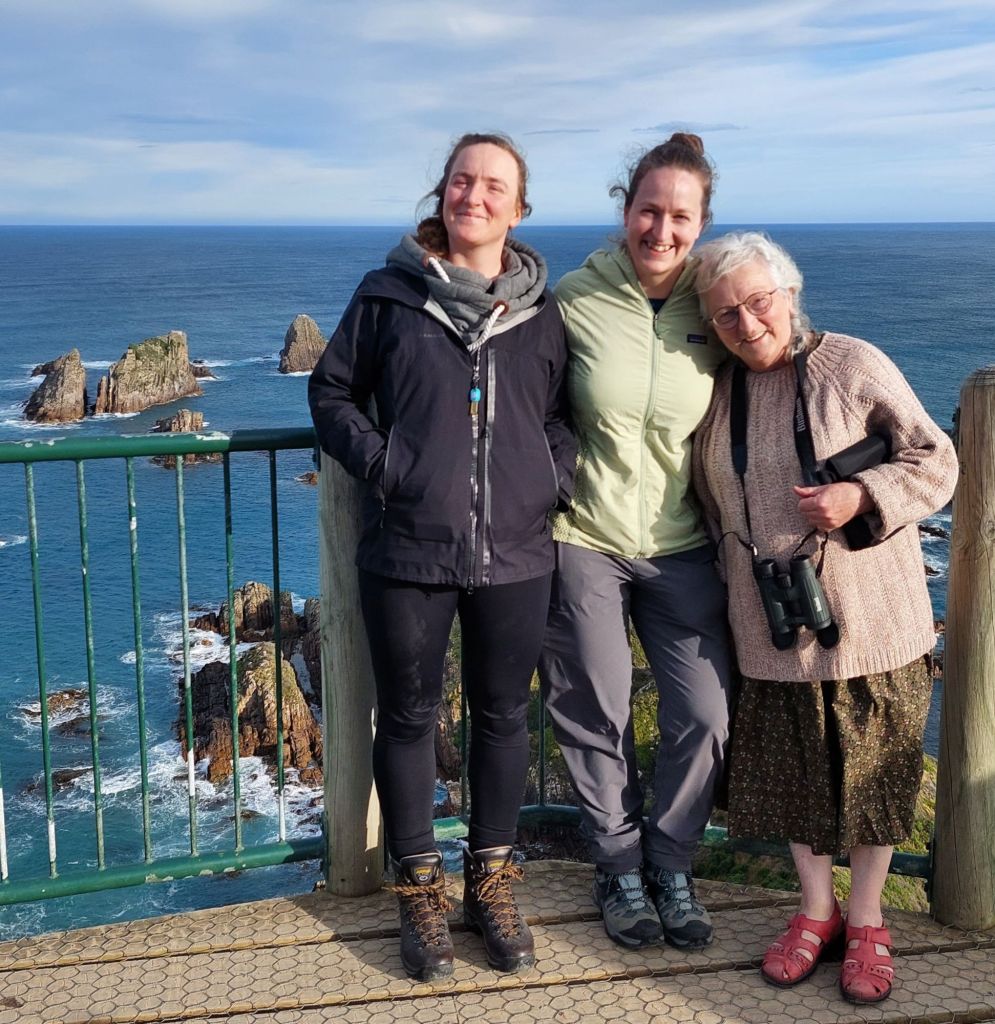
On the island with the sea arch, there are the white lumps / spoonbillsI was having difficulty holding the phone and monocular steady and lined up to get this, but the slightly larger lumps are fur seals!Context – there were seals all over, but the kid’s pool above is the narrow strip just left off the main peninsulaWilson womenLooking eastward
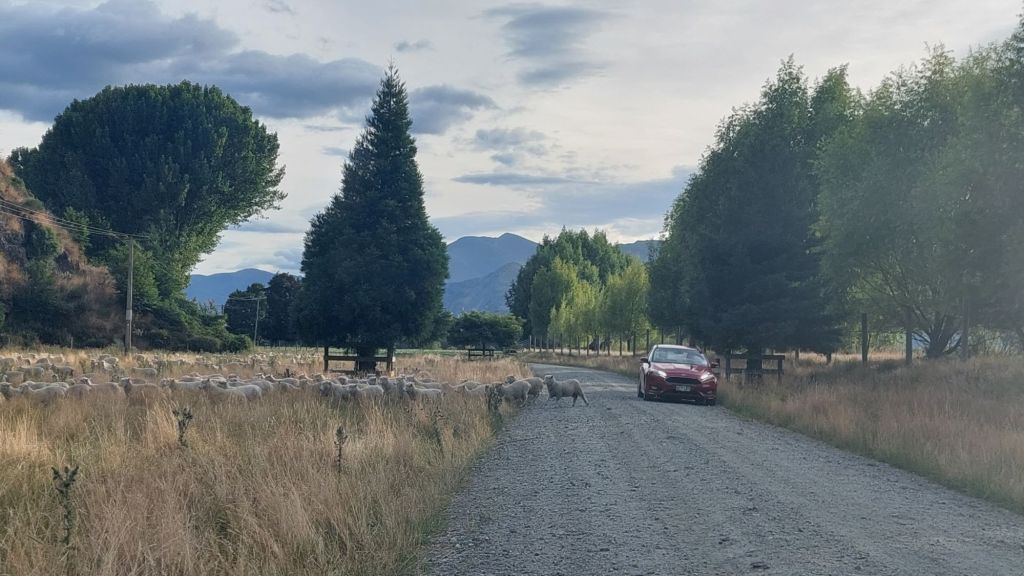
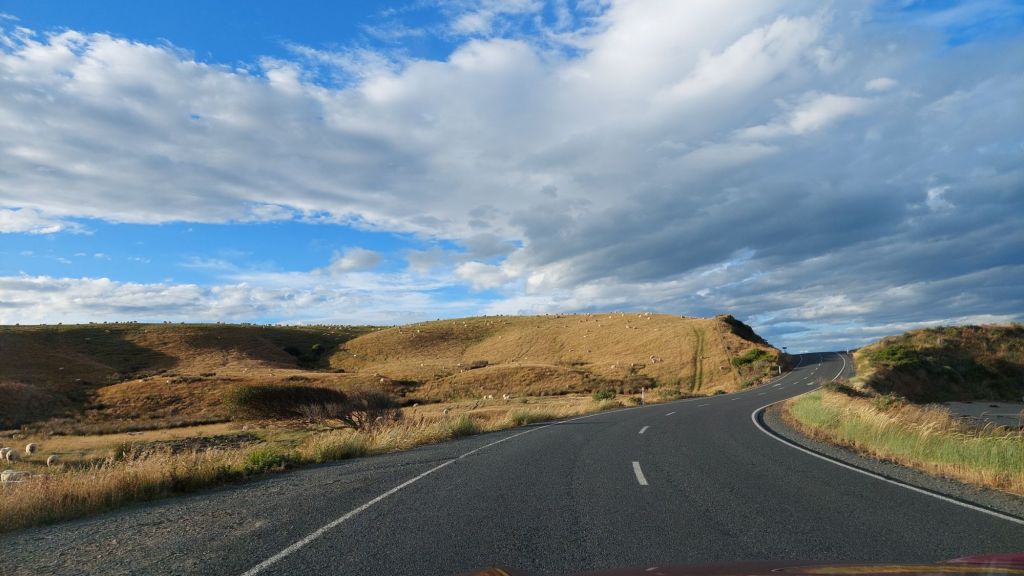
We spent the latter part of today on the Scenic Southern Route – it IS scenic. It’s a bit Shire-like, especially with The Fellowship soundtrack playing. Windy narrow roads with green fields and lots of sheep, or a F has dubbed them land maggots!
From a distance, you have to admit they do look a bit like maggots!
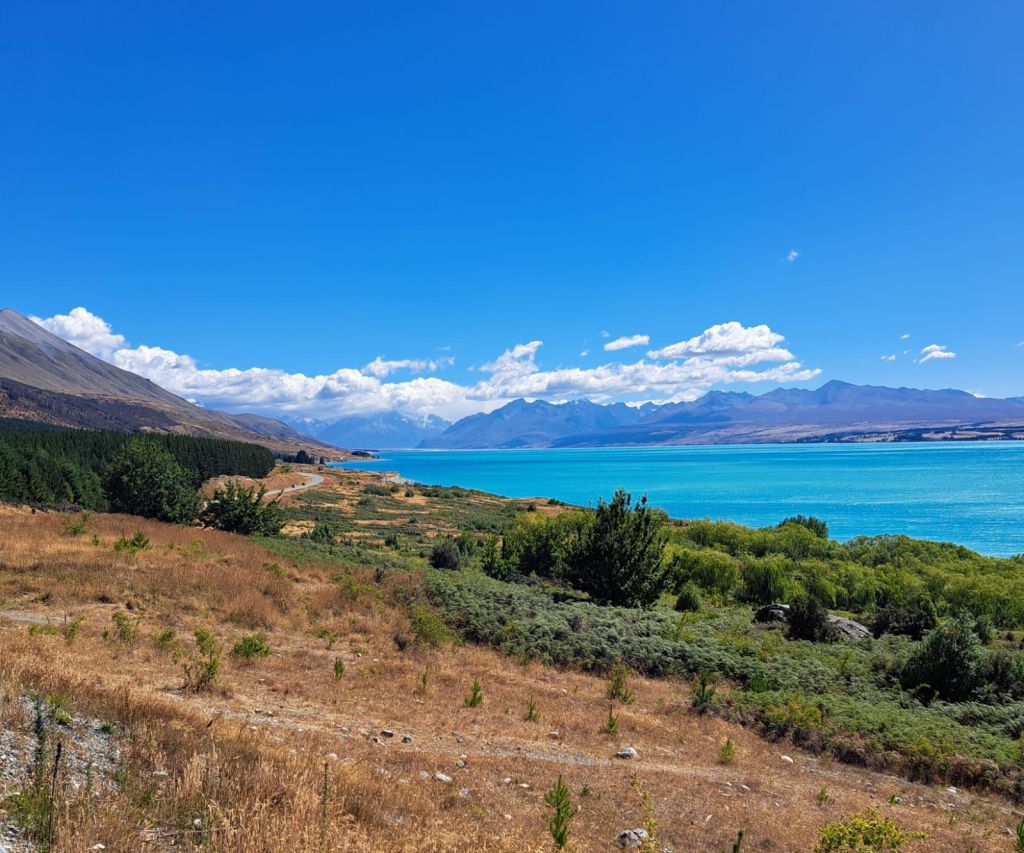
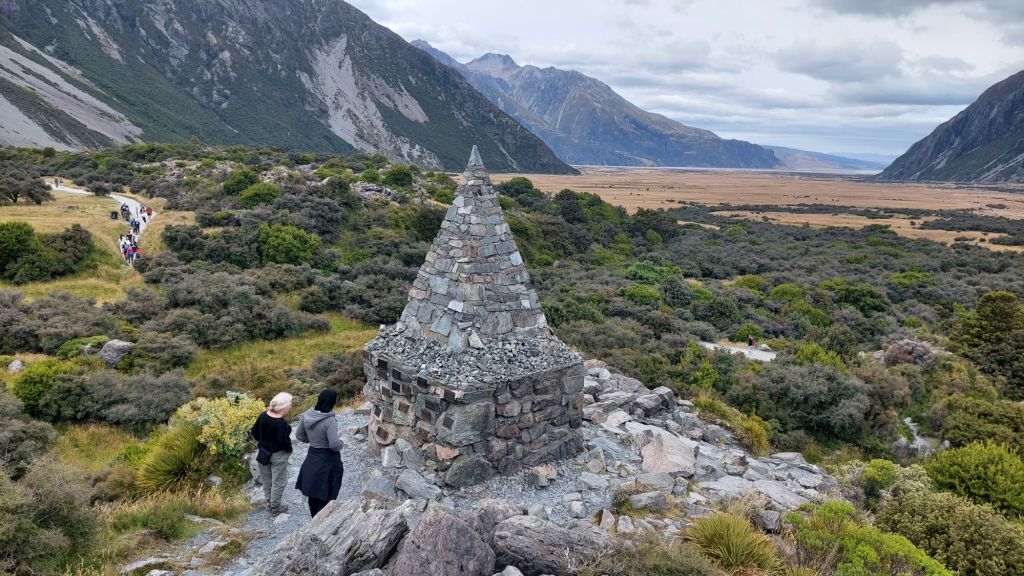
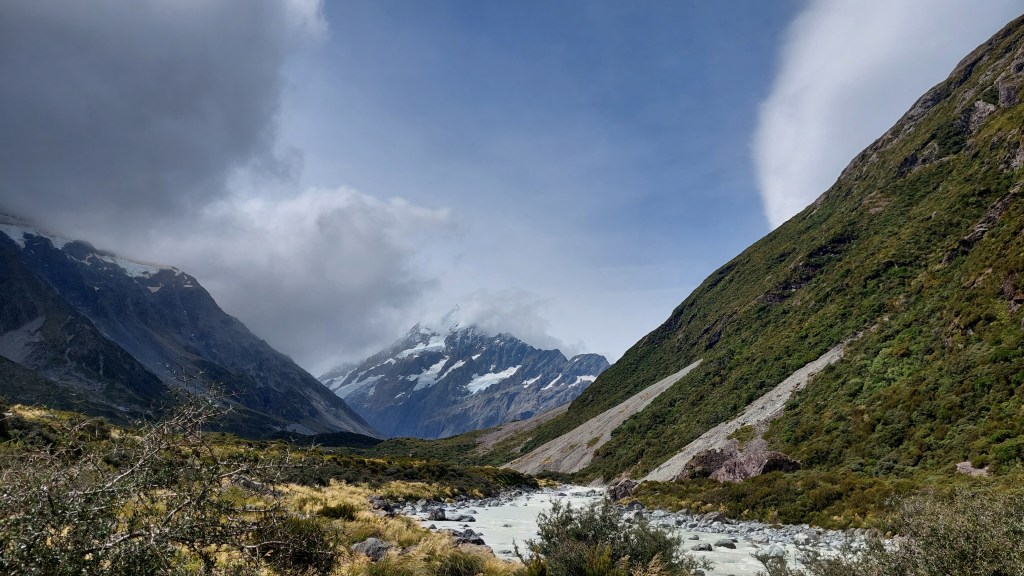
I’d made the most of the views last night knowing the forecast was for cloudy today, and sure enough, it was overcast and windy with showers. We (and a never ending supply of other tourists) decided it was still worth the flat 10km return walk up Hooker Valley.
After reading the memorials to many people who have died in the alpine, mum agreed she wouldn’t climb Mt Cook afterall
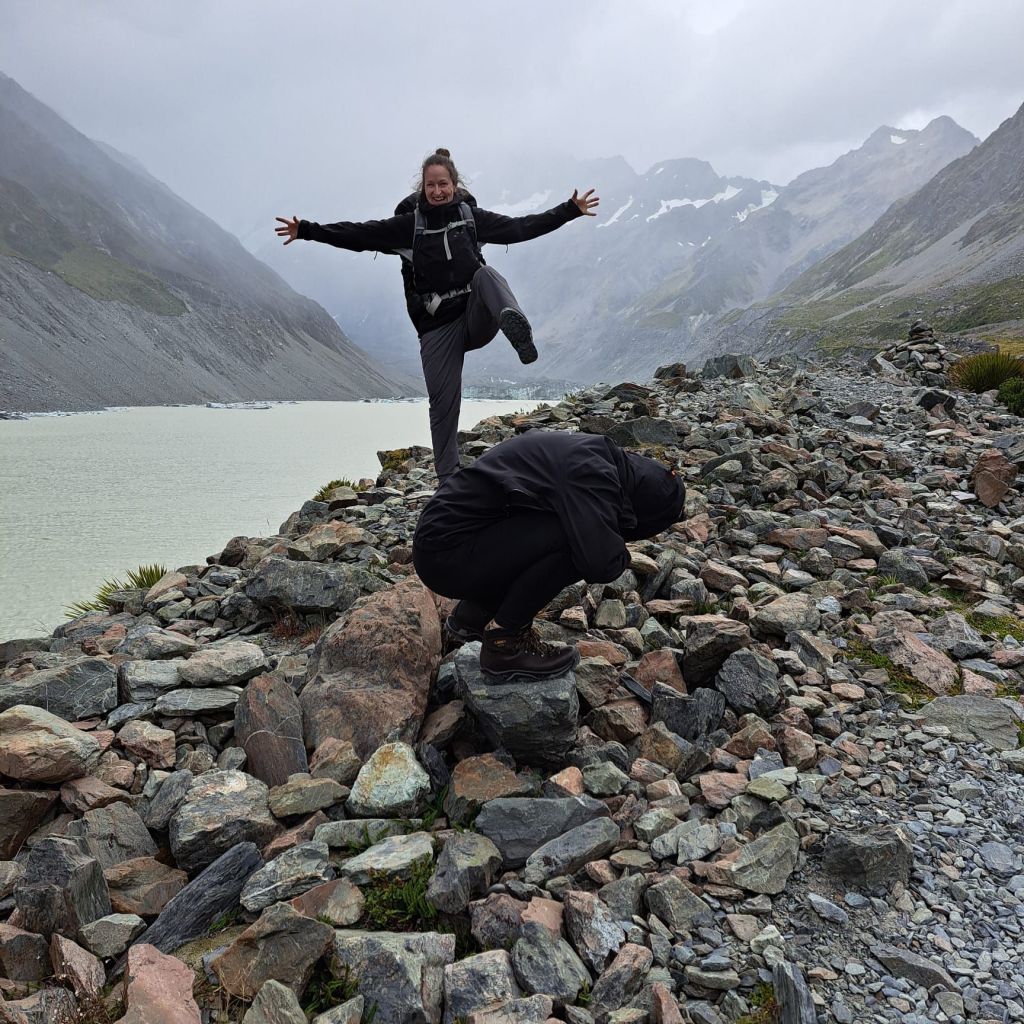
The views came and went through the clouds and rain, and the wind failed to blow us off any of the bridges. I had some flashbacks to Torres del Paine in Chile where F and I watched people getting their poses on.
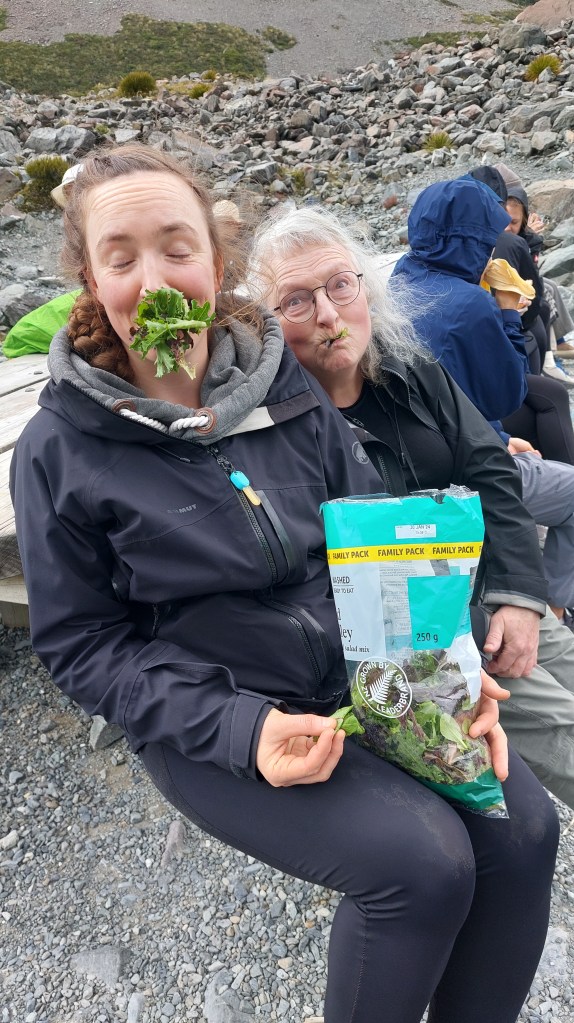
Not us. We were eating a family size bag of greens…
I don’t love walking with so many people, and I did ditch the crowd at the lookout and pick out my own route further up the valley. Fortunately, unlike Chile, this time I was not caught or threatened with eviction.
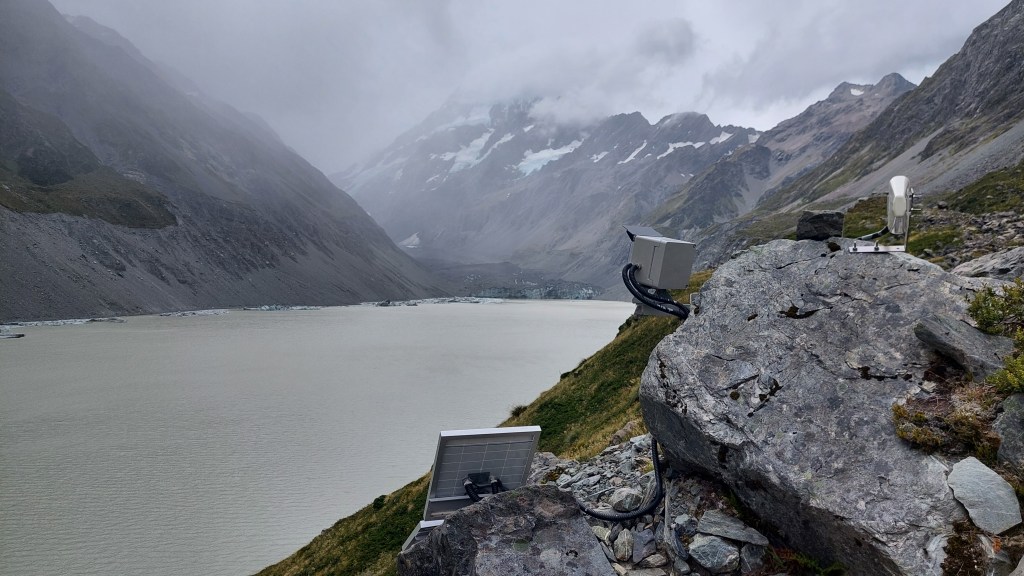
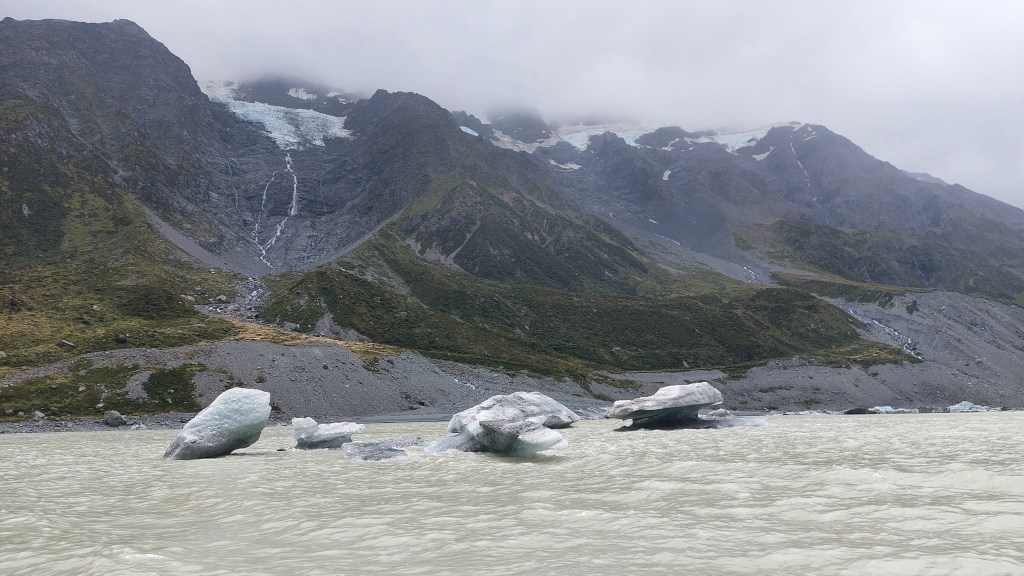
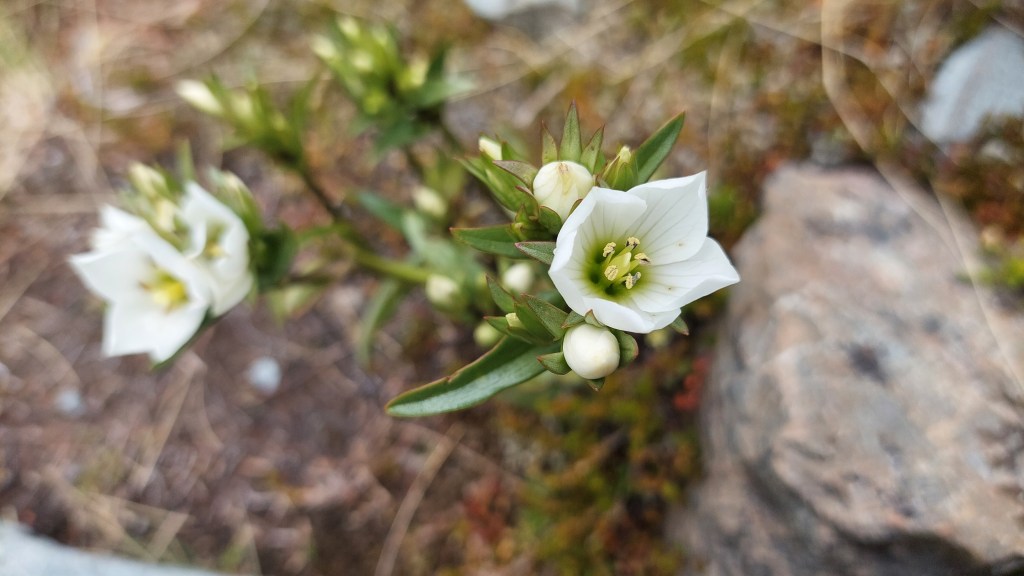
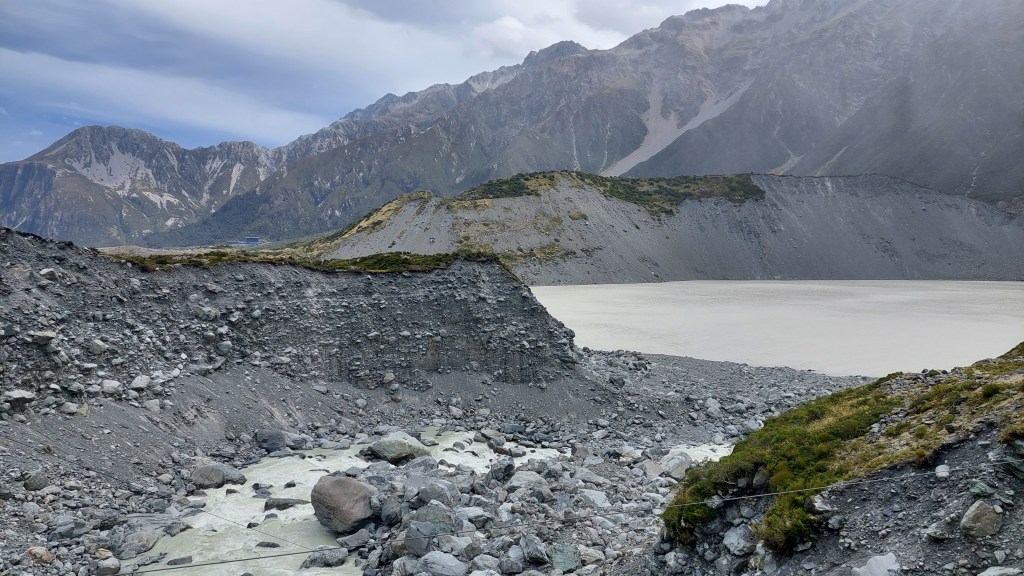
Found a solar powered camera and wind device?Grounded icebergsAoraki – peaked out briefly (ha ha peaked?)We have been told there are few native butterflies, and most flowers are pollinated by mothsGlacial moraine; the glacier extended much further even just 100 years ago
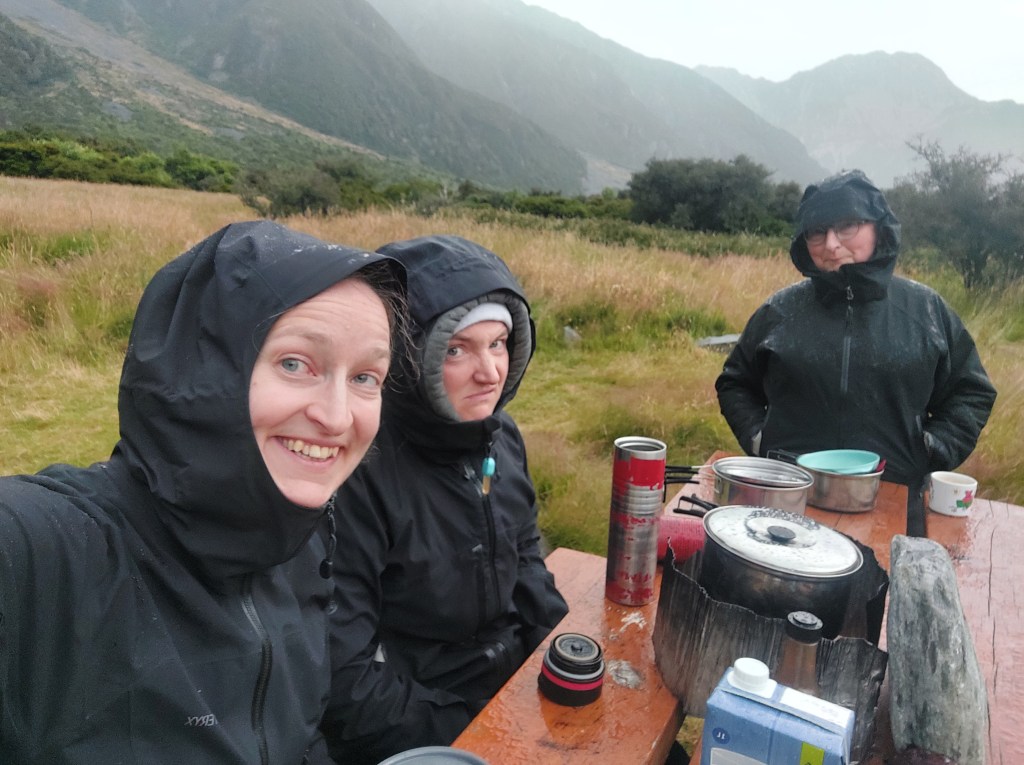
The return, with the wind blowing us home, seemed quick. The others “rested their eyes” and I made myself a cup of tea. I lured F and M out of the tent for dinner, which was an exercise in holding onto everything so it didn’t blow away. Only 2 hands each is not enough.
As soon as the rock windshield was installed the wind changed 180°
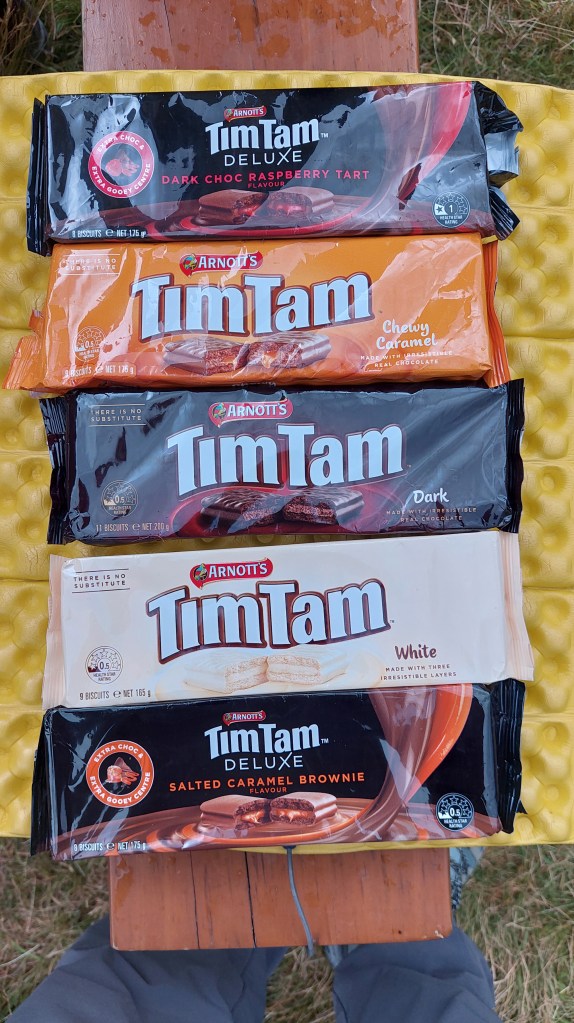
For dessert, we had a Timtam tasting experience. (What can I say, I was inspired by the wine tasting, and there *were* even more flavours that I DIDN’T buy when we got groceries…)
Tasting menu
That’s about when the torrential rain started, so we retreated to the tent with knitting, crossword puzzles, and books. As the rain and wind debated who could hammer louder on the tent, the debate inside the tent was whether it was worthwhile to get out of the tent to pee and brush teeth while it’s absolutely pissing or whether to put it off in hopes the rain would ease up.
Windy confirmed it was going to get worse overnight.
I am very glad to have recently re-waterproofed the tent, and to have the amazing vestibule.
 BC by Cycle