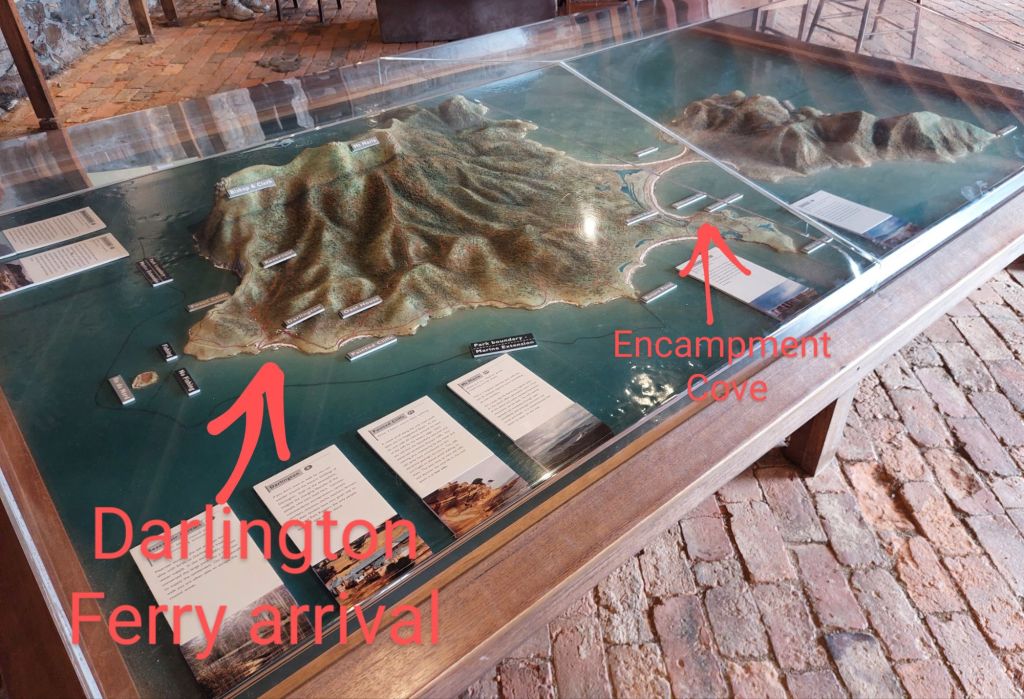
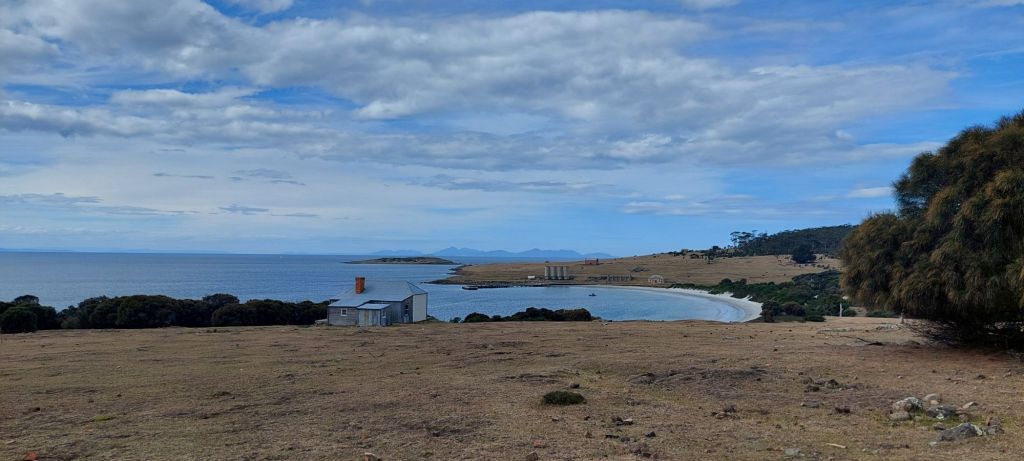
Encampment Cove, Maria Island -> Darlington, Maria Island
Distance cycled: 13.9 km Ave: 12.5 km/h Max speed: 33.2 km/h
I’d talked Flis into a future big day (110+kms and well over 1200m of climbing) in order to spend 2 nights here, which took very little convincing. Glad we did.
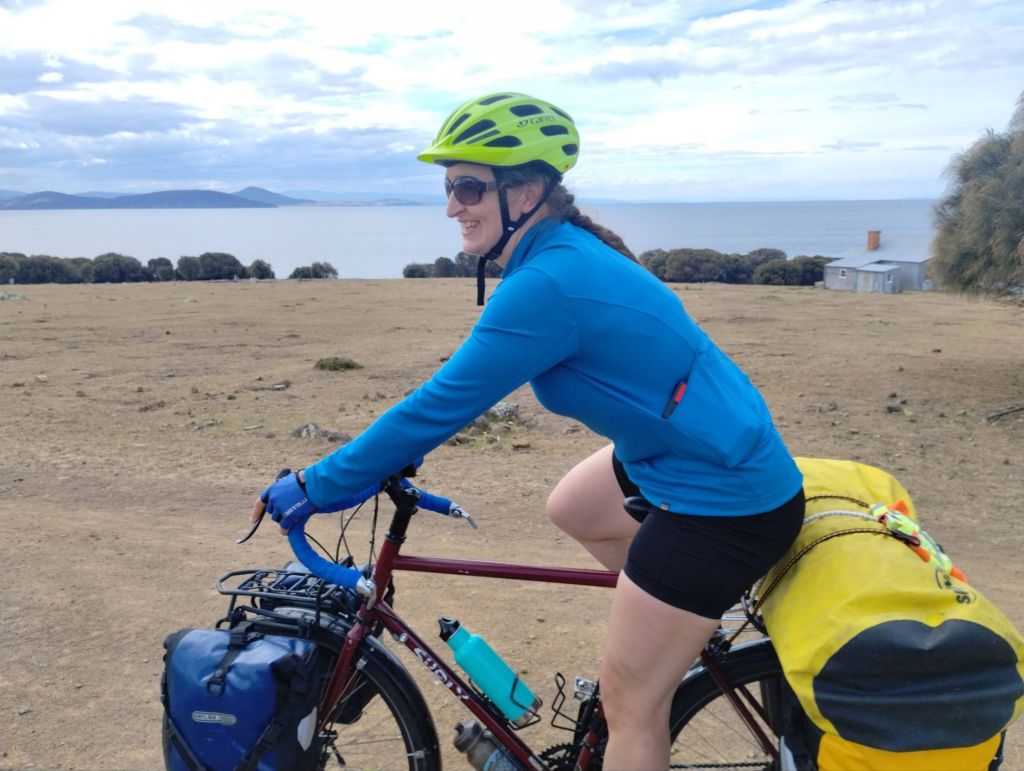
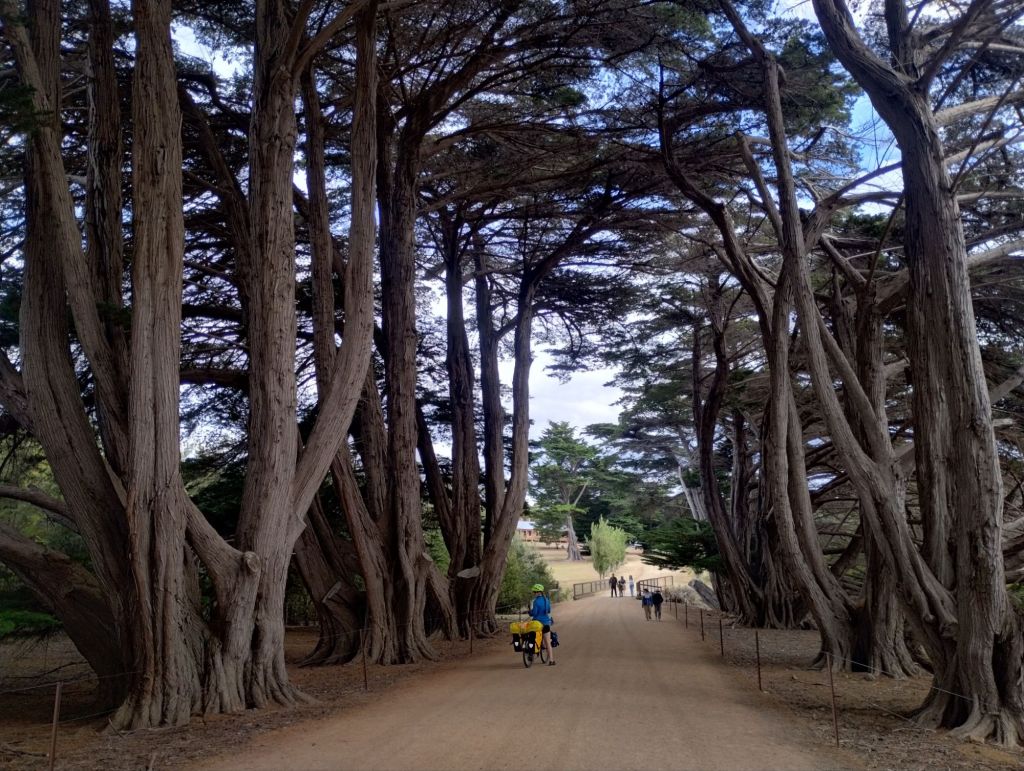
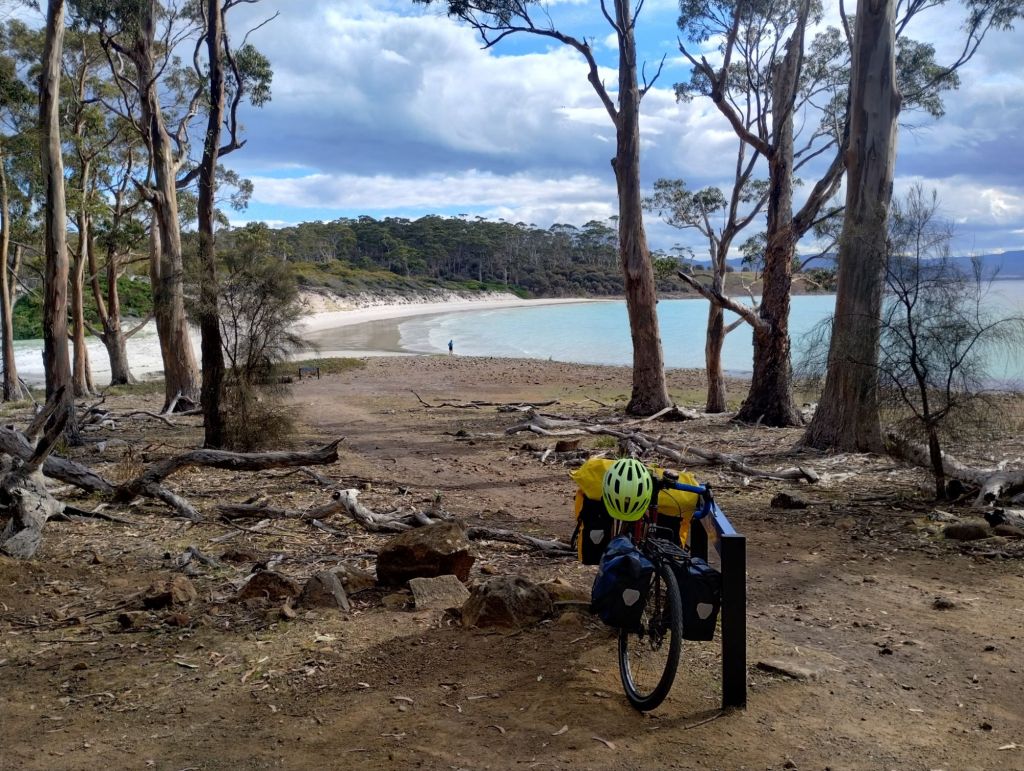
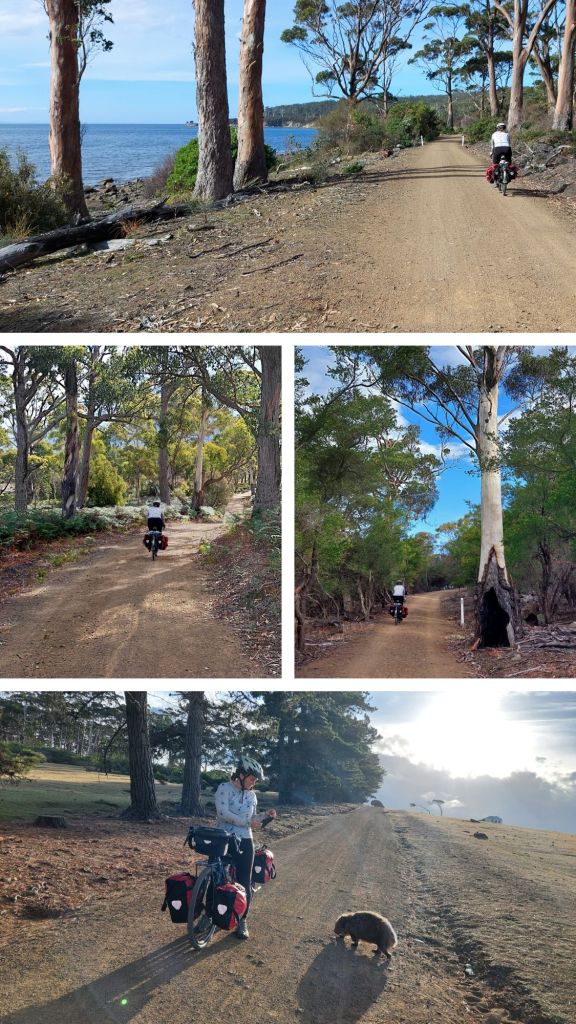
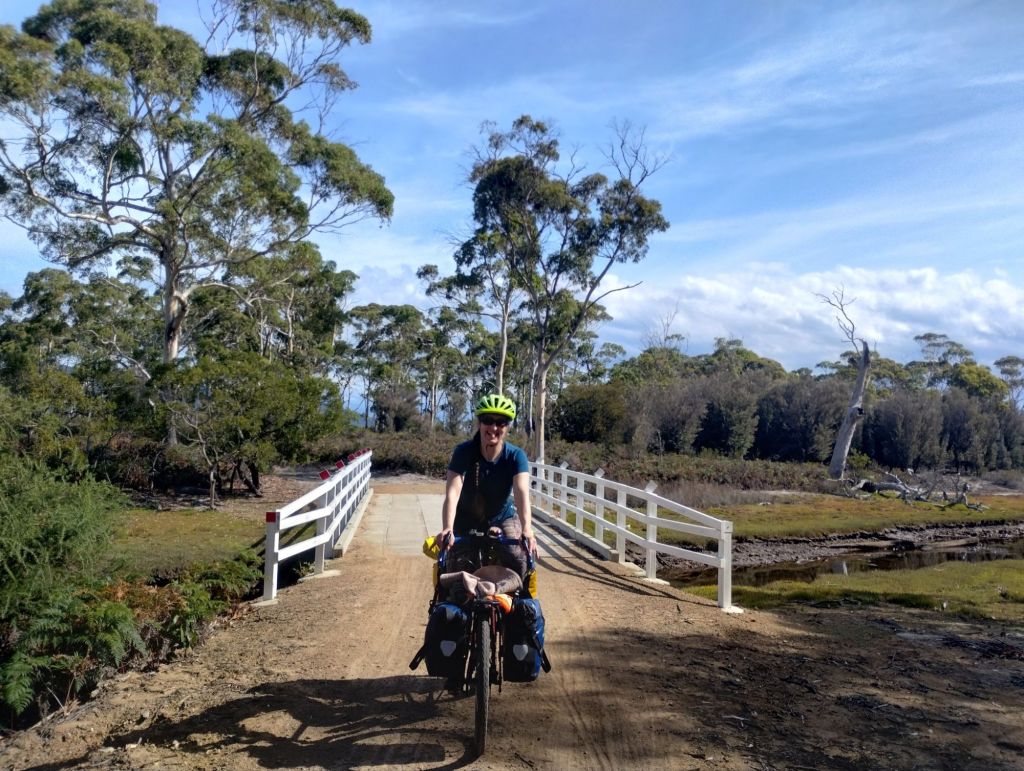
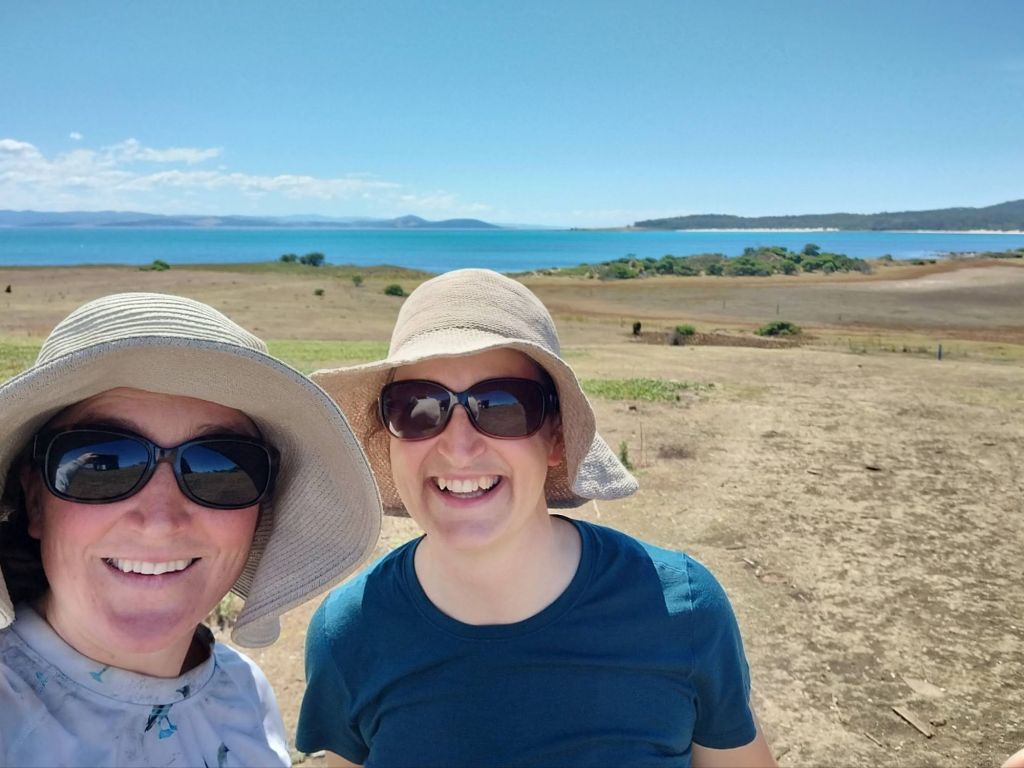
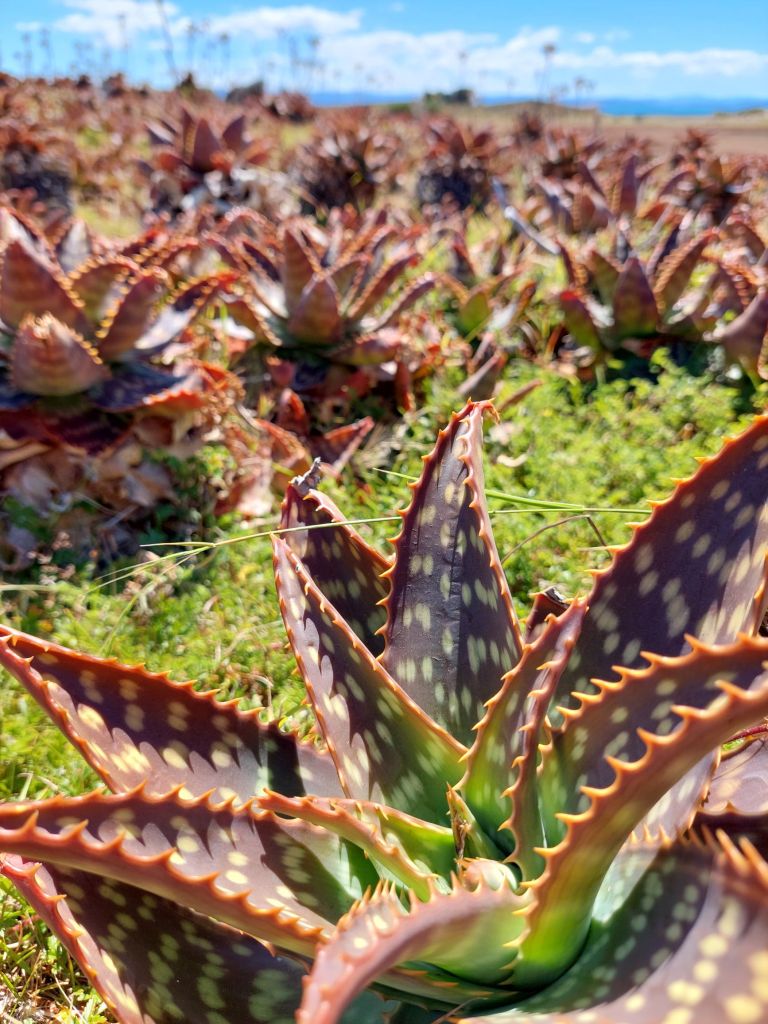
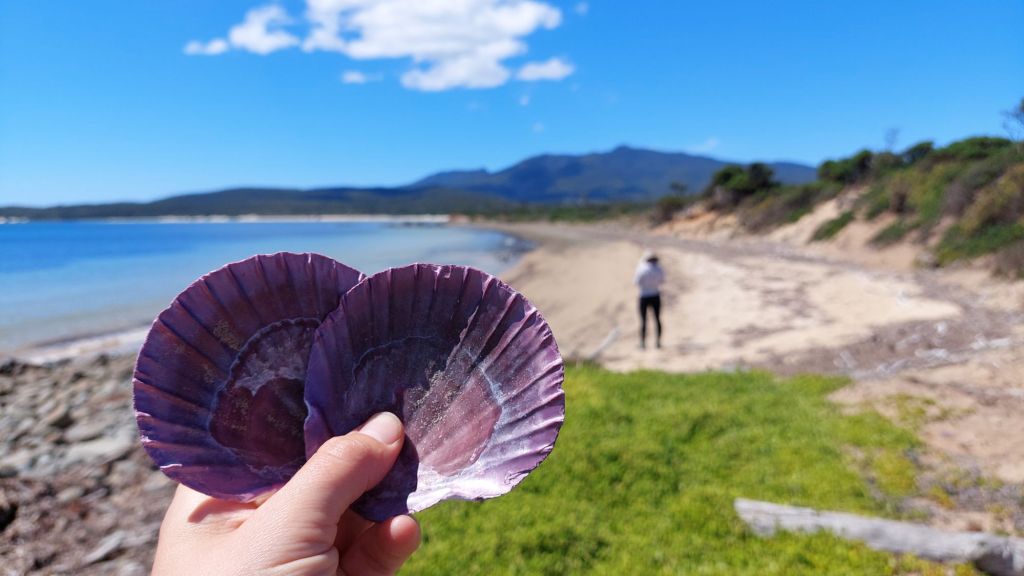
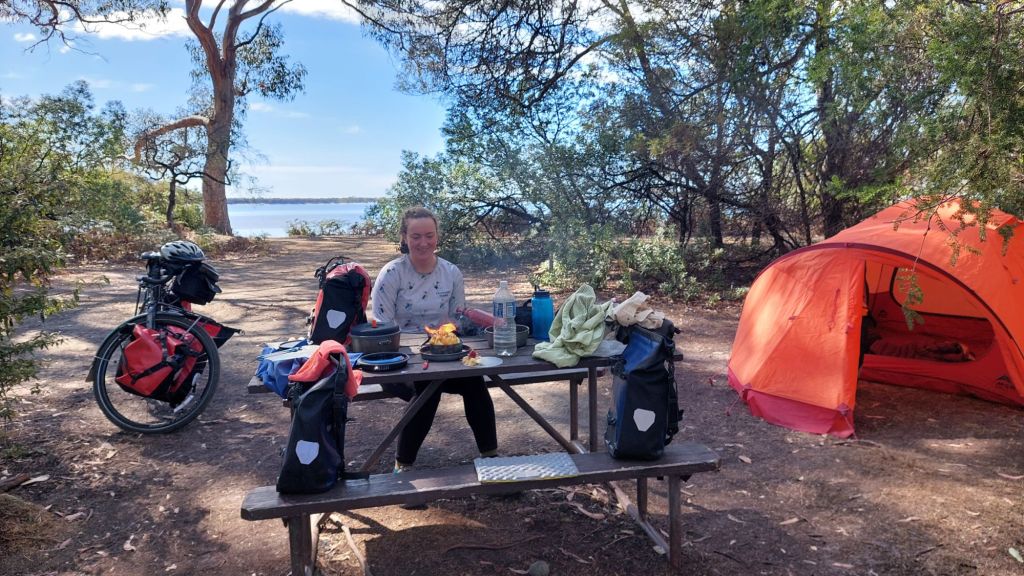
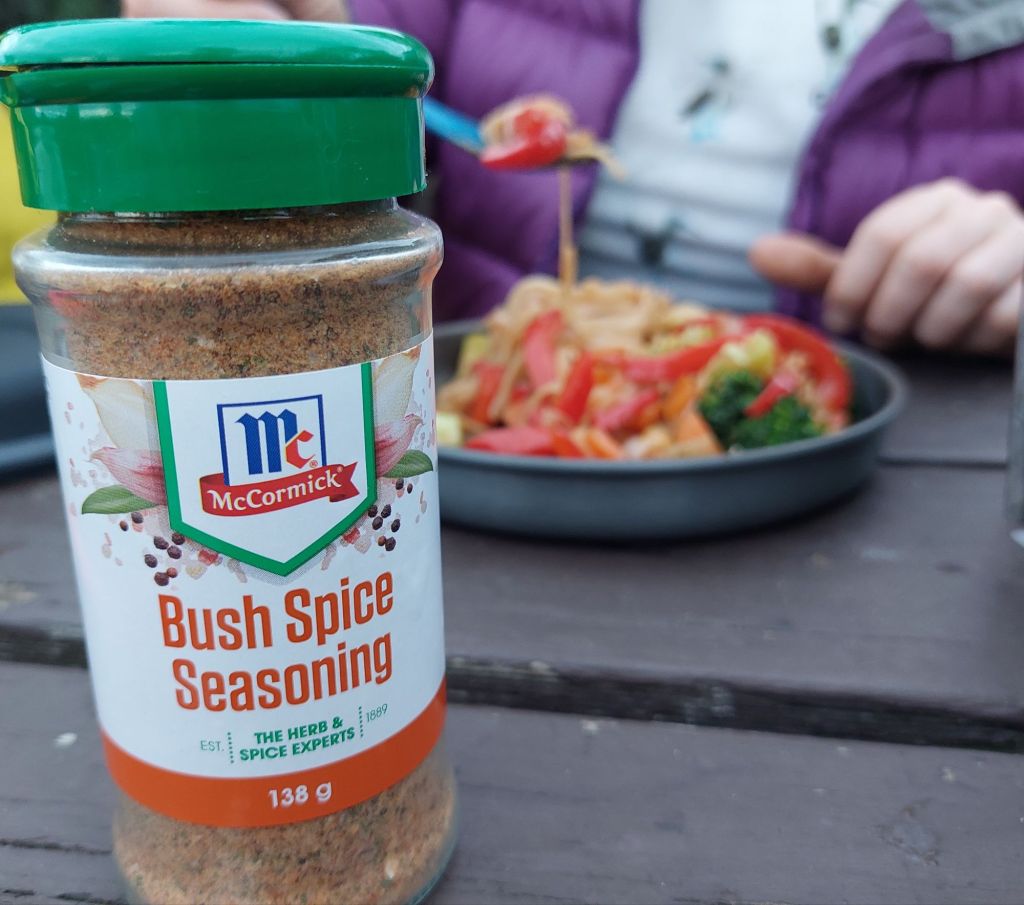
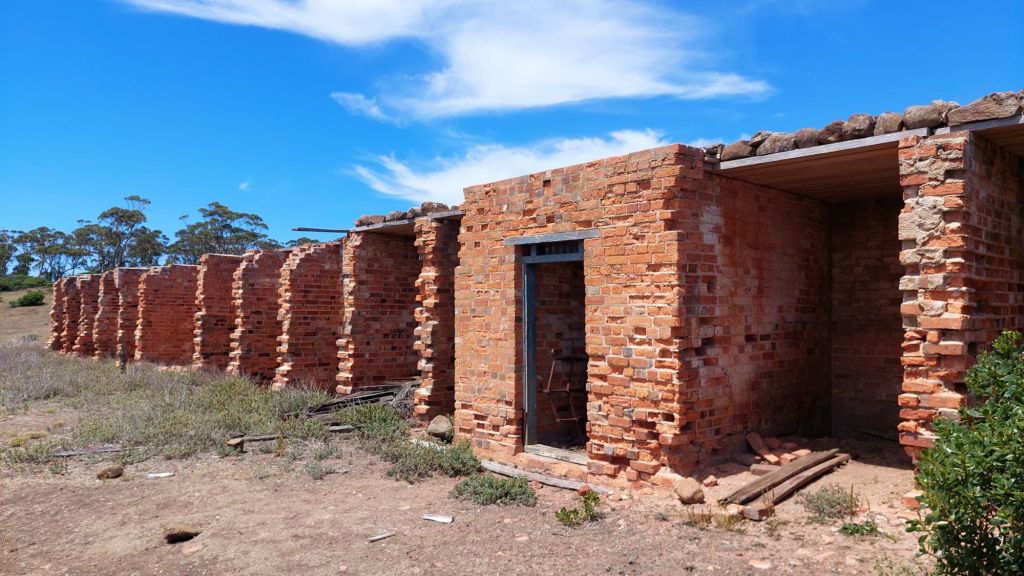
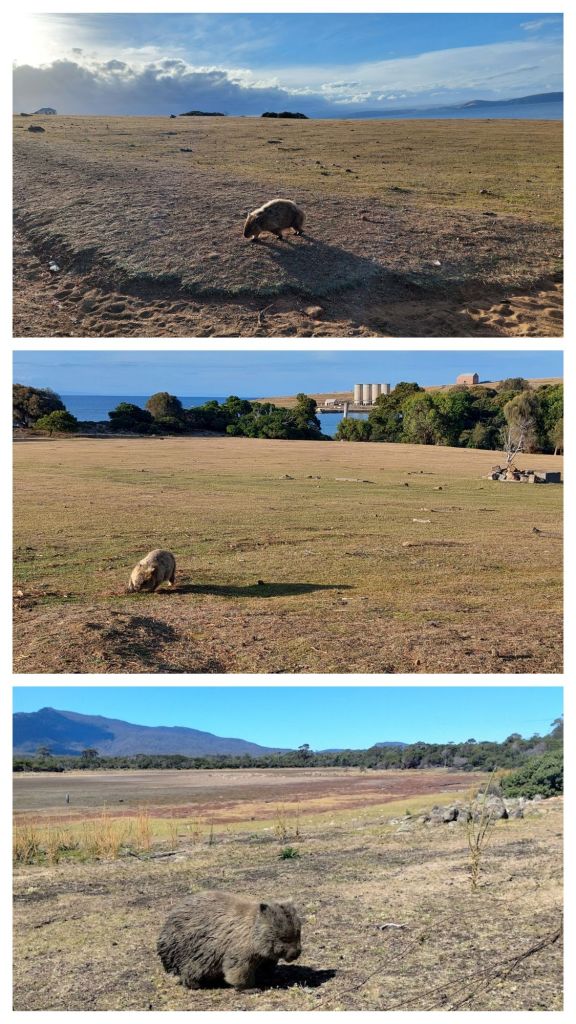
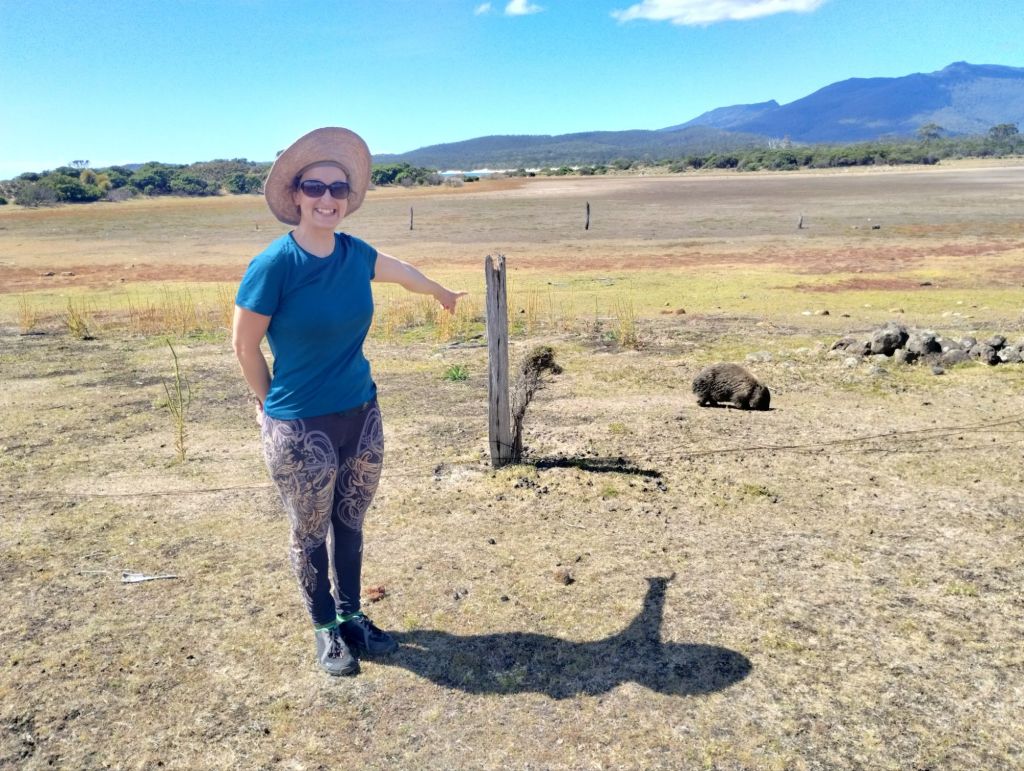
Maria Island is big!You could easily spend a week exploring here and still not see everything. There are multiple full day hikes, and plenty of smaller walks as well as historic buildings.Initially, I had aspirations of climbing tall things and seeing fossils, but after a leisurely roll to the campsite (stopping to oggle the wildlife and the views), I settled into a more restful mode.Maria Island is a no car zone. Passengers come on foot, or can bring bikes.If you zoom in you might be able to recognize the figure on the beach.The trails are mostly beautiful – I think it’s pretty ideal for cycle tourists (or boat folk), as without a bike, it would be hard to make it far from the Darlington area.Going across the isthmus to the south portion of the island was going to take 8 hours walking over soft sand, so we turned around and kept to the north part of Maria.We saw few other people south of Darlington.The grasslands were all over grazed, but the succulents were going strong. We had a leisurely beach swim with nobody in sight for hours.Even in Encampment Cove, there was only one other group, so in the relative privacy, I had a great campsite bath.For dinners, we had SFG soup and stir fry with noodles, and tested out some new “bush spice” which I’d picked up when we ran out of salt.Like many areas of Tassie, there is a colonial history of penitentiary use, which didn’t last. These cells, built in 1846, were only in use for 5 years.
In the 1960s, it became a kind of “Noah’s Ark” where threatened species were introduced and encouraged. This explains the abundance of grazers. We saw echidna, wallabies, cape barren geese…
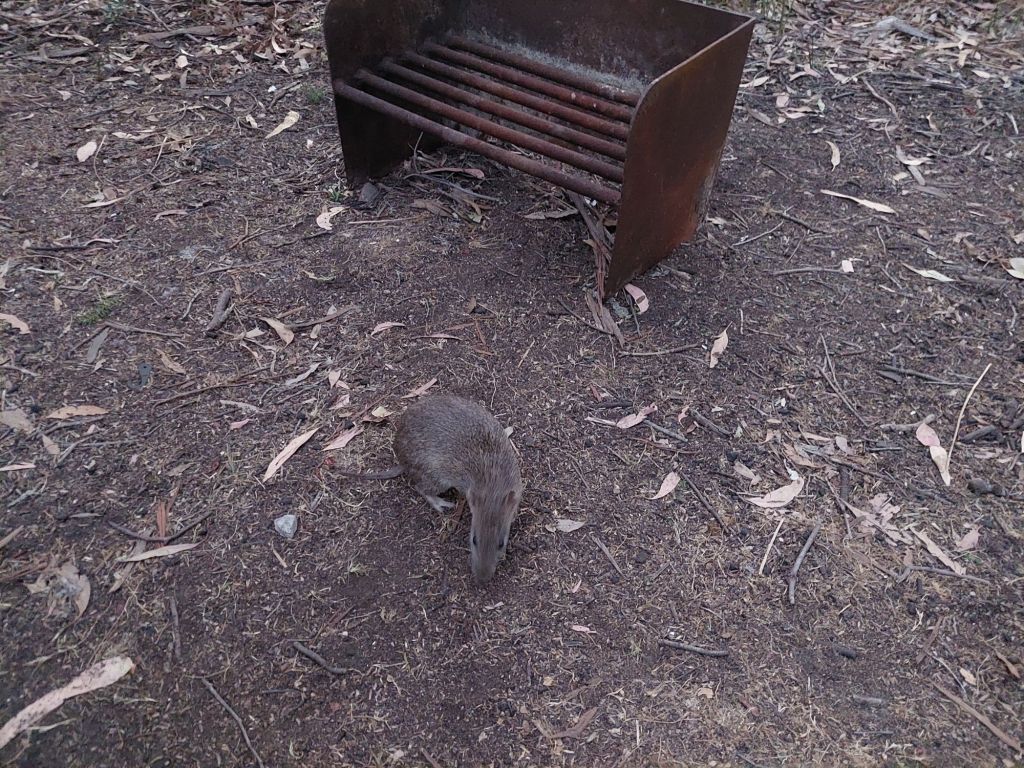
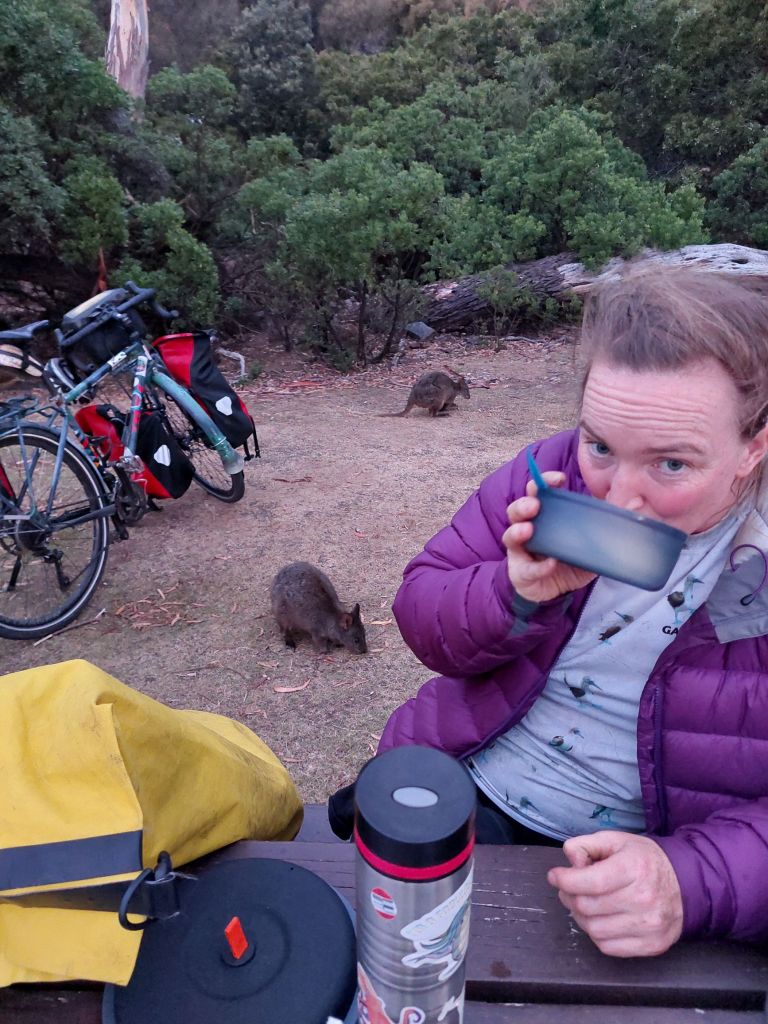
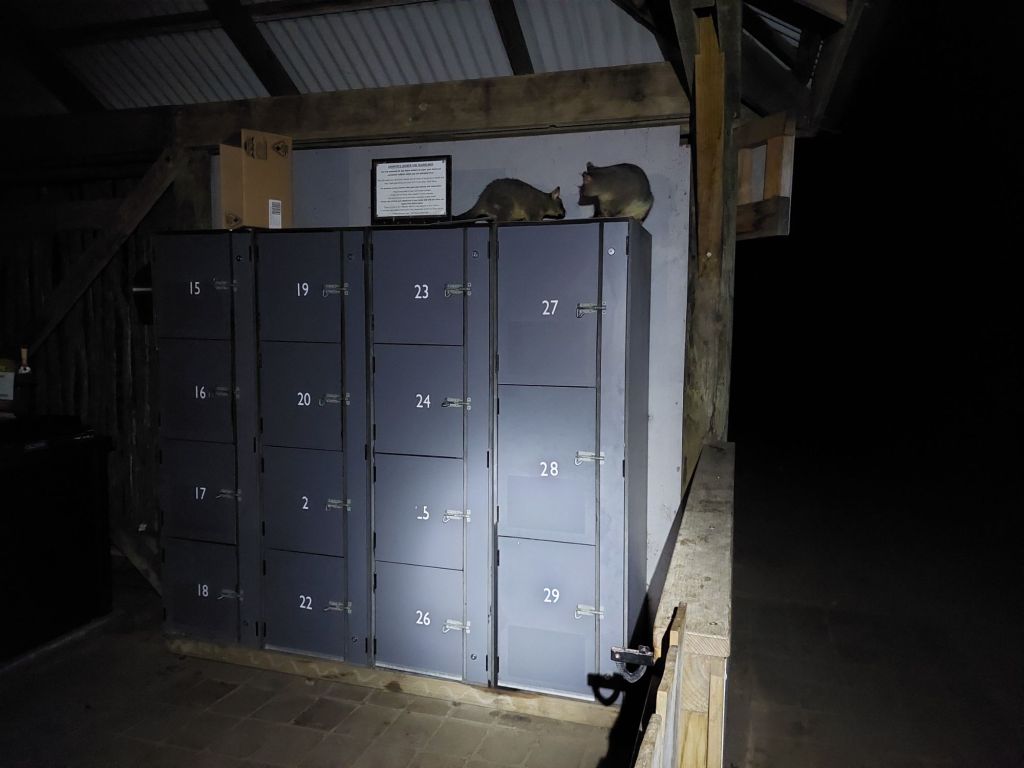
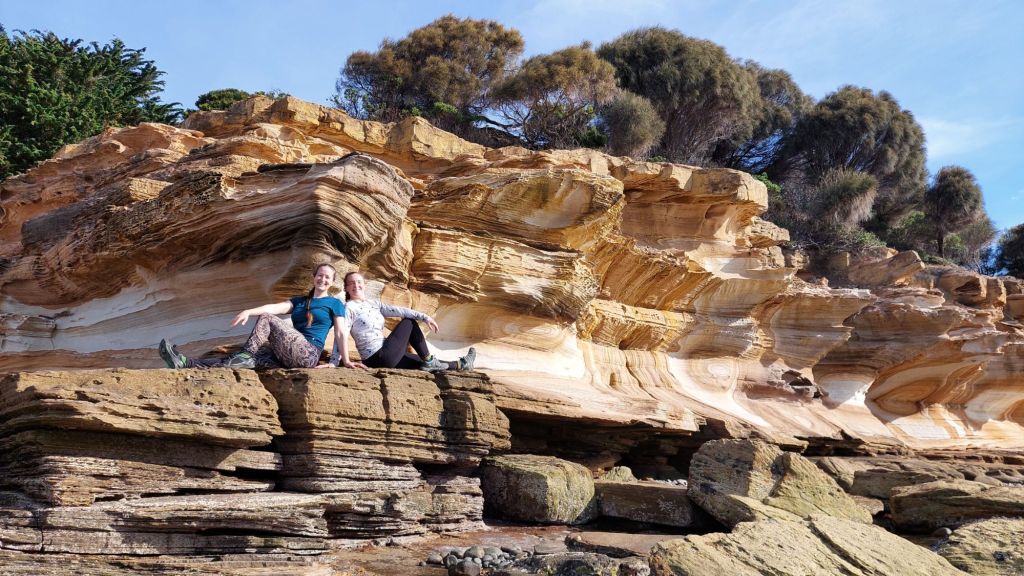
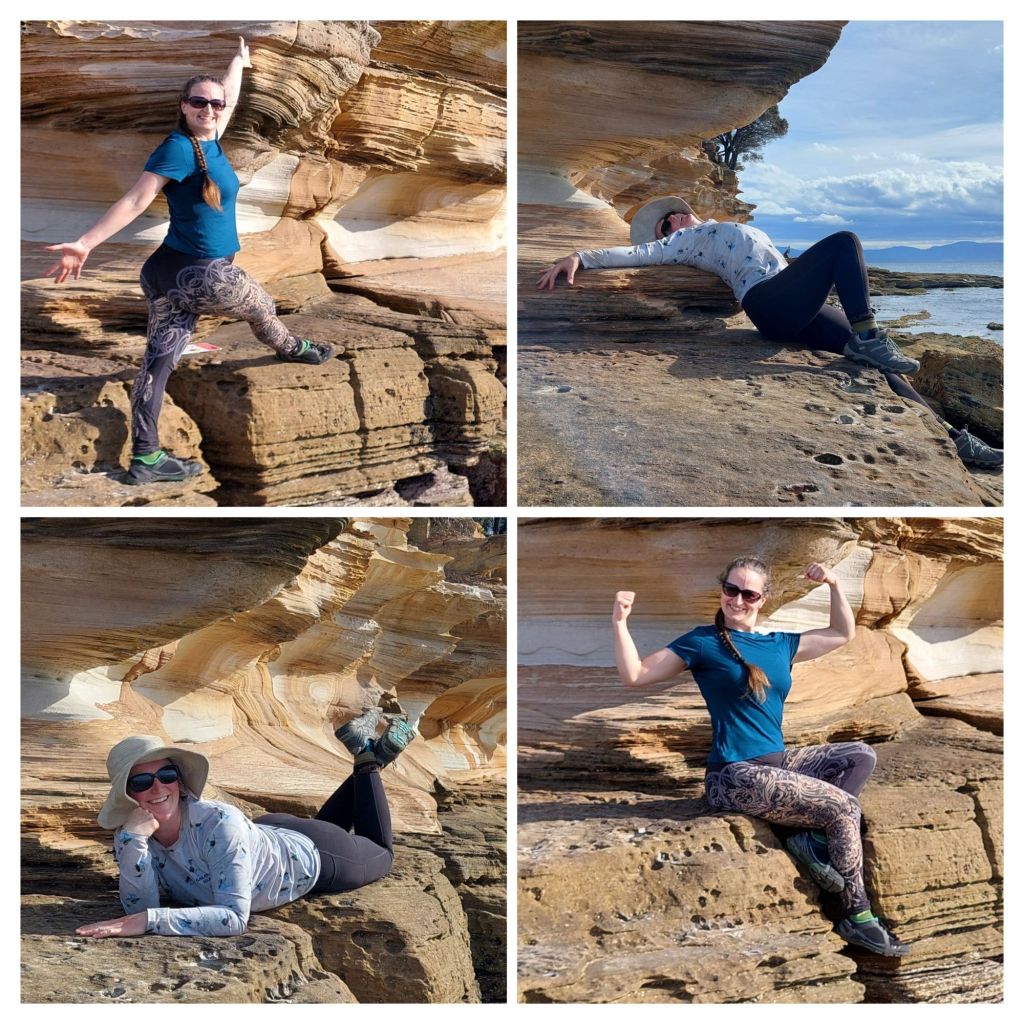
potaroo (large kanga-rat things)pademelons (easy to confuse with wallabies, but they’re a bit smaller)possums (not as destructive as raccoons as far as we have seen so far, but equally agile) …… and so many (ever so endearing) wombats!Fun fact: wombats’ main defence is their super tough ass (mostly cartilage) which, when attacked, they use to block access to their burrows.I made sure we visited the painted cliffs: The unique colouring is from iron rich water which leached down through the sandstone during wet season, and then was pulled up again through capillary action in dry season during its formation.It was also quite entertaining photographically.
We camped at Darlington, ready for the first ferry and the long day tomorrow to pay for our extra Island time.
 BC by Cycle